Yasin Asharaf P | Published on 28/07/2026
When the history of the Indian Ocean is told, it is often narrated in only one direction. Arab merchants crossed the Arabian Sea, bringing with them faith, ideas, architecture, cuisine, and commerce that became deeply woven into the cultural fabric of the Indian subcontinent.
But history also sailed the other wave.
Long before the discovery of oil transformed the Arabian Peninsula into one of the world's wealthiest regions, India stood among the great economic powers of the Indian Ocean. Its merchants commanded vast maritime networks stretching from East Africa to Southeast Asia, while Indian ships carried spices, textiles, timber, rice, and precious commodities across the seas. Yet they carried something even more enduring than trade—they carried charity. Their wealth did not merely build fortunes across oceans; it helped shape the social and charitable landscape of Islam's holiest city.
- The Holy Ka'aba pictured in 1887 by Al-Sayyid Abd al-Ghaffar
For centuries, Mecca's prosperity rested not on petroleum but on pilgrimage, commerce, and philanthropy. Every year thousands of pilgrims journeyed from across the Islamic world, and among the communities that contributed most significantly to the city's economy were Indian Muslims. Merchants from Gujarat, Malabar, Surat, Bombay, Hyderabad, the Coromandel Coast, Punjab, Kashmir, and the Deccan established flourishing commercial houses throughout the Red Sea region. Many settled permanently in the Hijaz, while others maintained thriving maritime connections between India and Arabia for generations.
Historian Ziauddin Sardar observes that by the second half of the eighteenth century, nearly one-fifth of Mecca's population was of Indian origin. Indian merchants, scholars, financiers, craftsmen, and pilgrims became an inseparable part of the city's social and economic life. Their influence extended far beyond commerce. They established charitable trusts (awqaf), and created Rubaths—charitable lodgings that offered free accommodation to pilgrims performing Hajj. These institutions became one of the greatest, yet least remembered, contributions of Indian Muslims to the Holy Cities.
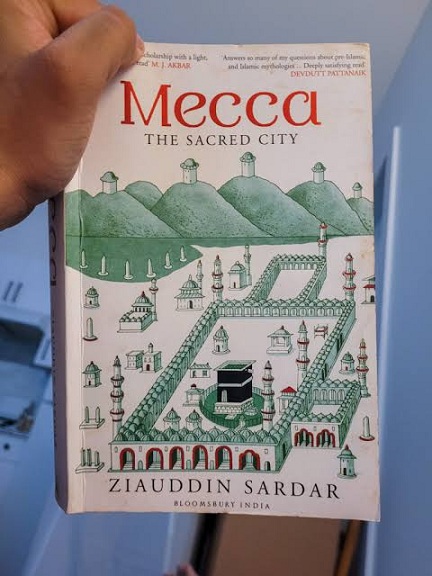
- Ziauddin Sardar's book on Mecca.
Few people today realize that India once maintained an extraordinary network of charitable endowments in Mecca and Madinah. According to Government of India records, five Indian Rubaths currently exist in Mecca—Bhopal, Bhora, Hyderabad, Arcot, and Tonk—and three in Madinah—Bhopal, Bhora, and Tonk. Established by princely states, merchant communities, and philanthropic families, these endowments served generations of pilgrims from the Indian subcontinent, providing shelter, hospitality, and assistance in the Holy Cities.
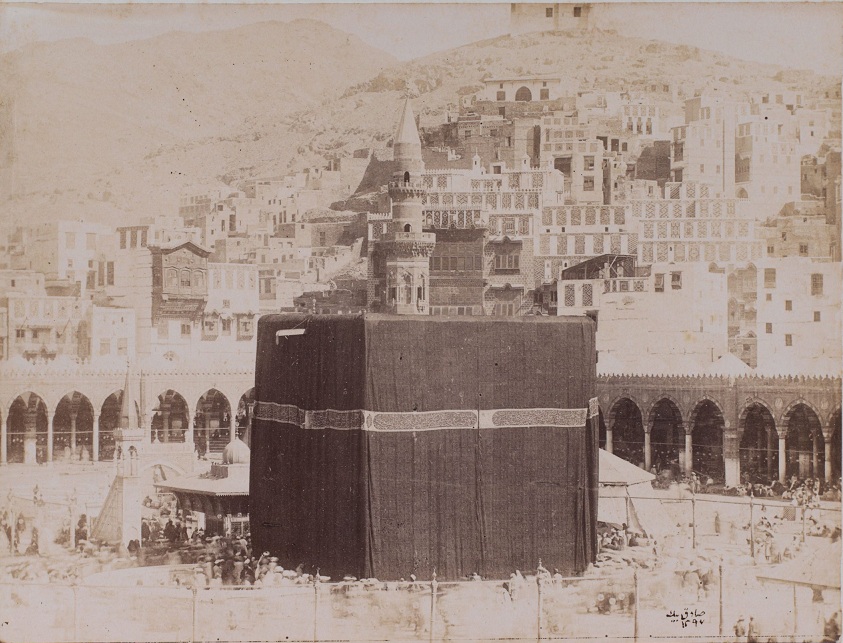
- An 1880 photograph of Ka'aba (Image: Khalili Collections)
Among these endowments, the Nizam's Rubath remains one of the most significant. Around 1860, Mir Tahniyat Ali Khan Siddiqi Bayafandi, better known as Nizam Afzal-ud-Daulah (Asaf Jah V) of Hyderabad, acquired a complex of 42 Rubath buildings as a waqf to provide free accommodation for pilgrims from the Hyderabad State. Although much of the original property was later acquired during the expansion of Masjid al-Haram, the endowment continues under the administration of the H.E.H. the Nizam's Charitable Trust, accommodating thousands of pilgrims every year. More than a century and a half after its establishment, it remains one of the oldest continuously functioning Indian charitable institutions in Mecca—a living reminder of an era when Indian rulers invested generously in the welfare of pilgrims far beyond their own kingdoms.
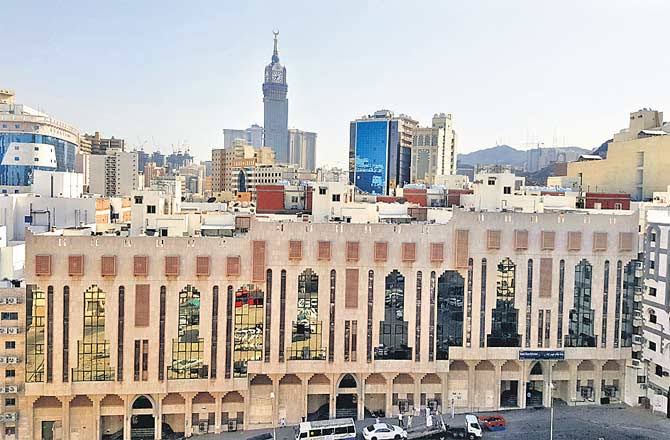
- Nizam's Rubath in Mecca (Image: Wikipedia)
Yet among all these stories of royal patronage, one stands apart—not because it was founded by a king, but because it was created by a merchant whose fortune was built upon the sea.
That story begins in Thalassery, on India's Malabar Coast.
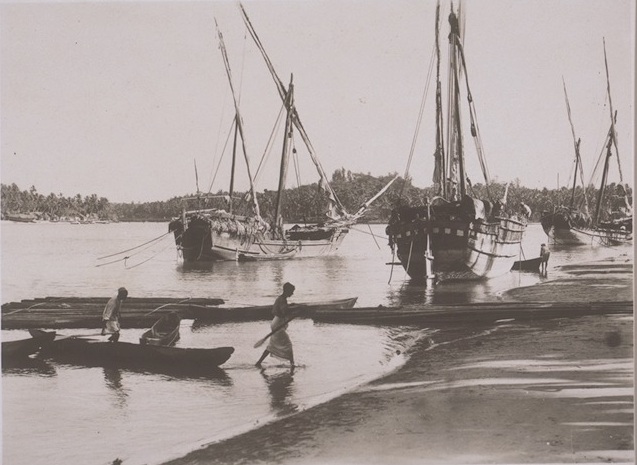
During the nineteenth century, the Keyi family emerged as one of the wealthiest Muslim merchant families in the Indian Ocean world. Their fleet sailed regularly between India, Arabia, Ceylon, and Southeast Asia, carrying spices, timber, textiles, and countless other commodities. They were not merely traders; they were among the maritime entrepreneurs who connected continents and helped sustain the commercial relationship between India and the Arabian Peninsula. Their success brought immense prosperity, but it also nurtured a tradition of philanthropy rooted in Islamic ideals.
When the celebrated shipping magnate Mayankutty Keyi performed Hajj in 1870, he encountered a problem faced by thousands of pilgrims arriving from India. Accommodation near Masjid al-Haram was scarce, and often beyond the reach of ordinary travellers who had spent months crossing the Indian Ocean. Rather than accepting these hardships as inevitable, he resolved to create a permanent solution.
Just a short distance from the Ka’aba, Mayankutty Keyi purchased approximately 1.5 acres of land and established what became known as the Keyi Rubath—a charitable lodging dedicated to pilgrims, particularly those arriving from India and the Malabar Coast. For generations, weary pilgrims found shelter within its walls after completing one of the longest journeys of the Islamic world.
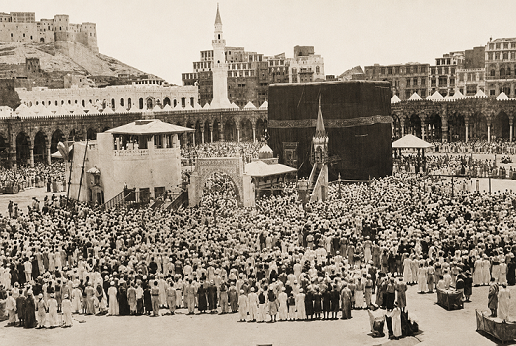
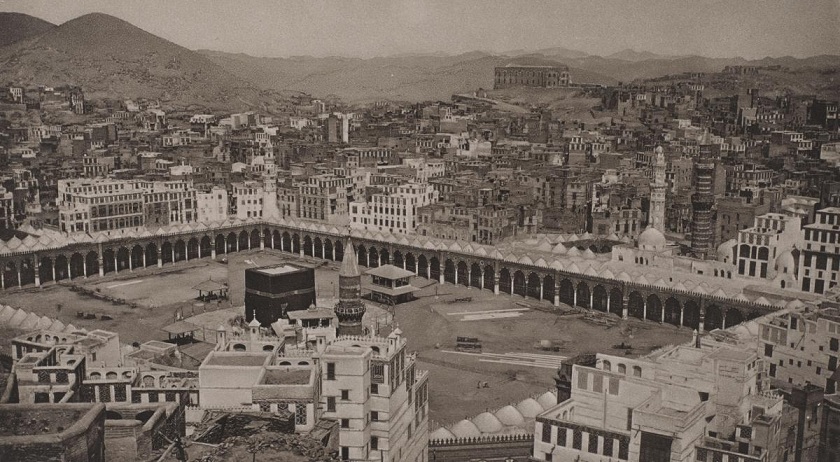
- A 19th-century photograph of Masjid al-Haram, captured by Abd al-Ghaffar, one of the earliest known photographers from Mecca. (AI-Assisted Restoration)
The Keyi Rubath stood alongside the charitable endowments of the Nizams of Hyderabad, the Nawabs of Arcot, the rulers of Bhopal and Tonk, the Bohra community, and numerous merchant families from Gujarat, Surat, and Bombay. Together, these institutions formed an extraordinary Indian philanthropic presence in Mecca. They remind us that Indian Muslims were not merely visitors to the Holy Cities—they were benefactors, builders, trustees, and patrons. They acquired valuable land near the Haram, established permanent charitable endowments, financed religious institutions, and ensured that generations of pilgrims could perform Hajj with dignity.
These investments played a quiet yet significant role in Mecca's development during a period when its economy depended almost entirely on pilgrimage and international commerce. Long before modern Saudi Arabia emerged, Indian wealth, philanthropy, and religious patronage were helping sustain the Holy City.
Their success extended far beyond commerce. Through partnerships with local rulers, European trading companies, and merchant communities stretching from Gujarat to Arabia, the Keyis became influential political and financial intermediaries. Colonial records repeatedly describe them as trusted allies of the British administration, while regional rulers sought their financial support during times of political uncertainty.
General Robert Abercromby, Governor of Bombay, recognised their importance as early as 1792, observing that the "Moplahs... are a very useful merchant class in Tellicherry for their own benefits and that of the Company." The assessment reflected not only the significance of the Mappila merchant community but also the extraordinary position occupied by the Keyis within it.
The family's influence continued to grow under Kunhipacki Keyi, who became head of the family in 1809 and was the first to receive the honorific title "Keyi," meaning "ship owner." Contemporary accounts suggest that his commercial fleet once numbered hundreds of ocean-going vessels, making the family among the most powerful indigenous maritime entrepreneurs on the Malabar Coast.
By the nineteenth century, the Keyis had evolved into a truly global merchant dynasty. They owned warehouses, trading houses, and grand residences across India's major ports—including Bombay, Calicut, Mangalore, and Alappuzha—and reportedly maintained commercial properties overseas, extending as far as Europe. Their wealth was further reflected in their ownership of islands in Lakshadweep, extensive estates, and prominent commercial buildings in Thalassery.
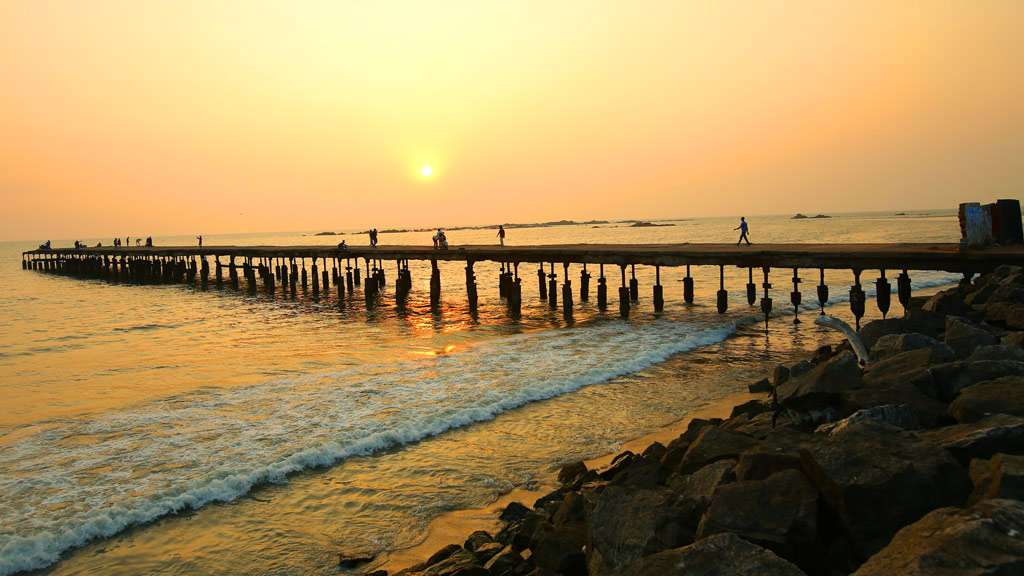
-Thalassery Pier (Image: Kerala Tourism)
Yet their greatest legacy was not measured merely by ships, warehouses, or fortunes.
Like many prosperous Muslim merchant families of the Indian Ocean, the Keyis believed that wealth carried a responsibility beyond commerce. Their prosperity was inseparable from faith, charity, and service to the wider Muslim world. It was this conviction that inspired one of the most remarkable acts of charity in the history of Kerala's maritime merchants—the construction of the Keyi Rubath in Mecca.
Odathil Palli & the Keyis' Architectural Heritage on the Malabar Coast
The story of the Keyi family is also etched into the landscapes of the Malabar Coast—in its mosques, warehouses, and mansions.
As the Keyis rose to prominence through the spice trade during the eighteenth and nineteenth centuries, they invested their wealth not merely in commerce but in architecture that reflected both their prosperity and their worldview. Along the shores of Thalassery, they built an impressive network of warehouses, merchant residences, and mosques that served as centres of trade, worship, and community life. Together, these structures embodied the cosmopolitan spirit of a family whose commercial networks stretched across the Indian Ocean.
The architecture of the Keyis was unlike anything else on the Malabar Coast. While rooted firmly in Kerala's traditional building techniques, their structures also revealed unmistakable influences from Europe and the wider maritime world. Their buildings became a remarkable synthesis of indigenous craftsmanship and international design, reflecting the global outlook of merchants who moved effortlessly between cultures.
Among the Keyis' religious endowments, five mosques stand as enduring reminders of their charity and influence—four in Thalassery and one in Mumbai. These include Odathil Palli, Mogdal Mosque, Jama Keyi Mosque, Thayal Palli, and the Mappila Masjid in Mumbai. Of these, none is more celebrated than the magnificent Odathil Palli, one of Kerala's finest examples of Mappila mosque architecture.
Standing in the historic heart of Thalassery, Odathil Palli is far more than a place of worship. It is a monument to the maritime prosperity of the Malabar Coast and a lasting symbol of the Keyi family's vision.
The mosque was built in the late eighteenth century by Moosa Kakka, the remarkable merchant who transformed the Keyis into one of the Indian Ocean's most influential trading families. The site itself carries an interesting story. Moosa Kakka purchased nearly two acres of land from the Dutch East India Company, where a sugarcane plantation once stood. The plantation was locally known as Karimbin Odam—karimbu meaning sugarcane in Malayalam and odam, derived from the Dutch (and often associated with the Portuguese word horta or garden), referring to a cultivated estate. Over time, the mosque built on this land became known simply as Odathil Palli—the mosque built in the Odam.
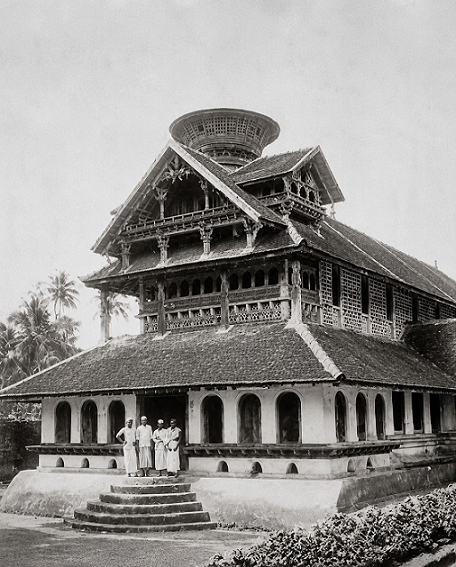
- Odathil Palli (Mosque), Thalassery (AI-Assisted Restoration from an Archival Image)
From the outside, the mosque reflects the graceful proportions of Kerala's traditional temple architecture rather than the monumental domes commonly associated with West Asian mosques. This architectural choice speaks to the unique evolution of Islamic architecture in Kerala, where local building traditions blended harmoniously with Islamic religious spaces.
Its grand entrance, known as the Padippura or Vatilmadam, welcomed worshippers through towering wooden pillars that once demonstrated the craftsmanship of Malabar's master carpenters.
The mosque's most celebrated feature was its remarkable copper-plated roof. Instead of conventional roofing materials, flat copper sheets were carefully laid over wooden planks to protect the structure from the heavy monsoon rains. Five beautifully crafted thazhikakkudams crowned the roof, while elegant kalasams adorned its pinnacles—architectural elements commonly found in medieval mosques across Malabar. Although portions of the original copper roofing have since been replaced because of weathering and corrosion, the mosque continues to preserve much of its historic character.
Wood is the soul of Odathil Palli.
More than sixty percent of the mosque was built entirely from teak. Massive timber beams span the prayer hall without interruption, while intricately carved wooden ceilings, staircases, columns, and balconies display the extraordinary skill of Kerala's traditional craftsmen. Some of the enormous cross-beams stretching across the prayer hall were carved from single pieces of teak, demonstrating both engineering excellence and artistic refinement.
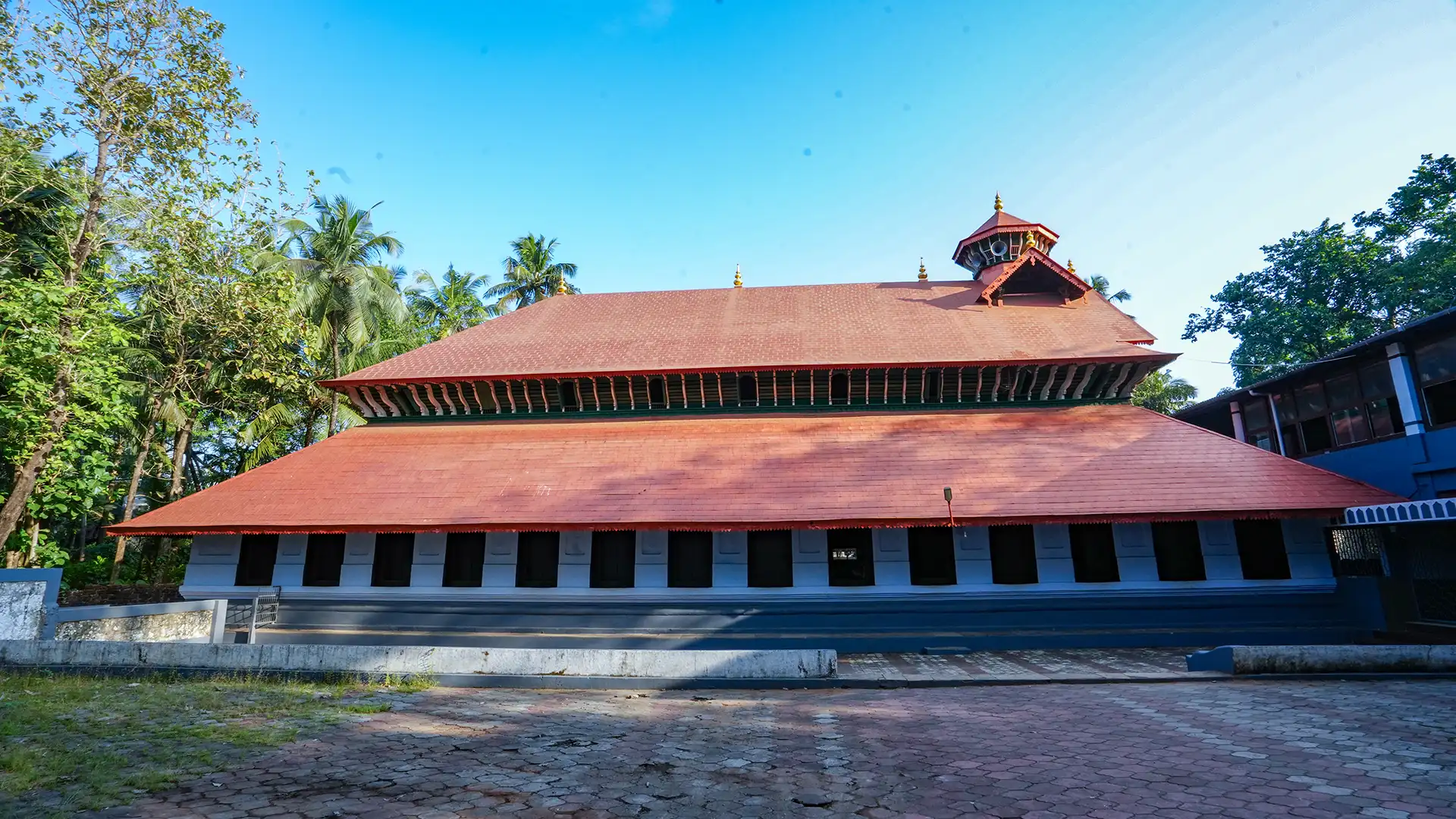
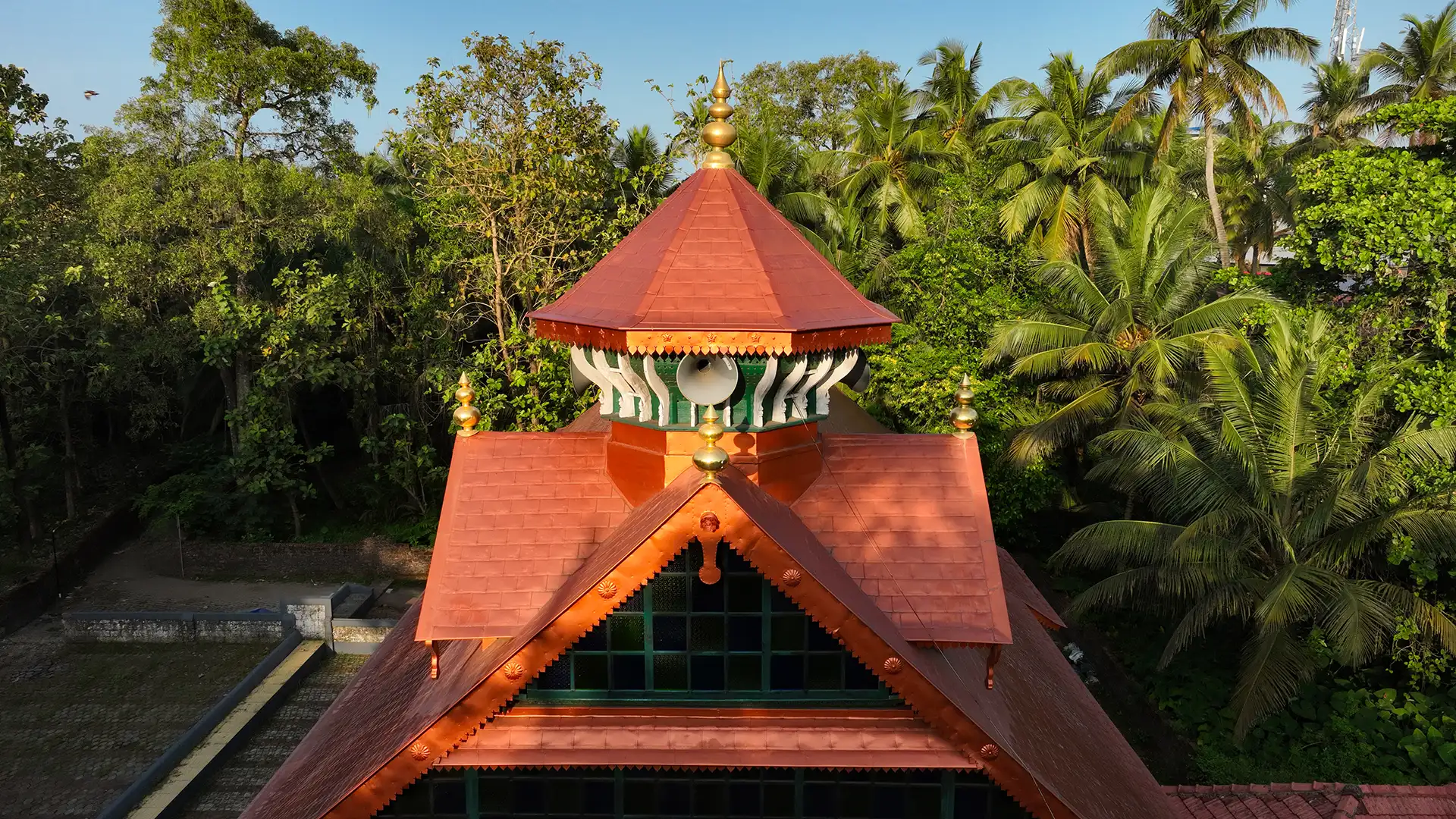
- Odathil Palli and it's thazhikakkudam (Image: Kerala Tourism)
At the heart of the mosque stands an exquisitely carved mimber, the pulpit from which the Friday sermon is delivered. Crafted by local artisans, it remains one of the finest surviving examples of traditional woodwork in Kerala's mosque architecture.
One of the most enduring legends associated with the mosque speaks of friendship beyond faith.
According to tradition, when political conflicts threatened the Kolathiri royal family, Moosa Kakka provided them with refuge and arranged their safe passage to Travancore aboard his own ships. In gratitude, the Raja of Travancore is believed to have presented Moosa Kakka with valuable teak timber, which was used in constructing the mosque. The ruler is also said to have supported the family's commercial revival in southern Kerala by granting land and financial assistance. These connections helped shape a culture of coexistence that became one of the defining features of the Malabar Coast.
Within the eastern courtyard of the mosque lie the tombs of Moosa Kakka and his two wives.
The architectural legacy of the Keyis extends well beyond Odathil Palli. Their warehouses, residences, mosques, and commercial buildings transformed Thalassery into one of the most cosmopolitan ports of the Indian Ocean.
Mayankutty Elaya: The Visionary Merchant Who First Brought the Qur'an into Arabi-Malayalam
The story of the Keyi Rubath in Mecca cannot be told without story of the man who built it - Mayankutty Keyi, better known as Mayankutty Elaya. Remembered as one of the most distinguished members of the Keyi family, he inherited not only a flourishing maritime empire but also a deep commitment to scholarship, charity, and public service.
Born into one of the wealthiest merchant families on the Malabar Coast, Mayankutty was the son of Abdul Qadir Keyi, an eminent trader who ensured that his son received an exceptional education. Distinguished scholars were invited to tutor the young heir, nurturing in him a profound appreciation for Islamic learning alongside the commercial traditions of the family. While he would eventually become an accomplished merchant, Mayankutty's greatest ambition extended beyond trade—it was to make religious knowledge accessible to ordinary people.
During the nineteenth century, most Muslims in Kerala recited the Qur'an in Arabic, yet many could not fully understand its meaning. Mayankutty believed that every believer should be able to engage with the sacred text in a language familiar to them. With this conviction, he embarked on an extraordinary intellectual undertaking: translating the Holy Qur'an into Arabi-Malayalam—Malayalam written in a modified Arabic script that had long served as the literary language of Kerala's Mappila Muslim community.
The work demanded immense patience and scholarship. Over fifteen years, Mayankutty carefully completed the translation, making him one of the earliest—and widely regarded as the first—to render the Qur'an into Arabi-Malayalam.
The translation, however, challenged prevailing religious attitudes of the time. Many orthodox scholars considered the effort controversial and opposed the circulation of the work. Yet Mayankutty remained steadfast. Refusing to abandon his vision, he printed additional copies and continued to distribute them, convinced that knowledge should never be restricted to a privileged few.
His determination reflected the qualities that defined his life: intellectual courage, generosity, and an unwavering commitment to the welfare of his community.
Mayankutty's influence extended beyond scholarship. Through marriage, he became closely connected with Kerala's only Muslim royal household—the Arakkal Royal Family of Kannur.
The Arakkal dynasty, unique in following a matrilineal system of succession, was headed by its senior-most member regardless of gender. When the ruler was a woman, she bore the title Arakkal Beevi, while her husband was honoured with the title Elaya, signifying the royal consort. Following his marriage into the royal family, Mayankutty came to be widely known as Mayankutty Elaya, a title that reflected both his royal association and the longstanding alliance between the Arakkal rulers and the Keyi merchant family.
The close relationship between these two influential families symbolised the interconnected world of commerce, politics, and culture that flourished along the Malabar Coast. Together, they helped shape the maritime history of northern Kerala and strengthened the region's enduring ties with the wider Indian Ocean.
In 1870, Mayankutty embarked on the pilgrimage to Mecca, entrusting the management of the family's extensive commercial empire to his brother before leaving Kerala. The journey would prove transformative. Witnessing the hardships faced by pilgrims from the Indian subcontinent, he resolved to create a permanent charitable institution near the Holy Mosque—an endowment that would serve generations of travellers long after his lifetime.
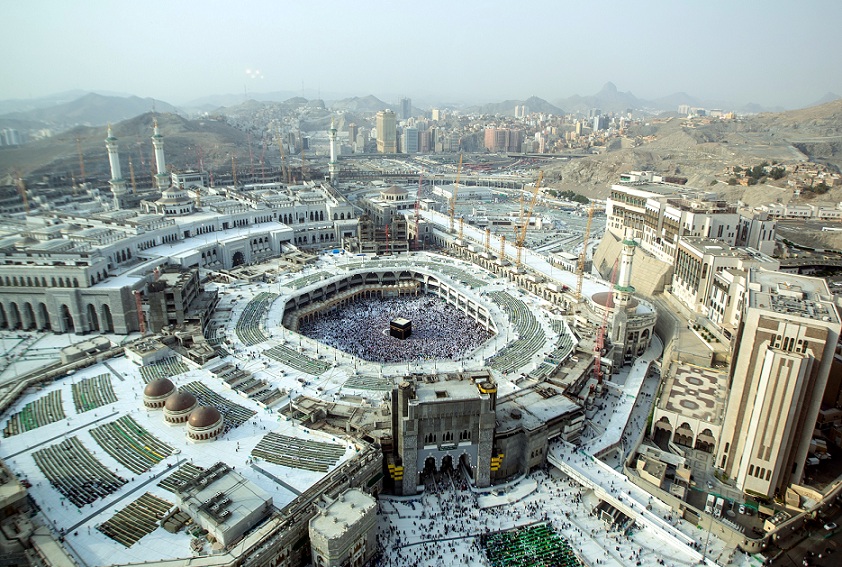
- Mecca (Image: Wikipedia)
After acquiring land near the Kaaba and establishing the Keyi Rubath, Mayankutty appointed Moosa Haji Malabari, a trusted Malayali, as its Nazir (custodian and administrator). Confident that the institution would continue to fulfil its charitable mission, he returned to Kerala, leaving behind not merely a building but a living legacy of service.
Through both his scholarship and his charitable vision, he transformed the prosperity of the Malabar Coast into an enduring gift for generations of pilgrims—one of the finest examples of Kerala's contribution to the shared heritage of the Islamic world.
An Enduring Legacy: The Story of the Keyi Rubath and the Unfinished Chapter in Mecca
For nearly a century, the Keyi Rubath stood as a quiet symbol of Kerala's contribution to the pilgrimage traditions of Mecca. Thousands of pilgrims, particularly from the Malabar Coast, found shelter within its walls, carrying with them memories of a charitable institution founded by a merchant whose vision reached far beyond the shores of India.
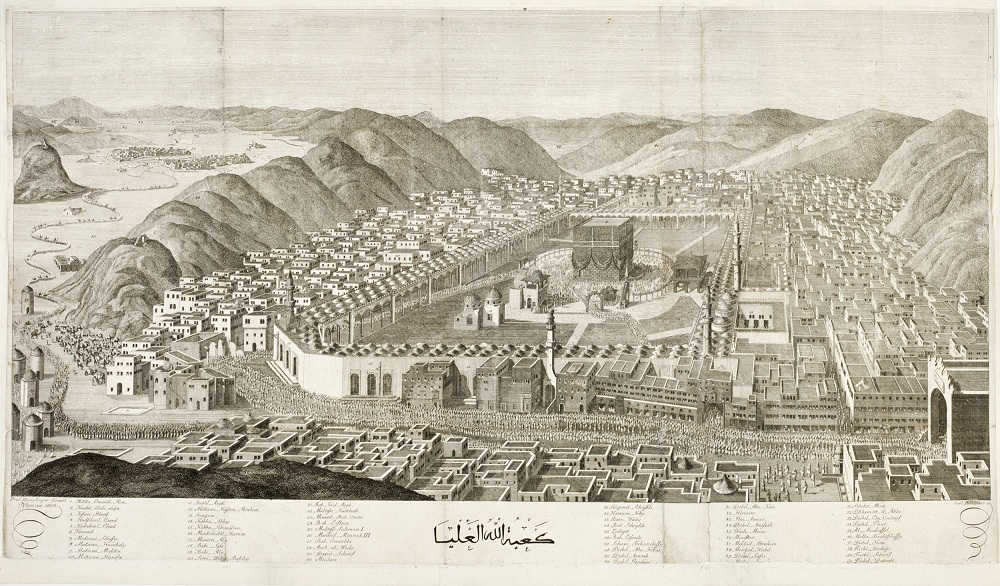
- A view of Mecca (Image: Khalili Collections)
Yet, like Mecca itself, the city continued to evolve.
The discovery of vast oil reserves in Saudi Arabia during the twentieth century transformed the Kingdom and ushered in an era of unprecedented development. As the number of pilgrims grew dramatically, the Saudi government launched successive expansion projects around Masjid al-Haram, reshaping the urban landscape of the Holy City.
The Keyi Rubath was among the many historic buildings affected by these changes.
The original rubath, situated close to the Kaaba, was acquired in 1956 as part of the expansion of the Grand Mosque. In exchange, the Saudi authorities allotted another parcel of land slightly farther from the original site, where a new Keyi Rubath was established so that its charitable mission could continue.
A little over a decade later, Mecca entered another phase of large-scale redevelopment. During the early 1970s, the second property was also acquired for the continuing expansion of the Holy Mosque. Official records indicate that financial compensation was deposited with the Awqaf (Waqf) Department, to be held in trust until the lawful heirs of the endowment could be identified.
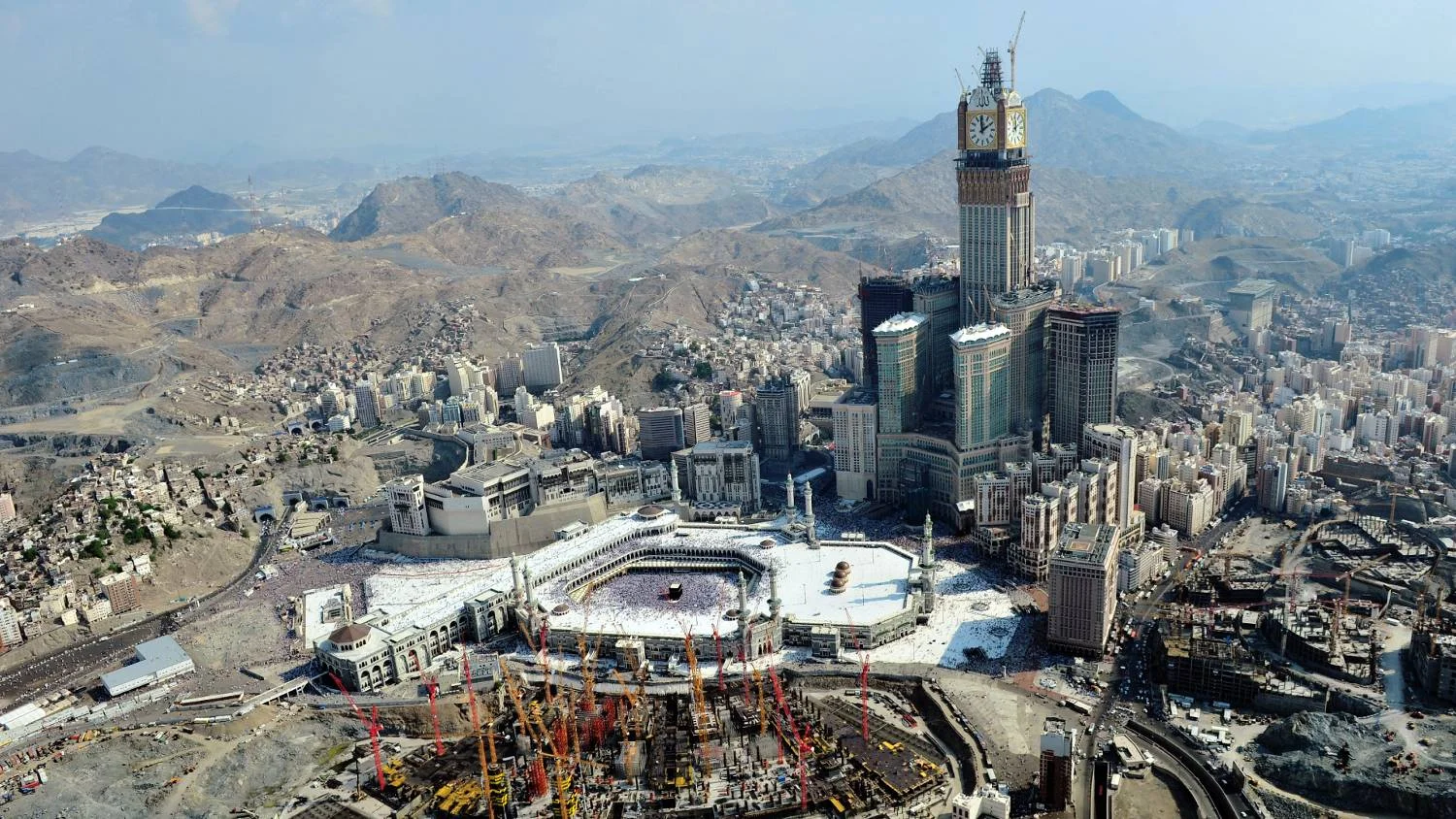
- Recent Developemts in Mecca (Image: Middle East Eye)
It was at this point that the story entered an entirely new chapter.
Two prominent families from Kerala—the Keyis of Thalassery, Mayankutty's paternal family, and the Arakkal Royal Family, into which he had married—each asserted claims connected to the endowment. The matter was further complicated by differences between Kerala's traditional matrilineal customs, the provisions of Indian inheritance law, and the legal framework governing inheritance and charitable endowments in Saudi Arabia.
According to the Keyi family's position, Mayankutty died without surviving children, making his sister's descendants the rightful heirs under the family's matrilineal tradition. The Arakkal family, however, has maintained that Mayankutty was survived by children and that inheritance should therefore follow a different legal line. These competing claims have remained the subject of legal and historical debate for decades.
The exact value of the compensation held in connection with the Keyi Rubath has also become a subject of widespread public interest and speculation. Official records from 1971 indicate that approximately 1.4 million Saudi Riyals had been deposited. Over the years, media reports have suggested widely differing estimates of what the present-day value of the property or compensation could represent, although no authoritative public valuation has been confirmed.
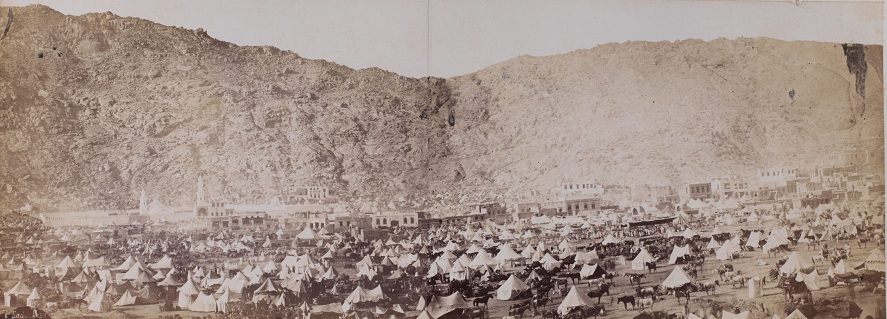
- The pilgrims at Mina on the day of the big feast - AD 1880 (Image: Khalili Collections)
Successive efforts by members of both families, along with interventions from political leaders and government authorities in India, have yet to produce a final resolution. More than half a century after the acquisition of the property, the question of its legal succession remains unresolved.
Yet, beyond questions of ownership and compensation, the true legacy of the Keyi Rubath lies elsewhere. It lives in the extraordinary story of a merchant family from the Malabar Coast whose wealth, earned through the spice trade of the Indian Ocean, was transformed into a charitable institution in the holiest city of Islam.
The Keyi Rubath stands as a remarkable reminder that the relationship between Kerala and the Arab world was never a one-way exchange. While Arab merchants profoundly shaped the history and culture of the Malabar Coast, Kerala, too, left an enduring imprint on the Holy Cities through its merchants, scholars, pilgrims, and benefactors.
City Heritage's Perspective and Contribution
For City Heritage, the story of the Keyi Rubath is far more than a dispute over ownership or compensation—it is a remarkable chapter in Kerala's maritime and cultural history that deserves greater recognition. Through its research on the Indian Ocean trade, the Mappila merchant networks, and the shared heritage between Kerala and the Arab world, City Heritage seeks to document and preserve this extraordinary legacy for future generations.
According to Muhammed Shihad, Founder of City Heritage and co-author of a book on the history of the Keyi and Arakkal families, the significance of the Keyi Rubath extends well beyond its monetary value. As he observed in an interview with the BBC, "If they don't get the compensation, it would be worth openly recognising the family's and the region's connection to this noble act." For City Heritage, the Rubath represents one of the finest examples of Kerala's contribution to the wider Islamic world—a legacy of philanthropy, maritime enterprise, and cross-cultural exchange that transformed the prosperity of the Malabar Coast into a lasting service for pilgrims in Mecca.
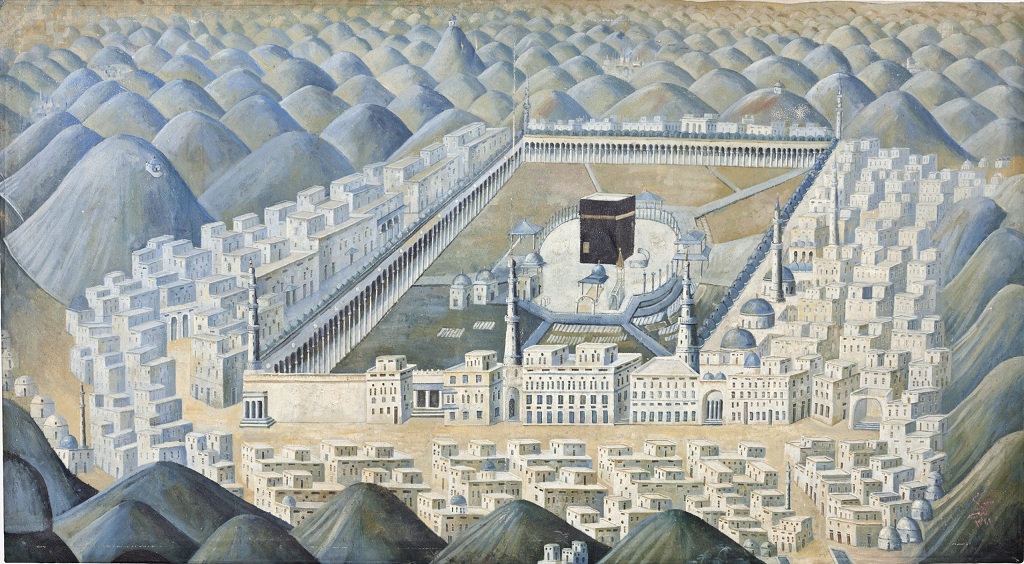
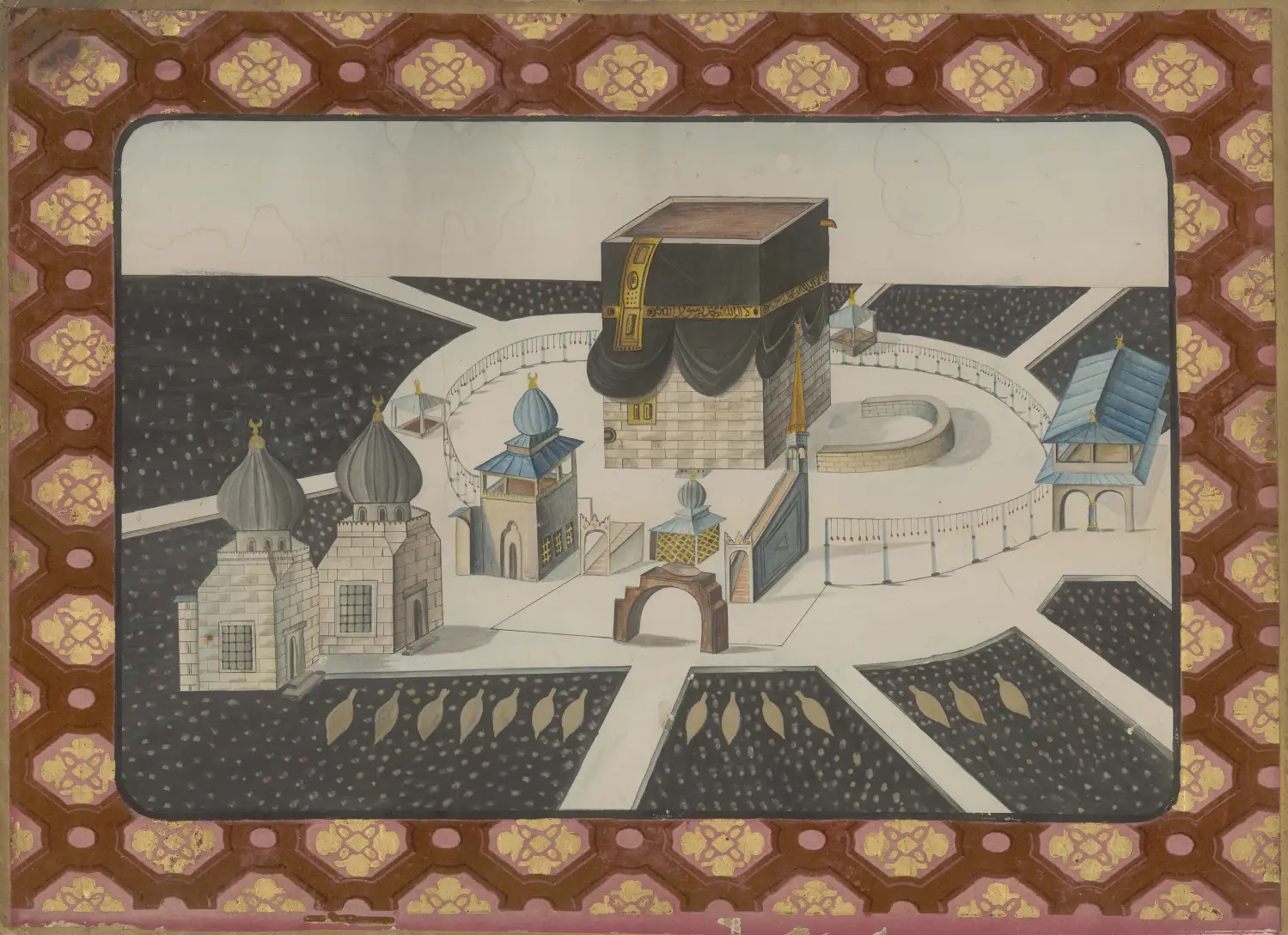
- A Painting of the Mecca from 1922 (Image: Khalili Collections)
City Heritage also believes that any discussion regarding the legal succession of the Keyi Rubath should be grounded in historical evidence and authentic archival records. As Muhammed Shihad noted in The Week, "Only the Saudis have the original documents. The day someone can provide matching proof, the matter is settled." Rather than taking sides in the ongoing dispute, City Heritage advocates for rigorous historical research, institutional collaboration, and the preservation of documentary evidence.
Above all, the organisation hopes that the story of the Keyi family and the Keyi Rubath will be remembered as an enduring symbol of the centuries-old connections between Kerala and the Holy City of Mecca.
References:
1. BBC News: The decades-old intrigue over an Indian guest house in Mecca: https://bbc.com/news/articles/cwy3gqz48qzo
2. The Week News: Two Muslim families from Kerala fight over Saudi money equal to billion dollars: www.theweek.in/magazine/theweek/cover/2021/10/28/two-muslim-families-from-kerala-fight-over-saudi-money-equal-to-billion-dollars.html
3. Rubath Nizam Hyderabad: https://hrubath.org/home/main-page/photo-gallery/
4. Keyi Rubat action Committee: https://www.keyirubathactioncommittee.org/
5. Odathil Mosque: https://www.sahapedia.org/keyis-and-odathil-mosque-thalassery
6. Bidding adieu to Khubba Melibari — a beacon of knowledge:https://saudigazette.com.sa/article/599297/SAUDI-ARABIA/Bidding-adieu-to-Khubba-Melibari-mdash-a-beacon-of-knowledge
7. The Keyi Mappila Muslim Merchants of Tellicherry and the Making of Coastal Cosmopolitanism on the Malabar Coast: https://brill.com/view/journals/arwh/5/2/article-p145_145.xml?language=en&srsltid=AfmBOorYUDZ2uN-HHLBlP8gx17hFf0JQjNphScF071cyB9OVqf9OuDNz
8. Rubath Nizam Hyderabad: https://hrubath.org/home/




 (1).png)
© Copyright 2026 City Heritage. All rights reserved.
Website designed by TNM Online Solutions.
If you have any enquiry, feel free to ask, and we'll provide you with a prompt and concise response.