
Yasin Asharaf P & Muhammed Shihad | Published on 11/03/2026
“How many times have I told you to pluck the pepper before it falls? Stop playing and come here!”
My mother’s voice echoed across the yard.
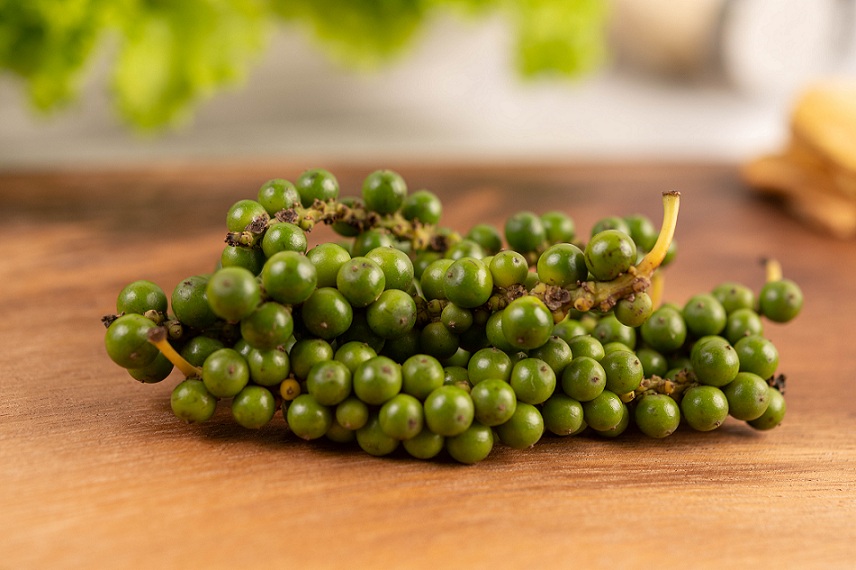
It was the month of February, the season when pepper vines grow heavy with their precious clusters. Around our house, once every tree carried a climbing vine of pepper, now few are left.
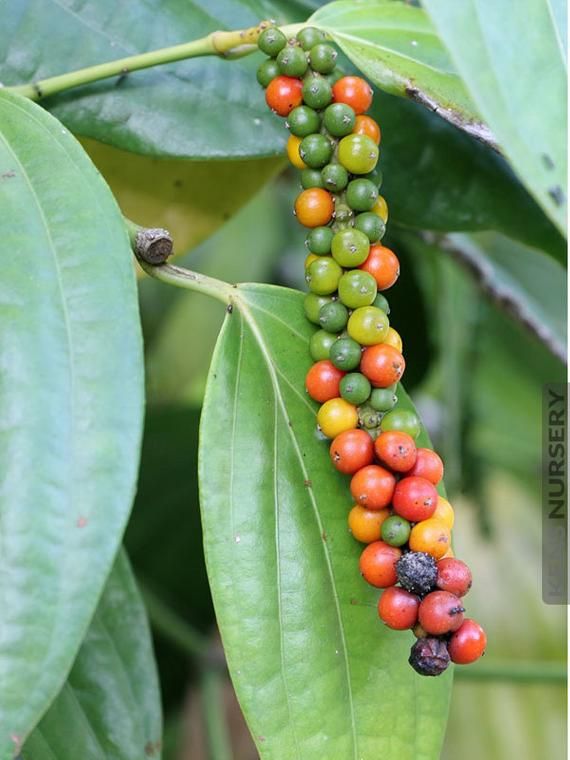
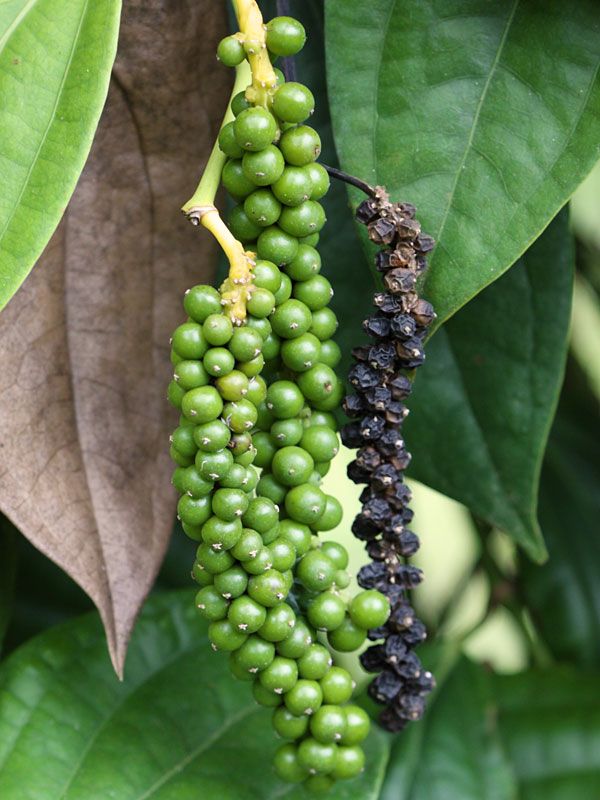
Some pepper bunches were still deep green, some had turned orange, a few were reddish, and only a small number had already begun to darken toward black. The vines climbed confidently up the tall trees, especially the jackfruit trees that stood like guardians of the yard. Tiny jackfruits had just begun to appear on their trunks—light green and small, promising the coming season of abundance.
Pepper harvesting was never a simple task. I brought the ladder, a coir rope, and a cloth pouch tied around my waist with the rope. This pouch hung like a small basket in front of me, ready to collect the pepper bunches as I climbed.
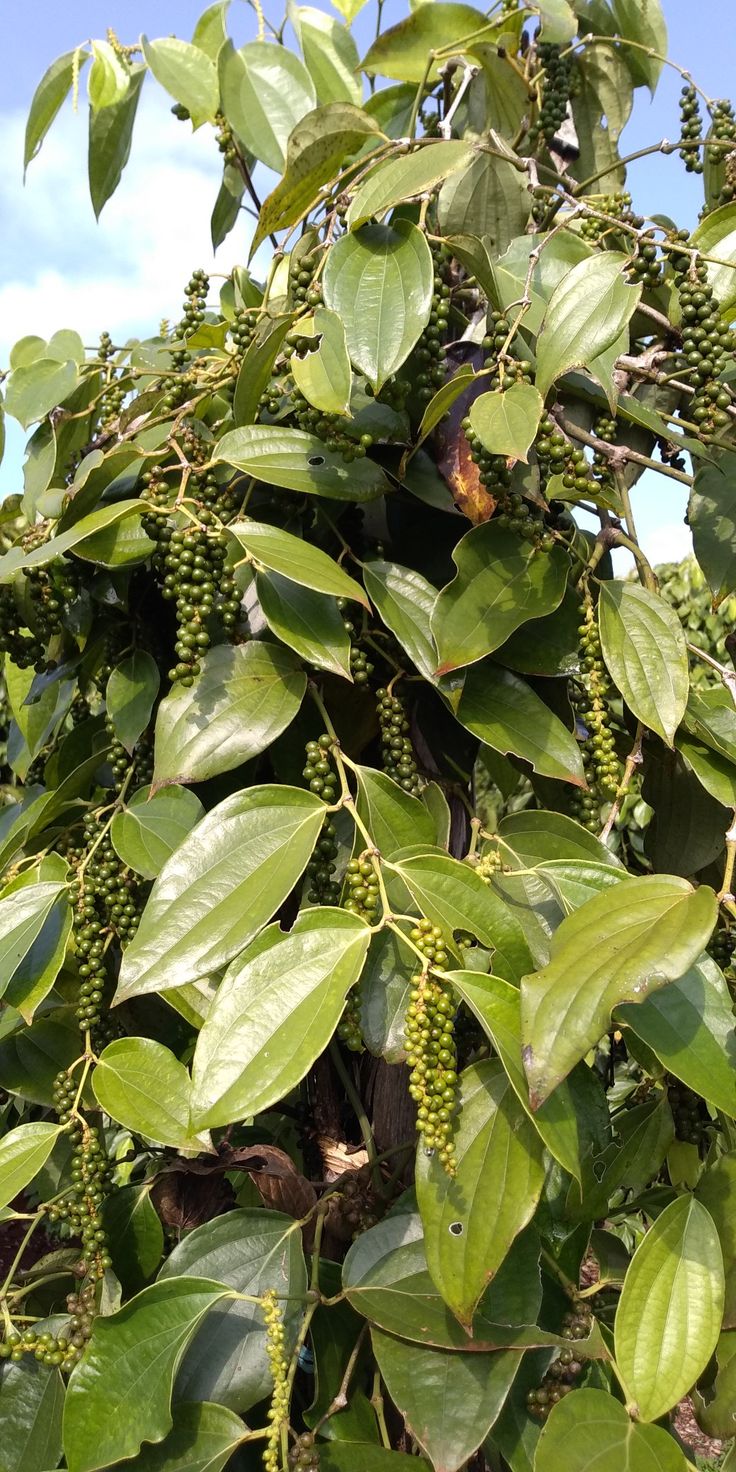
Starting from the lower branches, I slowly climbed upward, using the ladder and the tree trunk for support. The work demanded patience. Each pepper bunch had to be plucked carefully, one by one. Sometimes ants would bite, reminding me that the trees were their home too. High above, birds circled nervously, guarding their tiny nests hidden among the branches.
From the bottom to the very top of the tree, I worked steadily. By the time I climbed down, my pouch was heavy with pepper clusters. All the harvested bunches were gathered together in a large heap.
And later at night, the bunches were spread across the smooth marble floor of the house courtyard. Then came another traditional method — we gently trampled the pepper with our feet, separating each tiny berry from the stem. What remained on the floor looked like a rainbow of spices —green, yellow, orange, red, and black peppercorns, all mixed together.
The next step belonged to the sun. My mother spread the pepper across mats in the open yard. Day after day, under the powerful sunlight of the Malabar coast, the colors slowly disappeared. The peppercorns dried, darkened, and shrank into the familiar wrinkled black pearls of spice.
From the entire harvest, we usually collected three or four kilograms of dried pepper. That was enough for almost a whole year of cooking in our kitchen. If there was more than we needed, my mother would pack some for relatives who lived near the beachside, where pepper vines could not grow easily.
Pepper was everywhere in our food. It flavored our curries, fried snacks, and traditional dishes. In recent times, it even found its place in Arabian-influenced foods like Kabsa and Mandi, dishes that arrived in Kerala along with the journeys of migrant workers returning from the Gulf.
Visitors often say the same thing after tasting Kerala food:
“Oh, it is very spicy!”
But in Kerala, spicy does not simply mean hot. It means something richer. It means the deep presence of the spices that grow in our land —pepper, cardamom, cinnamon, ginger, garlic, and turmeric.
For centuries, these spices grew along the lush hills of Western Kerala and traveled from the Malabar Coast to distant lands. From as early as the first century, traders carried them across oceans to Arabia, Africa, and Europe.
Pepper, the most precious among them, was once called “Black Gold.” Its value was so great that kingdoms competed to control its trade. Ships sailed thousands of miles just to reach the spice ports of Malabar.
Archaeological discoveries reveal that pepper from the Malabar region had already reached the ancient world more than three thousand years ago. One remarkable example comes from ancient Egypt. When archaeologists examined the mummy of Pharaoh Ramesses II, who died in 1213 BCE, they discovered peppercorns placed inside the ruler’s nose during the mummification ritual. The spice had traveled thousands of kilometres from the forests of Kerala to the Nile Valley — a powerful symbol of the early spice trade.
Such stories remind us that the Spice Route was more than a trade network. It was a bridge that connected the Malabar Coast to the entire world.
Pepper and the Spice Route: Malabar at the Centre of Global Trade
The story of pepper begins in the lush green landscapes of Kerala, along the southwestern edge of India. In the dense forests of the Western Ghats, a humble climbing vine grows quietly, winding itself around tall trees and thriving in the warm rains and fertile soil of the mountains. This vine, known to the world as black pepper, has for thousands of years been the natural treasure of these hills.
From these forests, the tiny peppercorn began an extraordinary journey — one that would eventually connect distant civilizations across oceans.
When we look at the world map today, the Malabar Coast may appear as a narrow strip of land along the Arabian Sea. Yet for centuries, this coastline stood at the very heart of one of the greatest global networks in history: the Spice Route.
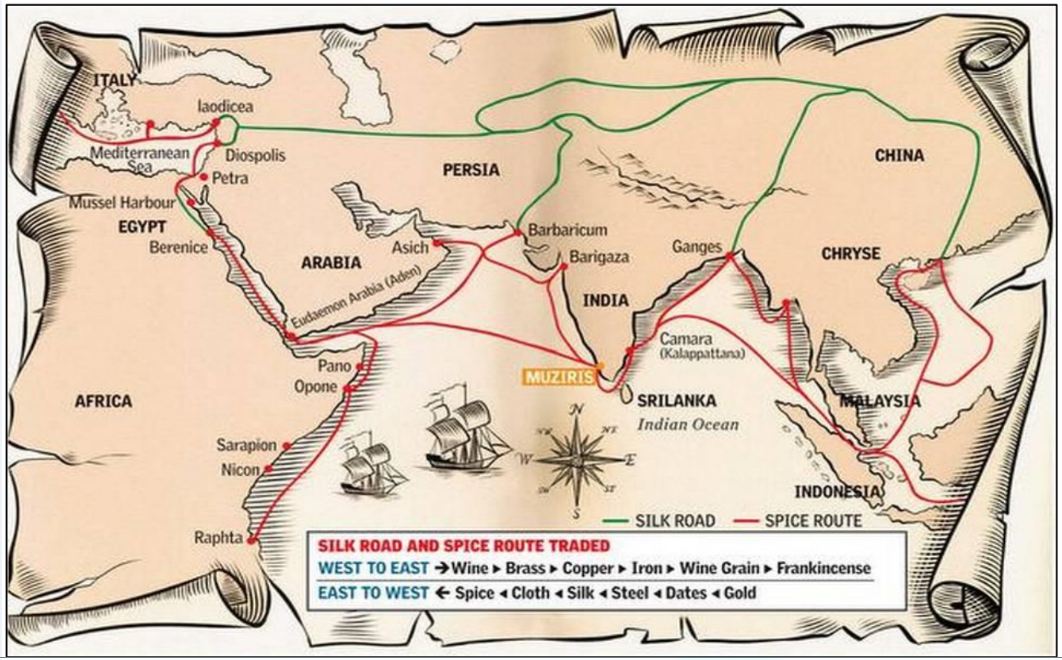
- Map depicting the ancient spice route, showcasing the trade links between Europe, Africa, and Asia. It marks key ports and traded goods like spices, silk, and metals along the pathways of the Silk Road and Spice Route. -
Malabar’s geography made it uniquely important. Positioned between the great civilizations of China and Southeast Asia in the east and the powerful regions of the Middle East, Africa, and Europe in the west, it became a natural meeting point for maritime trade. This strategic location transformed the Malabar Coast into a vibrant crossroads of cultures, commerce, and navigation.
Long before European explorers began searching for sea routes to India, Arab merchants had already mastered the waters of the Indian Ocean. Using the reliable rhythm of the monsoon winds, they sailed regularly between the ports of the East and the markets of the Mediterranean world. Acting as skilled intermediaries, they transported goods from India and China to the kingdoms of West Asia, North Africa, and Europe.
Among the many treasures carried across these waters, one product from the hills of Kerala stood above all others. It was black pepper — the spice that would earn the legendary title of “Black Gold.”
Pepper grew abundantly along the slopes of the Western Ghats. From these forested mountains, the spice made its way toward the coast through a network of rivers that flowed down to the Arabian Sea. This natural geography made transportation remarkably efficient. Merchants gathered the spices in bustling port towns, where ships and traditional dhows waited to carry them across the oceans.
By around 1000 BCE, Arab traders had come to dominate much of this spice trade. They carried pepper from the Malabar Coast to distant markets in Egypt, the Middle East, and North Africa. Because pepper could grow only in specific tropical environments, it remained extremely rare in other parts of the world.
For many centuries, pepper was not an everyday ingredient. It was a luxury enjoyed only by the wealthy — kings, emperors, and powerful merchants who could afford its high price. During the rise of the Roman Empire, the demand for pepper grew even stronger. When Rome conquered Egypt in 30 BCE, Roman merchants gained direct access to the trade routes of the Indian Ocean. Soon, fleets of Roman ships began sailing across the sea to the ports of the Malabar Coast, seeking the prized spice.
The Roman writer Pliny the Elder, writing in the first century CE, described the astonishing value of pepper in the markets of Rome. Even the most common black pepper commanded high prices, while rarer varieties such as white pepper and long pepper were even more costly. Transporting spices across vast oceans—without modern ships or navigation—made the trade both risky and expensive.
Across the centuries, the Spice Route stretched like a great maritime highway linking continents and civilizations, and at its heart stood the Malabar Coast. Traders and travellers from many lands found their way here—Egyptians, Chinese, and Arab merchants who sailed with the monsoon winds, carrying goods, ideas, and cultures across the Indian Ocean.
In time, European powers too were drawn by the fame of Malabar’s precious spices. In 1498, the Portuguese navigator Vasco da Gama arrived on the shores of Calicut, marking a turning point in the history of the region. What had long been a network of trade and cultural exchange soon began to transform into something very different.
With the arrival of the Portuguese—and later the Dutch, English, and French—the spice trade gradually shifted from a commercial enterprise into a colonial ambition. Competition for control over the lucrative spice markets intensified, and the peaceful rhythm of maritime trade gave way to conflict, rivalry, and political upheaval along the Malabar Coast.
Harbours of Spice: The Ancient Ports of the Malabar Coast
Along the shores of the Malabar Coast, where the Arabian Sea meets the spice-scented winds of the Western Ghats, a remarkable chain of port cities once flourished. Among the most celebrated were Muziris, Tyndis, and Naura — harbours that appeared on the maps and travel accounts of ancient civilizations.
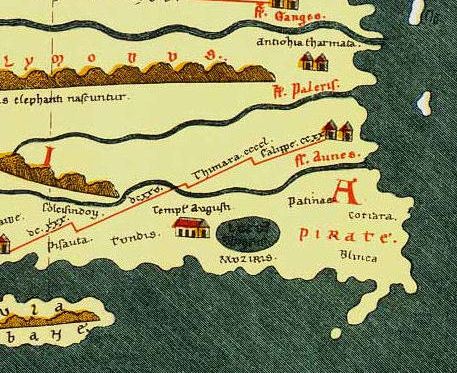
- Peutinger Table depicting the ancinet ports of Malabar -
Of these, Muziris, believed to have been located near present-day Kodungallur, stood as the greatest of them all. Classical writers from the Mediterranean world described it as one of the most vibrant trading centres of the ancient Indian Ocean. Greek and Roman sailors crossed the vast sea from the Red Sea ports of Egypt, riding the powerful monsoon winds to reach this legendary harbour. These voyages, guided by seasonal winds, could take nearly seventy days — a remarkable journey for the ancient world.
One of the most vivid descriptions of Muziris comes from a Greek navigational guide written in the first century CE, known as the Periplus of the Erythraean Sea. The author describes a bustling port where ships arrived carrying gold, wine, and luxury goods from the Roman world, and departed laden with pepper and spices from the forests of Malabar. The Roman historian Pliny the Elder even complained that vast amounts of Roman gold were flowing eastward to India in exchange for these precious spices.
For centuries these accounts remained part of historical memory — until archaeology began to bring the story back to life. At Pattanam, a village about 25 kilometres north of Kochi, excavations have uncovered remarkable evidence of this ancient maritime world. Since 2007, archaeologists working with the Kerala Council for Historical Research have unearthed more than 129,000 artefacts, some dating back nearly two thousand years. Among the discoveries were fragments of Roman amphorae — large clay jars used to transport wine and olive oil — along with pottery from Egypt, Mesopotamia, and West Asia.
Even more fascinating were the remains of a brick-lined wharf where ships once docked, wooden bollards used to tie vessels, and a six-metre-long wooden canoe preserved in waterlogged soil. Nearby, archaeologists found traces of ancient cargo: grains of black pepper, cardamom, and rice — silent witnesses to the spice trade that connected Malabar to distant continents.
These discoveries echo descriptions found in early Tamil Sangam literature such as the Akanānūru, which speaks of a port called Muchiri, where ships arrived with gold and jars of wine and returned carrying pepper. Archaeological evidence suggests that this port settlement was first occupied around 1000 BCE and remained active until about the 10th century CE, trading with regions across the Mediterranean, West Asia, Africa, and Southeast Asia.
Further north along the coast lay another important harbour known as Tyndis. Classical writers such as Ptolemy, Pliny, and the author of the Periplus all mention this port, placing it roughly ninety kilometres north of Muziris. Early Tamil literature also refers to a harbour called Tondi, which many historians believe may be the same place. Although its exact location remains uncertain today, the repeated references suggest that Tyndis was once a thriving centre within Malabar’s maritime network.
At the northern edge of this trading world stood Naura, believed to correspond to present-day Kannur in North Kerala. The Periplus of the Erythraean Sea describes it as an important port at the entrance to a region Greek writers called Limyrike — the pepper coast of India. From Naura, traders exported spices, especially pepper, along with valuable timber to merchants from the Roman Empire, the Arabian Peninsula, and the Mediterranean world. Some traditions even link the region’s timber to the legendary construction of Solomon’s Temple.
Connecting all these ports were the ships of Malabar’s own maritime tradition. In coastal towns such as Beypore, skilled craftsmen built large wooden vessels and Arabian dhows that sailed across the Indian Ocean. When these ships arrived at Malabar’s harbours, they carried goods from distant lands — Roman gold coins, Mediterranean wine, Egyptian glassware, and Mesopotamian pottery. In return, they left with cargoes of pepper, cardamom, and spices that would travel thousands of kilometres to kitchens, temples, and royal courts across the world.
Through these constant exchanges, the Malabar Coast became far more than a trading centre. It evolved into a global cultural crossroads, where merchants, sailors, scholars, and travellers from many civilizations met and interacted.
And at the heart of this story was a tiny berry growing quietly in the forests of the Western Ghats. The story of pepper is therefore not only the story of a spice. It is the story of how a spice transformed global trade, inspired voyages across oceans, and connected the Malabar Coast to the wider world for more than two thousand years.
Recently, this remarkable legacy of Spice Route connected Malabar to the World has found renewed expression in Kochi, where the first International Spice Routes Conference was held. Convened by the Muziris Heritage Project in partnership with the Kerala Tourism Department, the gathering sought to reconnect the many regions once linked by the ancient spice trade. The unveiling of its charter marked the beginning of a new cultural dialogue among nations that had long shared the currents of the Indian Ocean world.
How Pepper Shaped Malabar
The story of pepper is not only about trade and wealth. It is also the story of how the Malabar Coast became one of the world’s most remarkable cultural crossroads.
For centuries, ships from distant lands sailed toward this narrow stretch of coastline in search of the precious spices that grew in the hills of Kerala. But the traders who came to Malabar did not bring only gold and goods. Along with their cargo, they carried languages, beliefs, traditions, architecture, and food from different parts of the world. Malabar welcomed them.
Along with trade came faith. The spice routes that brought merchants to Malabar also carried some of the world’s oldest religions. Judaism arrived early on these shores, and the legacy of that connection still survives in the historic Jewish synagogues of Kochi. Christianity is believed to have reached Kerala in the first century CE, traditionally associated with the arrival of St. Thomas the Apostle, who is said to have established early Christian communities along the coast.
Around the same period of Prophet Muhammed, Islam also arrived through Arab traders. According to tradition, the early Muslim missionary Malik ibn Dinar played an important role in establishing some of the earliest mosques in the region. These faiths did not arrive through conquest but through commerce, dialogue, and peaceful interaction, making Malabar one of the rare places where diverse religious traditions took root side by side.
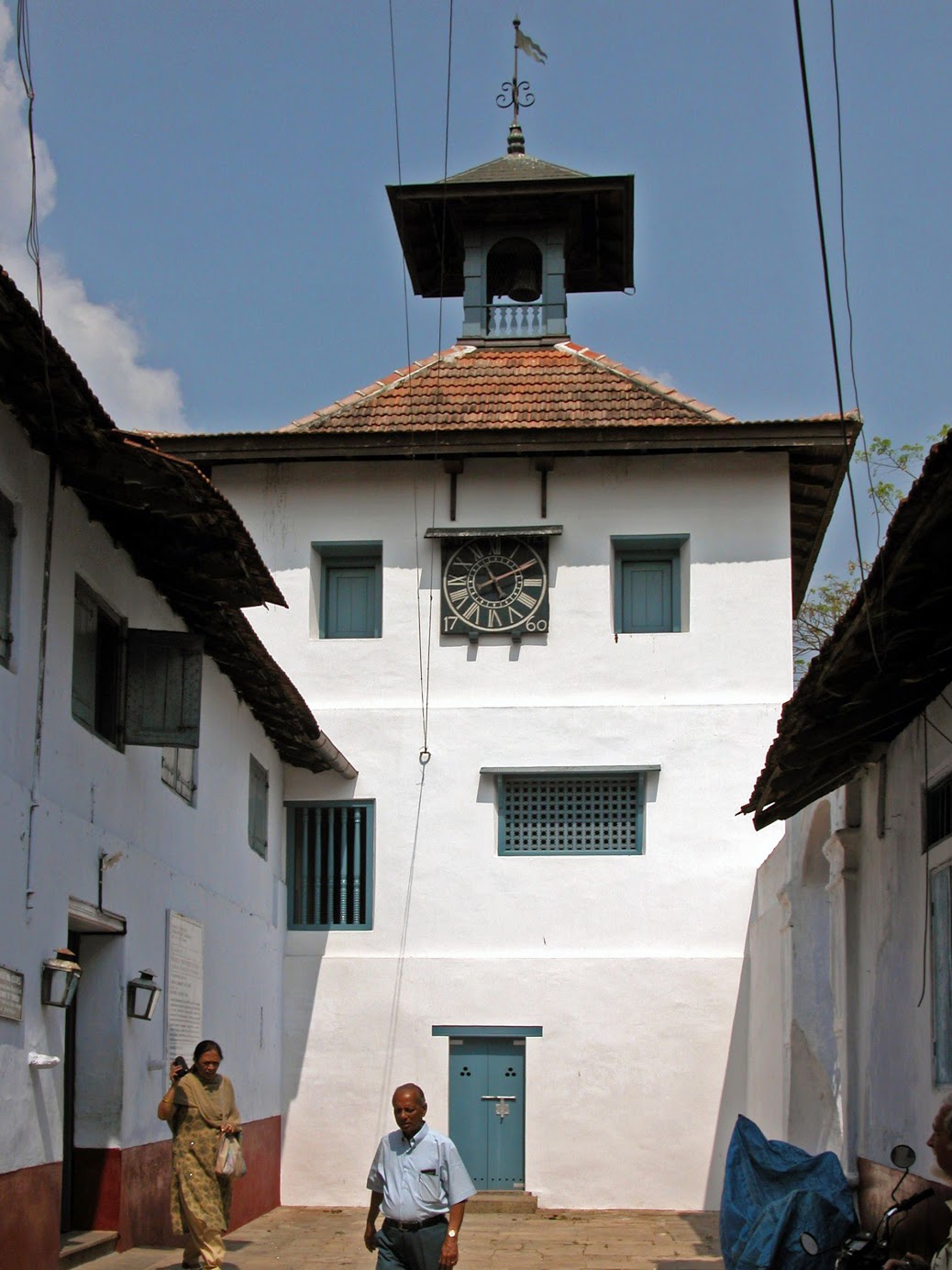
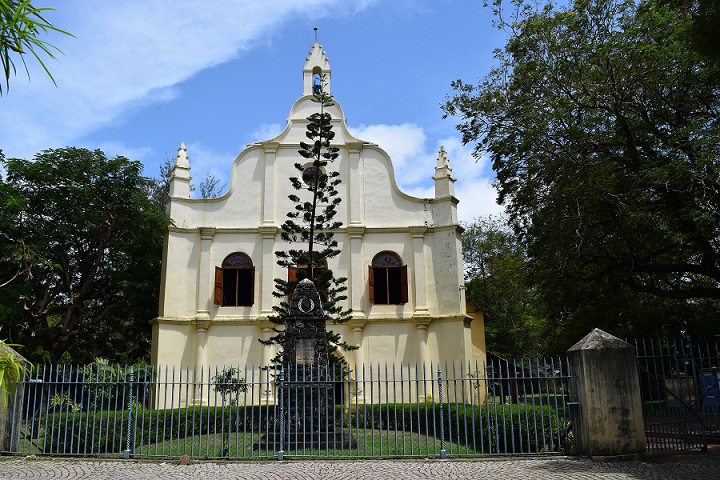
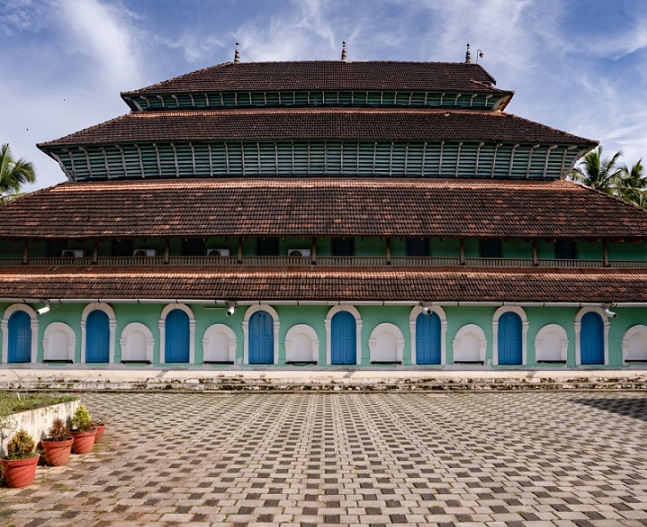
- Jewish synagogues of Mattancherry, St. Francis Church of Fort Kochi and the Mishkal Mosque of Calicut
The rulers and people of the region were known for their openness toward foreign merchants. Traders were treated with respect, allowed to conduct business freely, and often encouraged to settle along the coast. Over time, many of them chose to make Malabar their permanent home.
Gradually, a vibrant mosaic of trading communities began to emerge along the shores. Among them were the Baramis from Yemen, renowned for their expertise in building traditional Arabian dhows. Their shipbuilding skills became closely connected with places like Beypore, where large wooden vessels were constructed for centuries. Another important community was the Dawoodi Bohra Shia traders, who had links to Yemen and Gujarat and played a significant role in commercial networks across the Indian Ocean.
Gujarati merchants also established thriving settlements in trading centres such as Calicut (Kozhikode) and Kochi, creating their own streets, markets, and trading houses that connected Malabar to the wider mercantile world.
Over time, many other communities also came to the Malabar Coast in search of opportunity — Parsis, Sindhis, and merchants from across the Indian Ocean world. They brought with them their own customs and cuisines, which gradually blended with the rich culinary traditions of Kerala. The result was a unique food culture where local spices met global influences, creating dishes that reflected centuries of cultural exchange.
Even today, the historic neighbourhoods of Mattancherry and Fort Kochi stand as living reminders of this multicultural heritage. Within a small geographical space, more than thirty different communities continue to live and work together, preserving traditions that have evolved through generations of interaction.
This interaction gradually shaped what we today call Malabar cuisine, a culinary tradition where global flavours meet local taste. Many of the region’s famous dishes reflect this cultural exchange. Arab traders who frequently visited the coast often settled here, building families and communities. Along with their culture and faith, they brought culinary traditions from the Middle East. Over time, these food practices blended with the local ingredients of Kerala — rice, coconut, and the rich spices of the Western Ghats — creating a unique and vibrant food culture.
The beloved Malabar biriyani, for example, carries traces of Middle Eastern rice traditions but evolved into a completely local dish through the use of Kerala’s spices and cooking styles. Similarly, dishes like pathiri, ghee rice, and seafood delicacies show how coastal life and international connections influenced everyday cooking.
The desserts of Malabar also carry fascinating stories of cultural fusion. One of the most beautiful examples is Muttamala, often called the “golden threads of Malabar.” Made from delicate strands of egg yolk cooked in sugar syrup, the dish reflects techniques that travelled along the spice routes and were adapted into the local culinary tradition.
Even today, the kitchens of Malabar continue to reflect these centuries of exchange. New influences from migrant communities — especially from the Gulf — have introduced dishes like mandi and kabsa, which are now prepared with local spices and flavours. In many ways, Malabar cuisine is a living reminder of its global past.
Through trade, Malabar did not simply export spices to the world. It absorbed the world into its own cultural fabric. Pepper brought ships to its shores, but those ships carried far more than merchandise. They carried people, stories, ideas, and beliefs that gradually shaped the identity of the region.
This long history of exchange shaped Malabar — and later the wider region of Kerala — into one of the most culturally diverse and historically significant landscapes in the Indian subcontinent. In many ways, the story of Pepper is also the story of how global connections created a society built on diversity, coexistence, and shared heritage along the shores of the Malabar Coast.
Welcome to Kerala — Explore the legendary Global Spice Routes along the historic shores of Malabar with City Heritage.
Visit us and Contact:
Visit: www.cityheritage.in
Email: mail@cityheritage.in
Instagram: cityheritage.in
Phone: +91 7356569573, +91 8377024979




 (1).png)
© Copyright 2026 City Heritage. All rights reserved.
Website designed by TNM Online Solutions.
If you have any enquiry, feel free to ask, and we'll provide you with a prompt and concise response.