
Yasin Asharaf P | Published on 16/04/2026
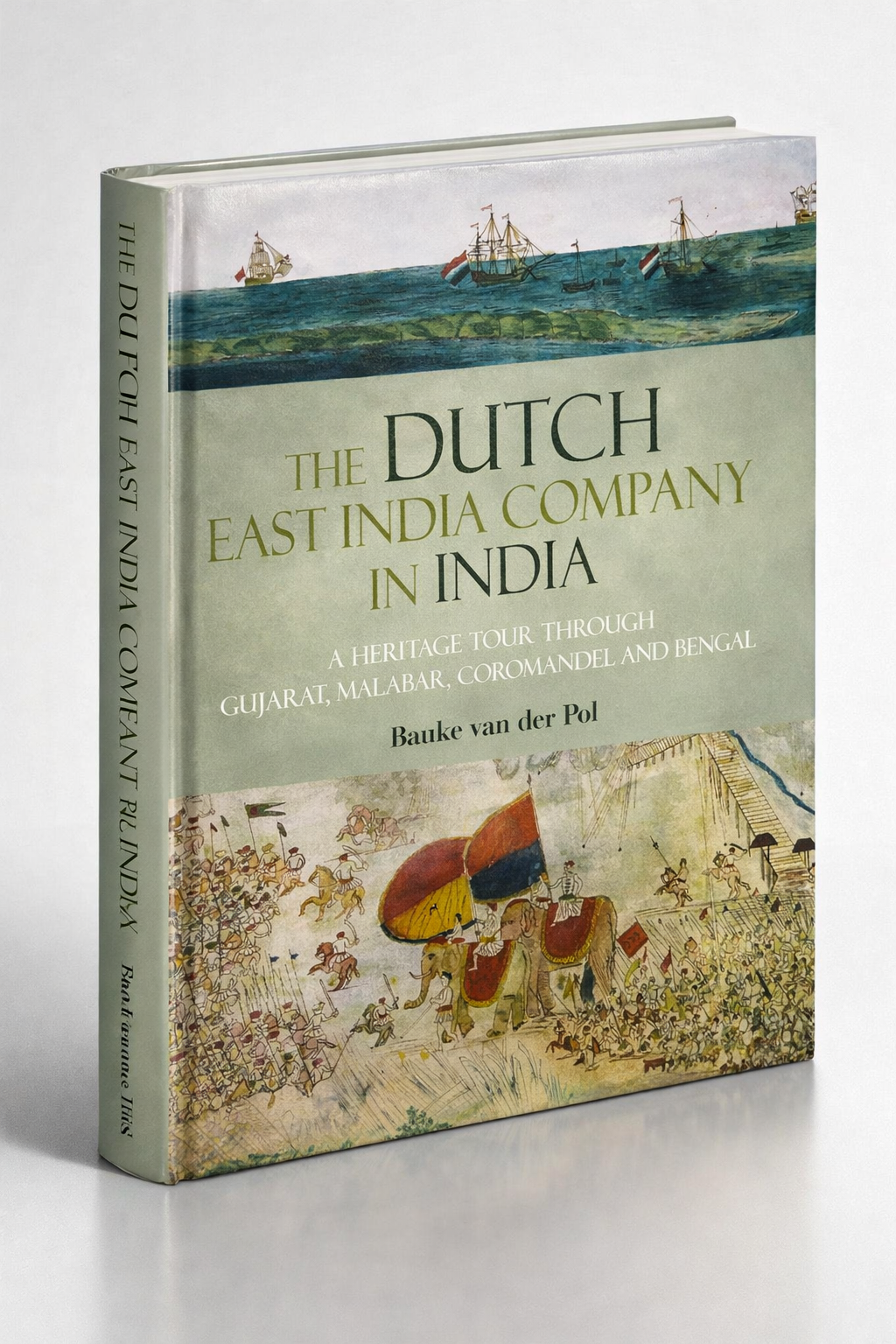
The Dutch Story in Malabar’s History - Book Review of Bauke van der Pol’s 'The Dutch East India Company in India – A Heritage Tour through Gujarat, Malabar, Coromandel and Bengal'
Bauke van der Pol’s 'The Dutch East India Company in India – A Heritage Tour through Gujarat, Malabar, Coromandel and Bengal' is a richly layered travelogue-cum-historical narrative that fills a significant gap in the study of European presence in India. Moving beyond conventional colonial histories dominated by the Portuguese and the British, this work foregrounds the Dutch East India Company (VOC) and its enduring yet often overlooked legacy across the Indian subcontinent, particularly in Malabar.
A cultural anthropologist with decades of engagement with India, Bauke brings an unusual depth to his subject. Having visited the country more than fifty times since 1974 and guided Dutch tourists across its landscapes, his familiarity with both terrain and history is evident. His research, spanning archives in The Hague, Amsterdam, London, Paris, and Kolkata, lends the book academic rigor, while his journeys across India—especially his focused visits in 2009 and 2011—infuse it with the immediacy of lived experience.
At its core, the book is a heritage tour—both literal and intellectual—mapping VOC settlements across four major regions: Gujarat, Malabar, Coromandel, and Bengal. Yet, it is in Malabar that the narrative finds its most evocative and detailed expression, emerging as the heart of Dutch engagement in India.
Tracing Trade, Power, and Cultural Imprints of the Dutch in Malabar
Bauke presents Malabar not merely as a trading zone but as a dynamic theatre of political negotiation, military conflict, and cultural exchange. Beginning with the historic 1604 treaty between Admiral Steven Van Der Hagen and the Zamorin of Kozhikode, the author traces how the Dutch established a foothold through diplomacy and mutual commercial interests. Both sides promised support against the Portuguese and pledged “eternal friendship as long as the sun and moon are in the sky.” The Zamorin assured that trade between them would continue just as long.
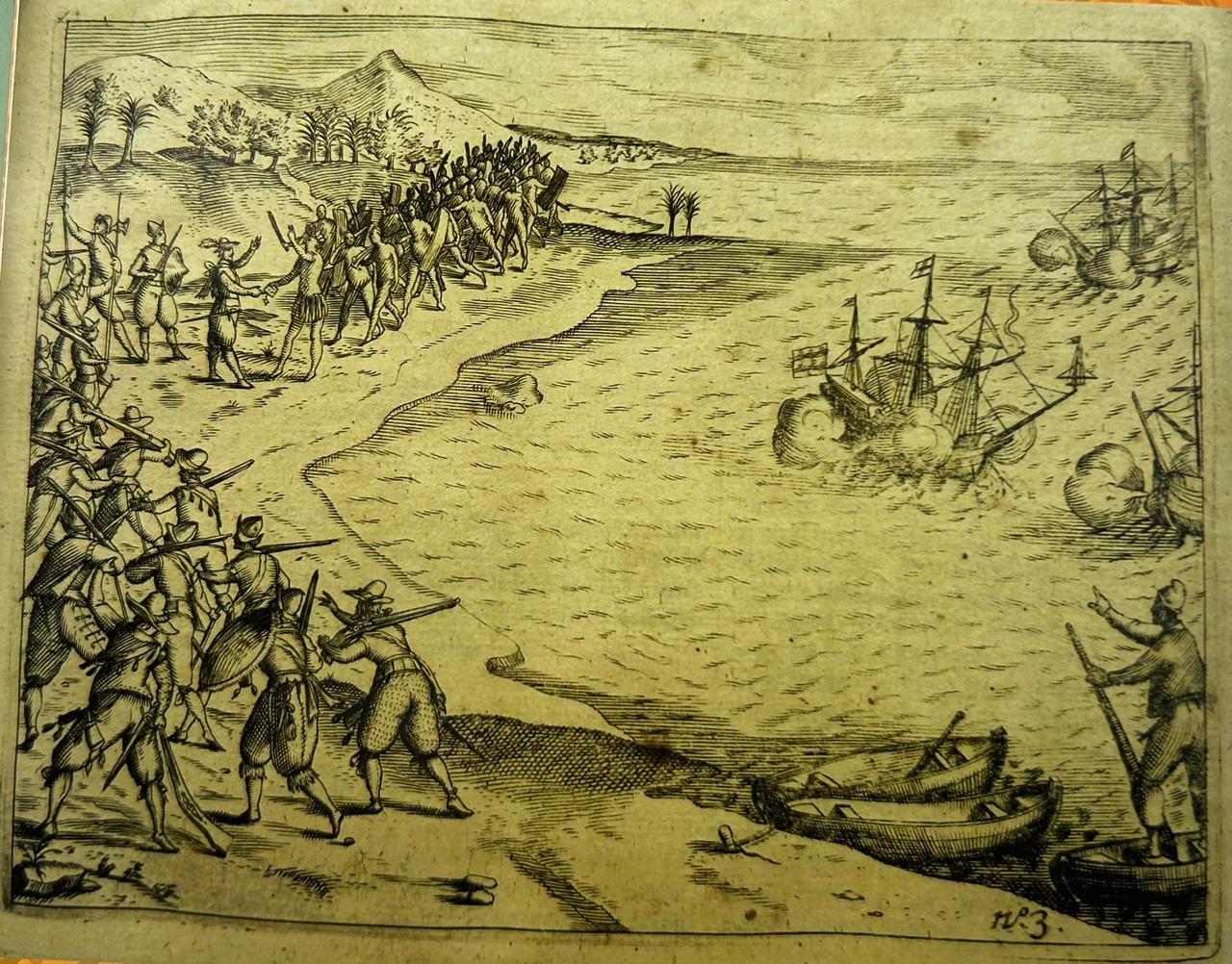
Illustration of the way in which the Dutch are welcomed by the Zamorin
Guided by commerce rather than conquest, the Dutch began expanding their presence across India. In the North, their trade depended on the support of the powerful Mughal rulers, while in the South, they negotiated with various local kings. Instead of ruling territory, the Dutch adapted to local laws and focused on profitable trade.
Their ships carried valuable goods such as spices, indigo, cotton, silk, pearls, opium, and saltpeter, connecting India not just with Europe but with other parts of Asia as well. Thus, what began as a simple promise of friendship grew into a wide network of trade—built not on power, but on cooperation and commerce.
The conquest of Cochin in 1663 from the Portuguese marks a decisive turning point. Under Rijcklof Van Goens, the Dutch transformed Cochin into their administrative headquarters in Malabar. Unlike the Portuguese, they restructured rather than expanded—reducing fortifications for economic efficiency while repurposing existing religious and civic buildings for trade. Churches became warehouses, and infrastructure was aligned with commerce, especially the storage and export of pepper, rice, and spices.
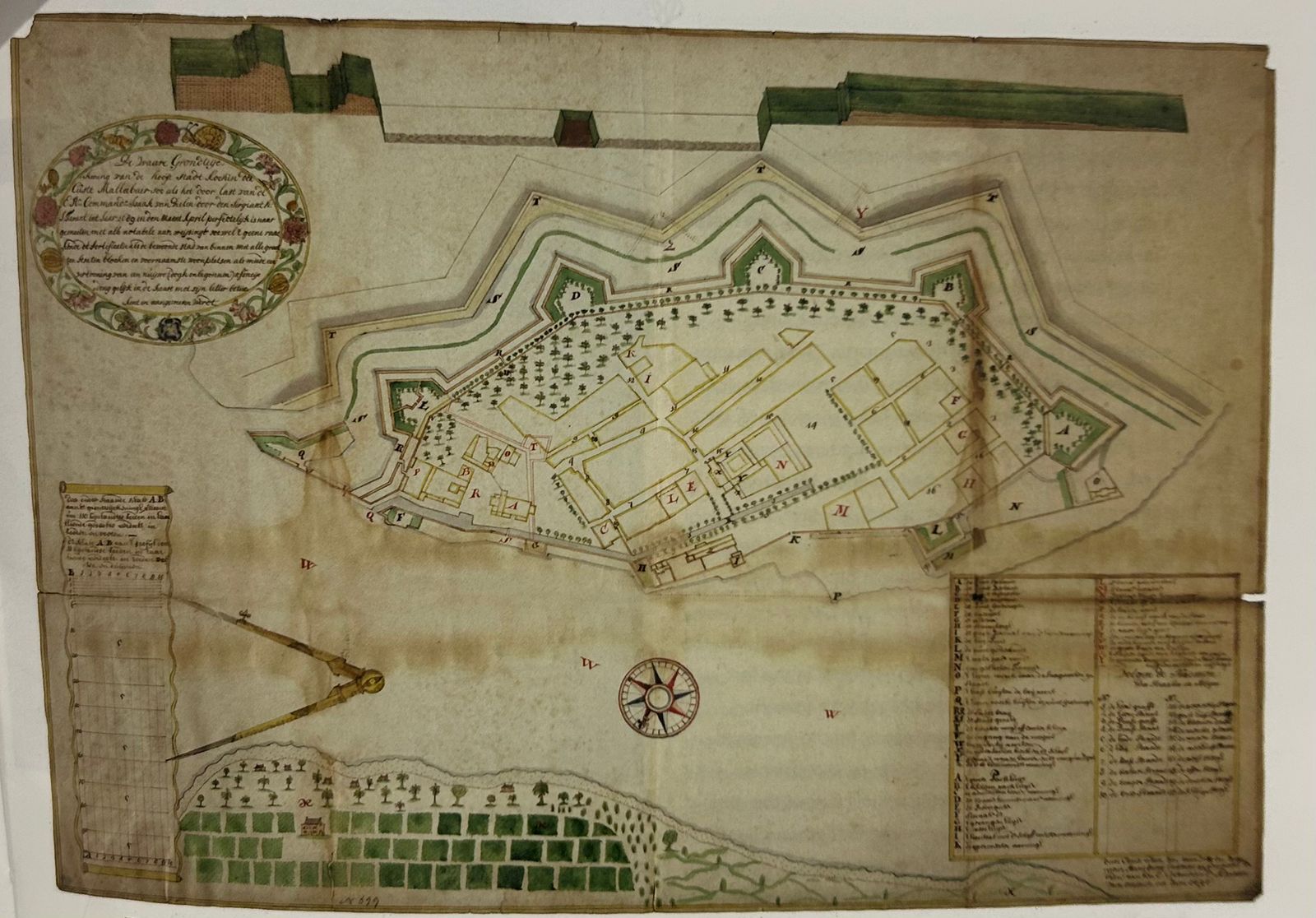
The map of Fort Emmanuel during Dutch period
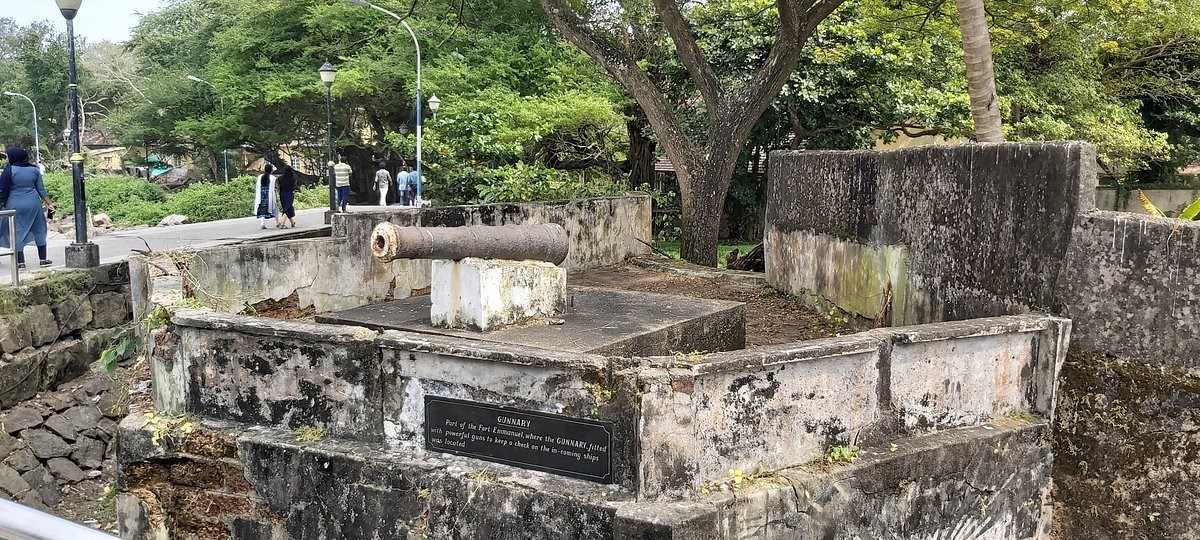
The Fort Emmanuel at Fort Kochi
Fort Kochi, as described in the book, becomes a living archive of Dutch presence. Street names such as Rose Street, Lilly Street, and Bastion Street, along with remnants of the seven bastions named after Dutch provinces, reflect a transplanted European identity adapted to Kerala’s geography. Architectural features like ‘chat benches’ in Dutch houses, the Dutch Palace reconstructed in Kerala style, and David Hall exemplify a hybrid cultural landscape. The Dutch also introduced urban planning elements, tree-lined streets, and functional coastal markers such as flagpoles used as navigational beacons.
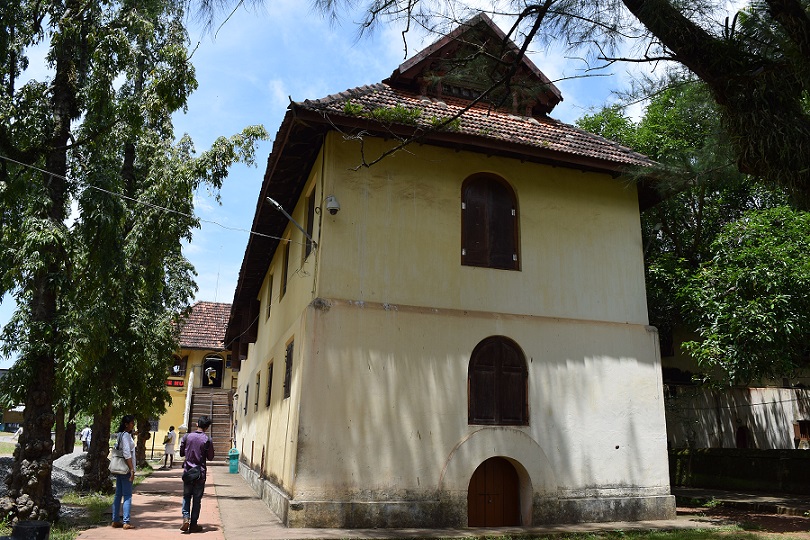
Dutch Palace, Mattancherry
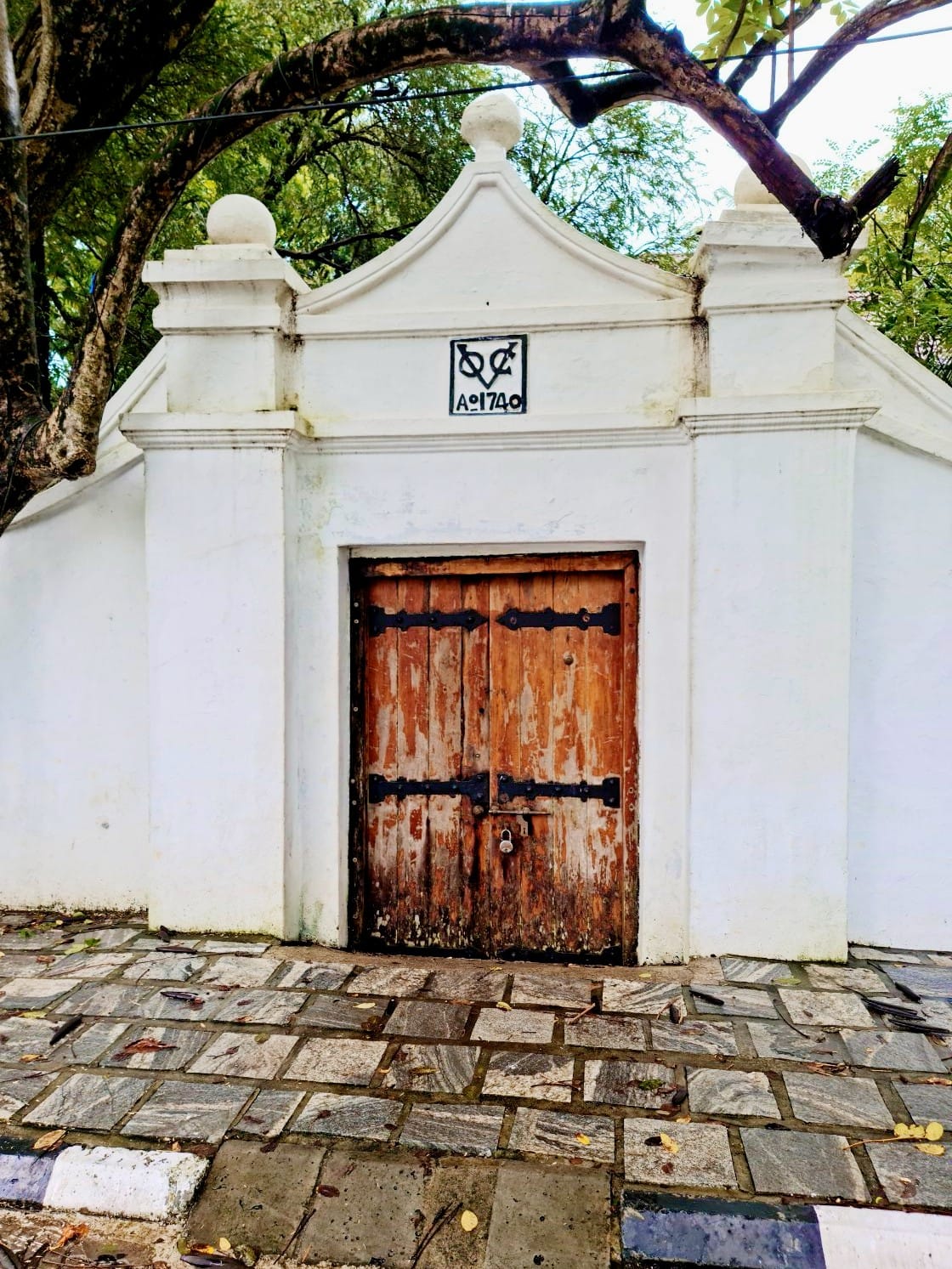
The VOC gate (1740) on Parade Ground, Fort Kochi
The Dutch maintained a warm and friendly relationship with the rulers of Cochin. This connection is still visible today—for instance, the bell tower of the Pardesi Synagogue reflects Dutch architectural influence. Even the residence of the Jewish leader in Cochin was built in a distinctive Dutch style, showcasing the cultural ties they shared.
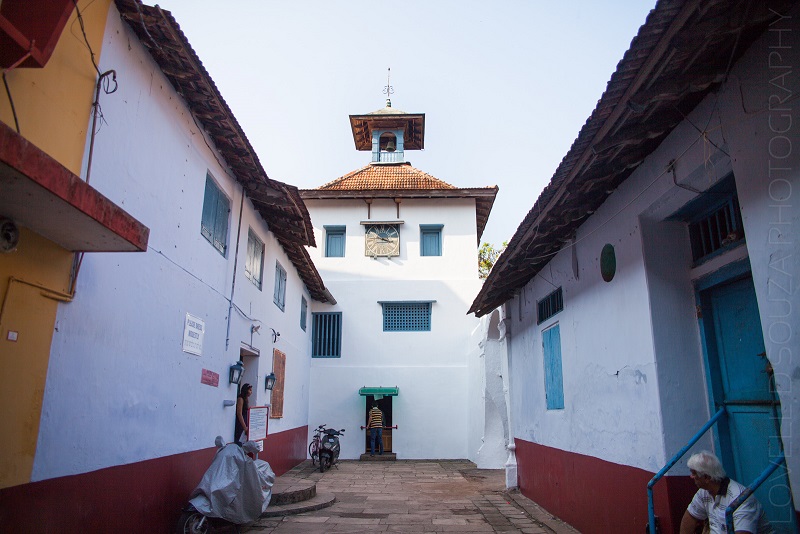
Paradesi Synagougue at Kochi
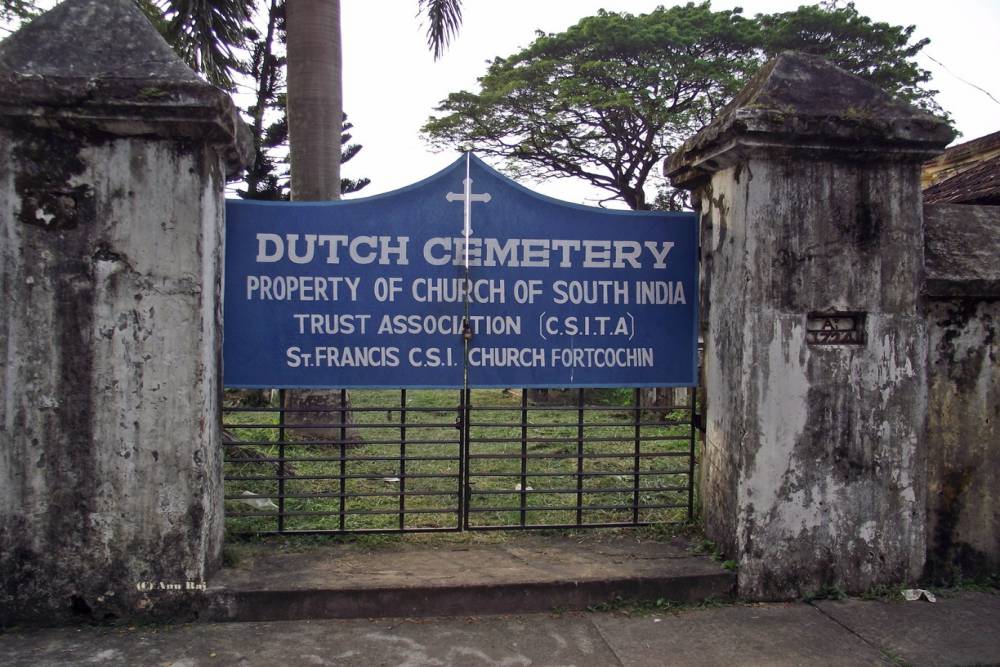
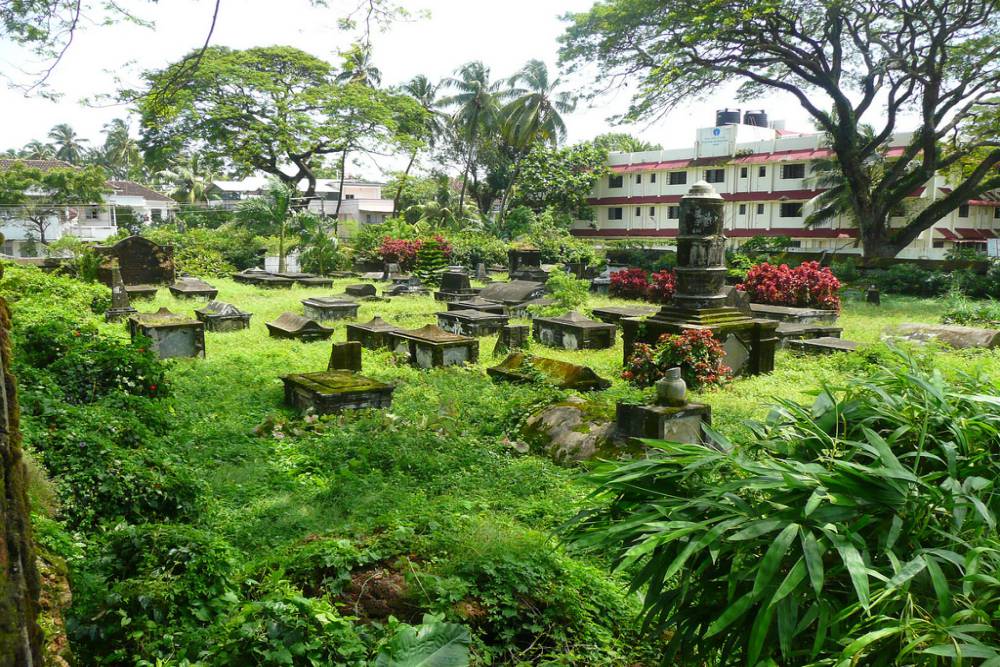
Dutch Cemetery at Kochi
Beyond Cochin, the Dutch influence extended across the Malabar Coast. In Kannur, the capture of St. Angelo Fort in 1663 and the alliance with the Arakkal dynasty highlight a strategic partnership rooted in trade, particularly in cardamom and turmeric. In Kollam, the Dutch reshaped Portuguese fortifications, while leaving behind subtle cultural traces such as temple artefacts and bells donated to local shrines, including those in Varkala and Mavelikkara.
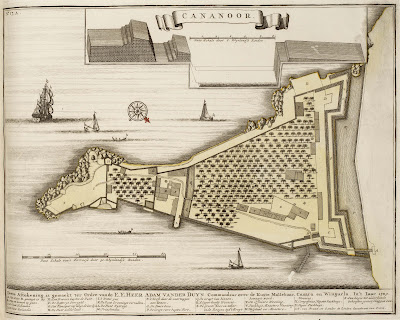
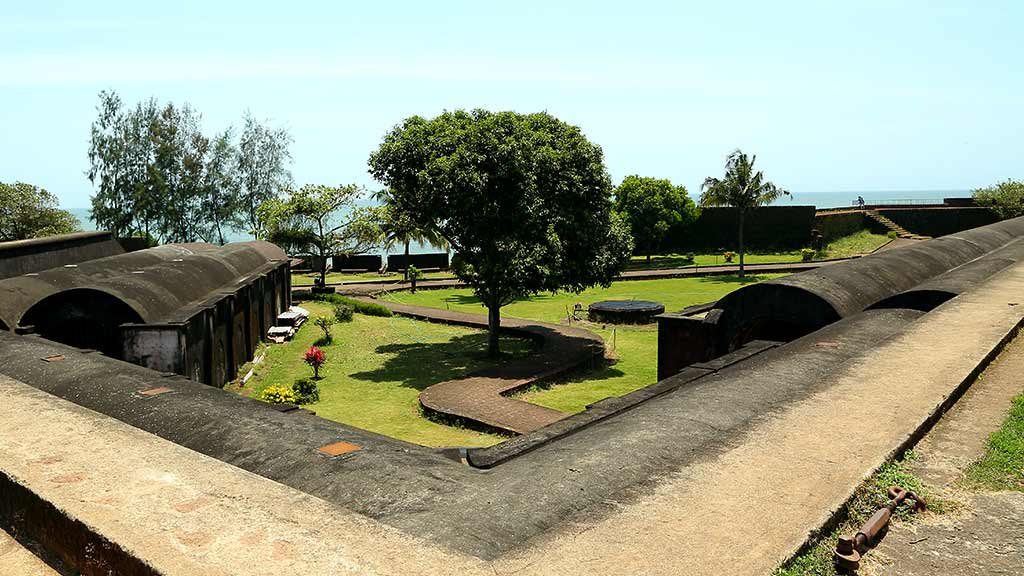
Map of St. Angelo Fort at Kannur (1726) & the present condition
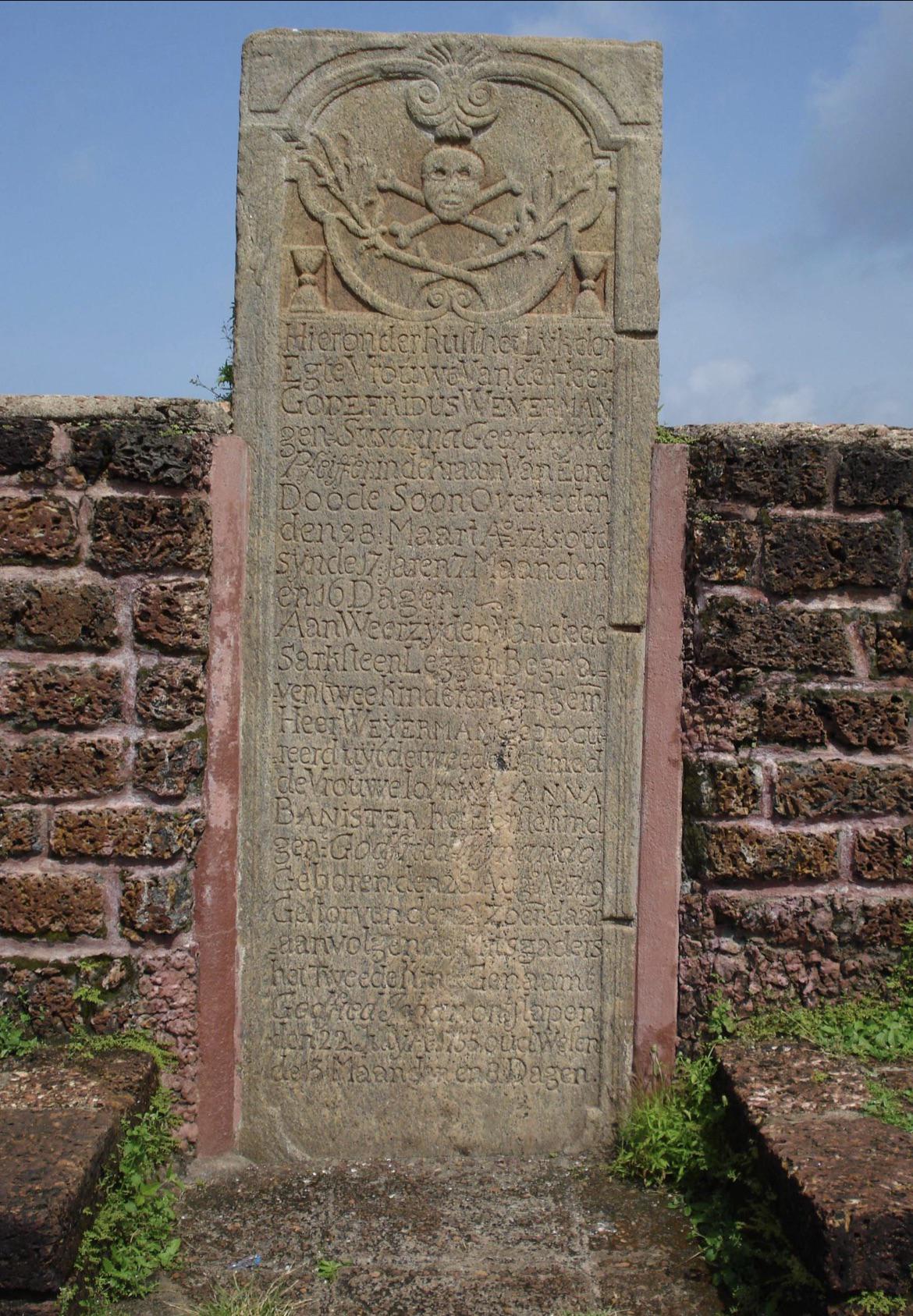
The Dutch gravestone at Kannur St. Angelo Fort featuring 'pirate symbols'.
The narrative also explores Dutch military and political engagements, most notably the Battle of Colachel in 1741. The defeat of the Dutch by Marthanda Varma of Travancore marked a historic reversal—one of the first instances of an Indian ruler overcoming a European power. This event signaled the gradual decline of Dutch authority in Malabar and reshaped regional power dynamics.
Bauke further enriches the Malabar account by documenting satellite sites and lesser-known remnants: Bolgatty Island’s Dutch country house, the Lazarus House in Vypeen, the Paliyam Palace in Chennamangalam, and the strategic forts of Cranganore (Kottappuram) and Chettuva. These sites collectively illustrate the extensive network through which the VOC operated, balancing trade logistics with regional alliances and military preparedness.
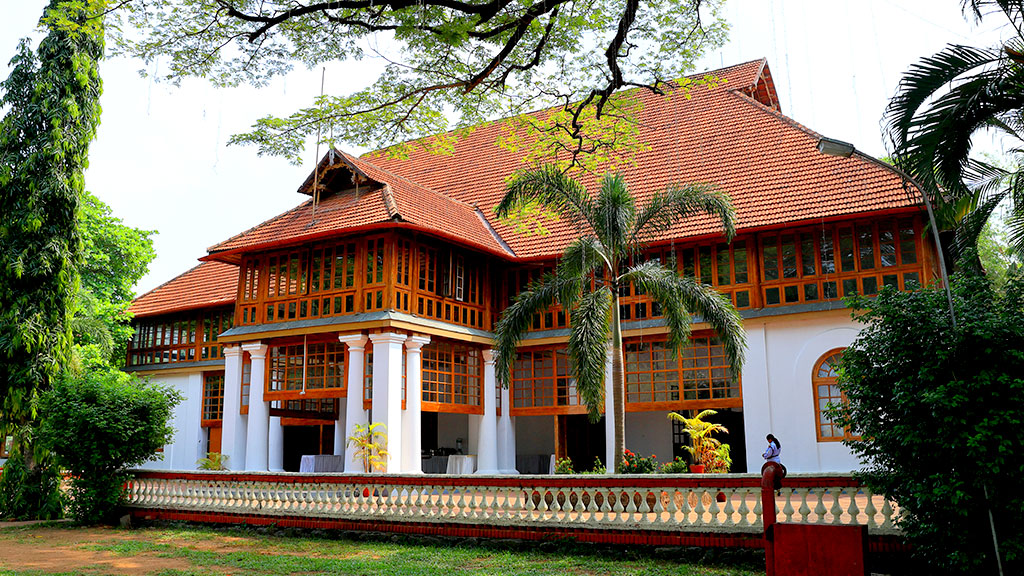
Bolgatty Island’s Dutch country house
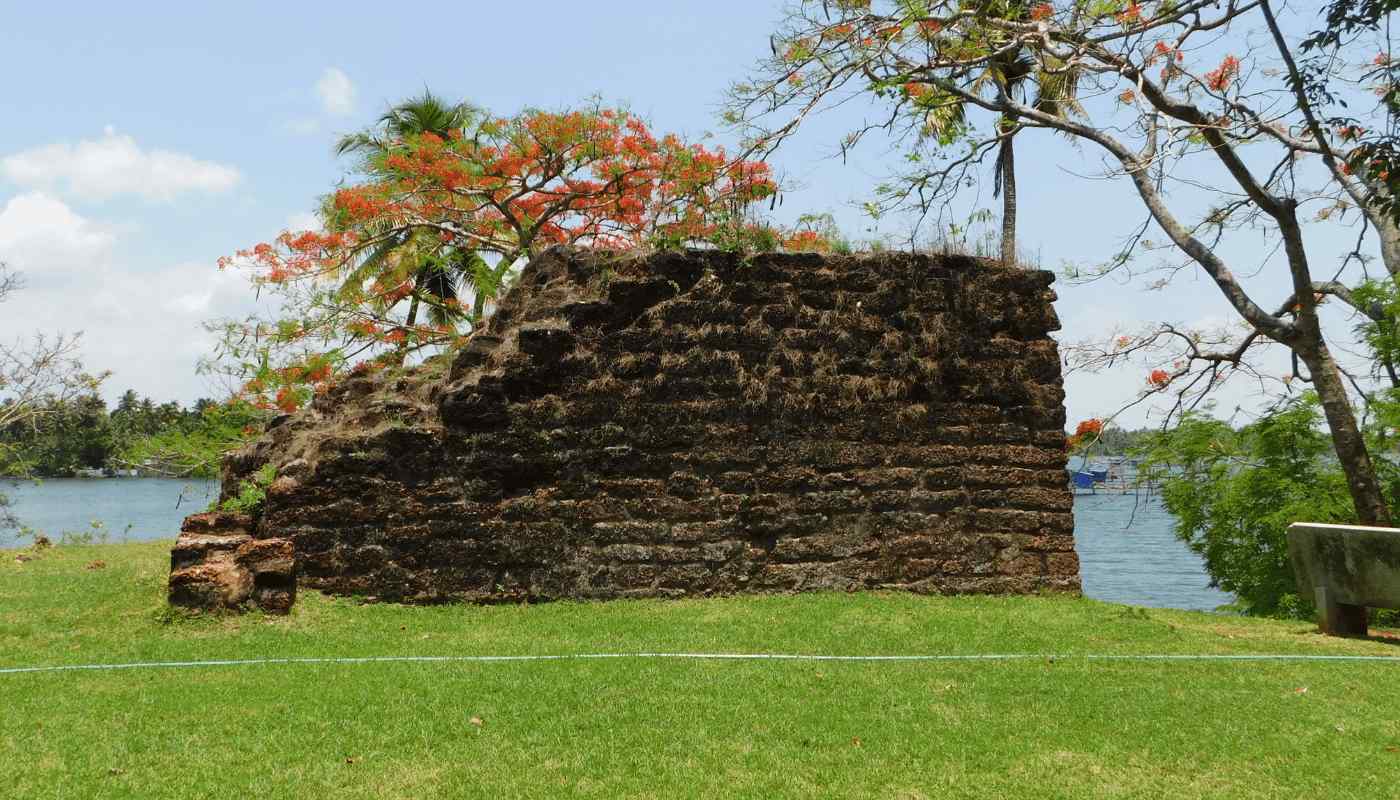
Fort of Cranganore (Kottappuram)
Through these detailed explorations, Malabar emerges not only as a centre of spice trade but as a space where European commercial ambitions were negotiated within Indian political realities. The Dutch, unlike other colonial powers, adapted to local systems, forming alliances rather than imposing dominance—a theme that runs consistently through the book.
One of the book’s most compelling arguments is the distinction between Dutch and Portuguese colonial motives. While the Portuguese pursued religious and political dominance, the Dutch were primarily driven by commerce. Their approach was pragmatic: adapt to local systems, respect existing power structures, and ensure profitable trade.
The narrative is enriched by historical anecdotes and figures, such as the letters of Jacobus Canter Visscher, which provide rare insights into 18th-century Kerala—its society, culture, climate, agriculture, and everyday life. These writings serve as some of the earliest detailed European observations of the region.
What sets this book apart is its keen eye for material heritage. The author meticulously documents surviving Dutch imprints: forts, palaces, churches, warehouses, street names, and even temple artefacts. However, he also laments their present condition, noting that many Dutch monuments across India are in neglect and require urgent preservation efforts.
The Dutch East India Company in India is a significant contribution to both travel writing and historical scholarship. It successfully bridges archival research with on-ground exploration, offering readers a nuanced understanding of the Dutch presence in India. For those interested in Kerala’s layered past, colonial trade networks, or heritage studies, this book provides an insightful and much-needed perspective.
Bauke’s work reminds us that history is not only written in texts but also embedded in landscapes—and in Malabar, the Dutch legacy, though subtle, continues to endure.
Warmly welcome to Kerala — Come & explore the Dutch histroy & heritage of Kerala with City Heritage.
Visit us and Contact:
Visit: www.cityheritage.in
Email: mail@cityheritage.in
Instagram: cityheritage.in
Phone: +91 7356569573, +91 8377024979




 (1).png)
© Copyright 2026 City Heritage. All rights reserved.
Website designed by TNM Online Solutions.
If you have any enquiry, feel free to ask, and we'll provide you with a prompt and concise response.