
Yasin Asharaf P | Published on 11/06/2026
Summer in Calicut often brings visitors seeking its beaches, cuisine, and vibrant culture. But on April 6, 2026, City Heritage welcomed a group of young researchers eager to uncover stories hidden within its historic landscapes. With over a decade of experience in heritage research, documentation, conservation, and cultural interpretation across Malabar, City Heritage designed a field based itinerary that would make it possible for them to visit the sites of research they wanted to.
A team of four students from Srishti Institute of Art, Design and Technology, Bangalore, accompanied by their faculty member Dr. Priya Joseph—architect and author of 'Brick Architecture of the Nineteenth Century in South India'—arrived in Kozhikode to undertake research on the architectural and industrial history of the Basel Evangelical Mission in the region. Their five-day academic journey would take them through archives, historic institutions, churches, industrial heritage sites, and the living cultural landscape of the city.
The journey began at Calicut International Airport, where we welcomed the team and introduced them to the city that would become their classroom for the next five days. Following an initial discussion with City Heritage Founder Muhammed Shihad, we recommended the logistics and time plan, that would help them visit their places of interest and help in their intended research. The objective was not merely to visit historic sites, but to understand how the Basel Mission influenced education, architecture, industry, religion, and society in Malabar.
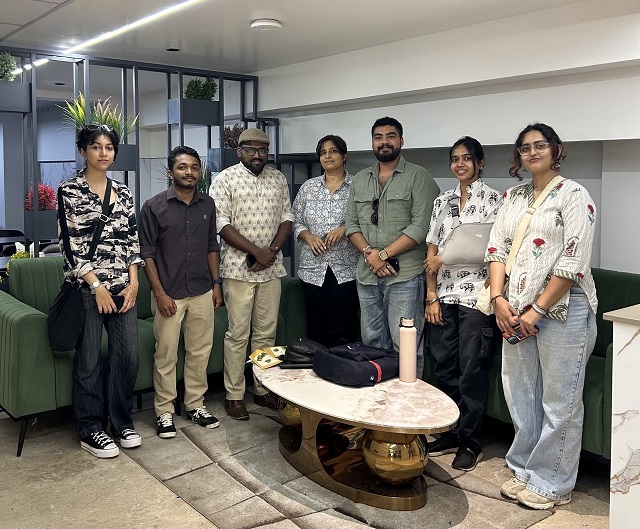
- The student and faculty team from Bangalore is with City Heritage founder Muhammed Shihad and Yasin Asharaf.
Beginning at a Century-Old Campus
Our first destination was the historic Malabar Christian College (MCC), one of the most significant educational institutions connected to the Basel Mission tradition in Calicut.
As we entered the campus through its modern entrance and walked toward the older structures, the students immediately began observing architectural details. Their attention was drawn to the distinctive roof tiles bearing Basel Mission markings.
One student paused and remarked with excitement:
"Not only the college, but even the roof tiles tell the story of the Basel Mission."
That simple observation perfectly captured the essence of heritage research. History is not confined to textbooks or archives; it often survives in everyday objects, quietly preserving memories of the past.
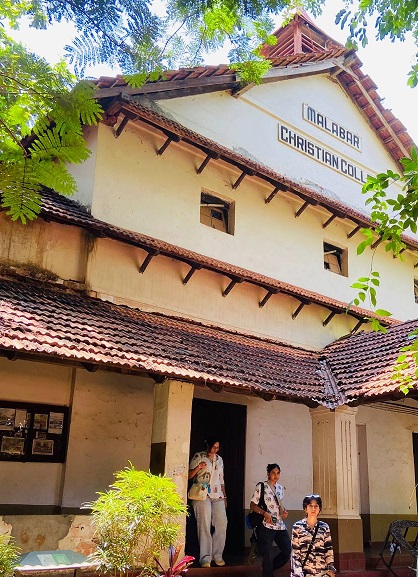
- At Malabar Christain College, Calicut
Standing before the century-old college buildings, we discussed the origins of the Basel Evangelical Mission and its role in shaping education and social transformation in Malabar. For me, the experience carried a personal connection. Having completed my Master's degree in History from the same institution, I found myself revisiting memories while sharing stories about the campus and its historical significance. The familiar surroundings became a bridge between my own academic journey and the students' ongoing research.
Our exploration was enriched by the support of Dr. Shenoy Jesinth, Head of the Department of History at Malabar Christian College. He welcomed the team and introduced us to the college's leadership.
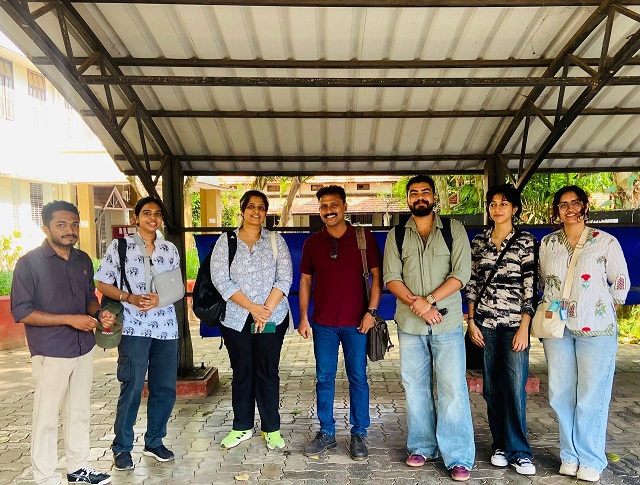
- The team is with Dr. Shenoy Jesinth, Head of the Department of History at Malabar Christian College, and City Heritage storyteller Yasin Asharaf.
At the Principal's chamber, we met Dr. Sachin P. James, whose insights opened new perspectives on the Basel Mission's legacy in Calicut. As a member of the Executive Committee of the Commonwealth Trust, he was able to explain the continuing relevance of institutions and properties once associated with the Mission, including the historic tile factories that remain an important chapter in Kerala's industrial heritage.
The conversation offered the students valuable context for understanding how historical institutions evolve while continuing to preserve their legacy.
From the college, we proceeded to the CSI Church and Bishop House near Mananchira, accompanied by Dr. Shenoy Jesinth.
The visit provided another important dimension of Basel Mission history. Through discussions on church architecture, missionary activities, and educational initiatives, the students gained a deeper understanding of how faith and social development were interconnected during the nineteenth and twentieth centuries.
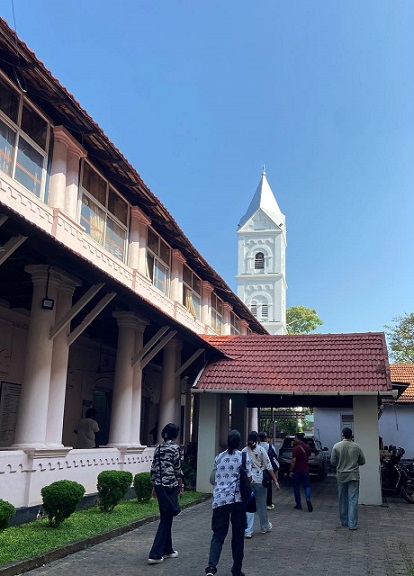
- At Bhishop House of the CSI Diocese, Mananchira.
One of the highlights of the day was meeting Rt. Rev. Dr. Royce Manoj Victor, Bishop of the CSI Diocese. Despite his busy schedule, he generously spent time with the team, sharing valuable perspectives and assuring access to archival resources related to the Basel Mission in Calicut.
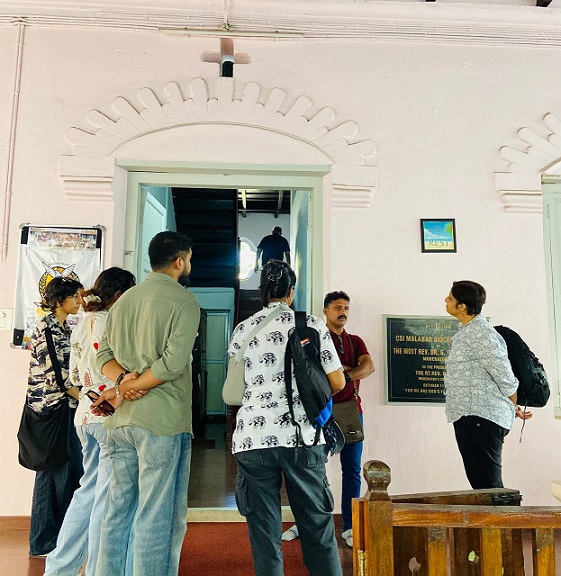
- Dr. Shenoy Jesinth guiding the team at CSI Bhishop House at Mananchira
Walking Through the Layers of Calicut
Research in Calicut cannot remain confined to archives and academic discussions. To understand the city, one must walk through it.
As evening approached, we embarked on a heritage walk through the historic quarters of Kozhikode. Led by City Heritage Founder and storyteller Muhammed Shihad, the walk introduced the students to the city's rich multicultural past.
The journey began with a tea break at Aadaminte Chaayakkada, where the team tasted authentic Malabar snacks and experienced one of the region's most cherished social traditions—sharing stories over tea.
From there, we moved through Silk Street, the Mother of God Cathedral, Sindhi Darbar, Big Bazaar, Gujarati Street, and the historic neighbourhood of Kuttichira, each location revealing another layer of Calicut's centuries-old connections with global trade networks.
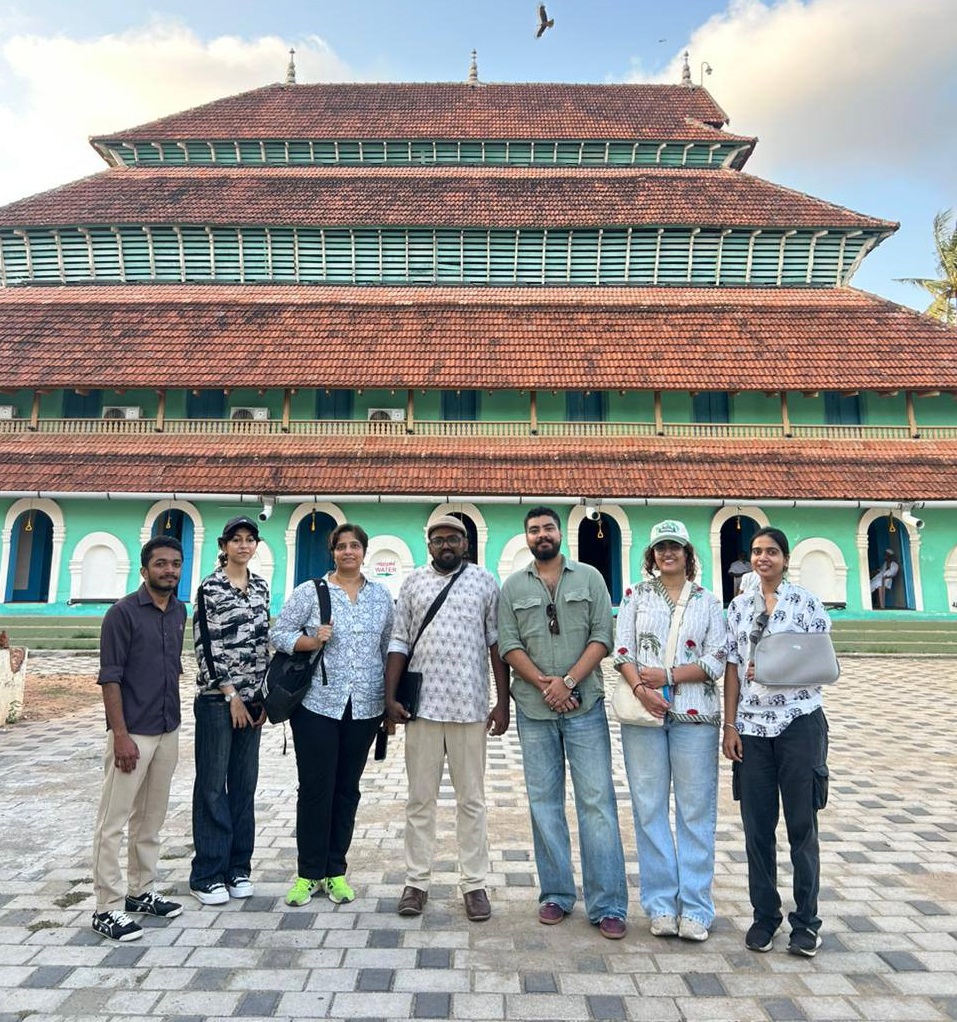
The walk concluded at the magnificent Mishkal Mosque, one of the finest examples of traditional Kerala-Islamic architecture. Standing before its wooden structures and unique design, the students could witness how local craftsmanship and global influences came together to create one of Malabar's most iconic heritage monuments.
By the end of the first day, the students had already encountered historians, educators, religious leaders, heritage sites, and living traditions. More importantly, they had begun to understand that the story of the Basel Mission cannot be separated from the wider story of Calicut itself—a city shaped by trade, faith, education, industry, and cultural exchange. For City Heritage, this is the essence of heritage interpretation: transforming places into stories and stories into meaningful experiences.
Exploring the Industrial Heritage of the Basel Mission in Feroke, Calicut
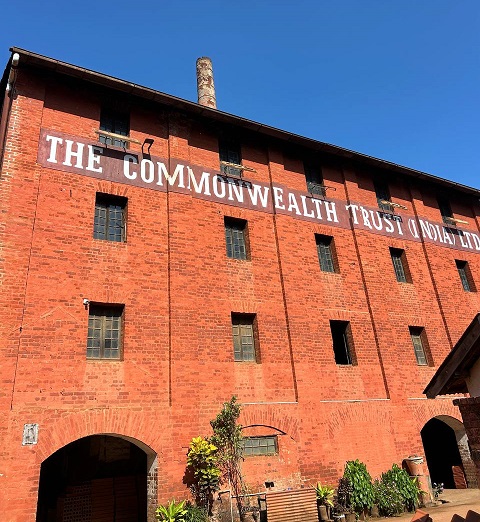
- The Commonwealth Tile Factory at Feroke (Image: Haseebe Ahamed)
After spending the first day exploring the educational, religious, and cultural footprints of the Basel Evangelical Mission in Calicut, our journey on April 7, 2026, took us to another remarkable chapter of its legacy—industrial heritage.
The destination was Feroke, once celebrated as the "Cradle of Tile Factories" in Kerala, where the Basel Mission established one of the region's most influential industrial ventures. Here, among the banks of the Chaliyar River, stands the historic Commonwealth Tile Factory, a living continuation of a story that began more than a century ago.
A Question That Echoes Through History
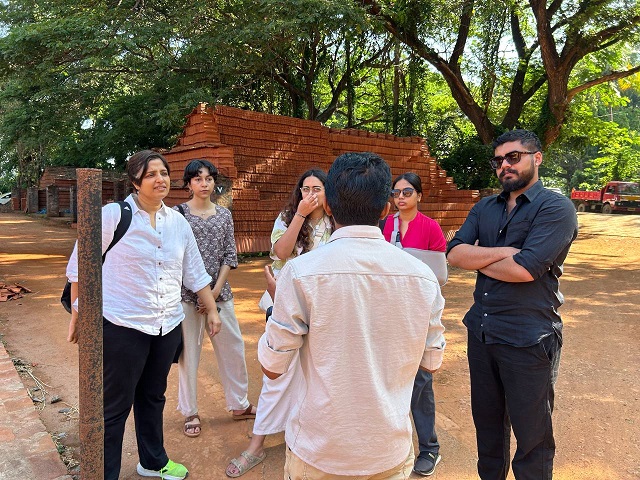
- Yasin Asharaf guiding the team at the Feroke Tile Factory.
As we entered the factory premises, a question naturally emerged among the students:
"Why did a Christian missionary organization build a tile factory?"
The answer can be found in the unique vision of the Basel Mission in Malabar. Alongside its spiritual work, the Mission sought to improve the lives of converted communities by creating opportunities for dignified employment. Through industries such as tile manufacturing, people gained skills, income, and stability, while transforming the architectural landscape of South India.
Originally established by the Basel Mission in 1905, the factory later came under the management of the Commonwealth Trust and became known as the Commonwealth Tile Factory. Today, it continues to preserve a unique chapter of Kerala's industrial and social history.
Accompanied by an experienced factory staff member, we began our exploration of the production units. His enthusiasm and pride in the institution were evident as he guided us through the different stages of tile manufacturing.
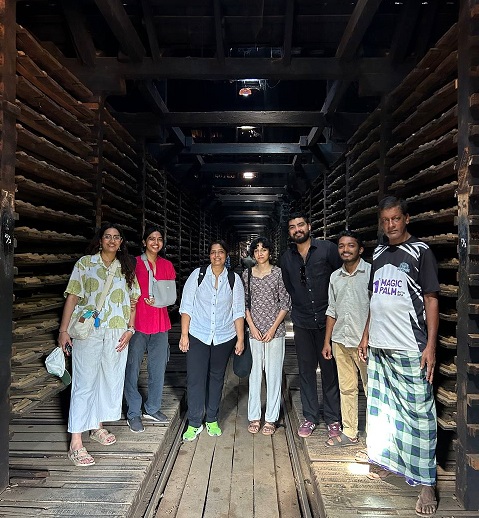
- At Commonwealth Tile Factory at Feroke
The students and their faculty member, Priya Joseph, carefully documented every step of the process. The team observed the entire journey of tile production—from the preparation and mixing of clay to moulding, drying, firing, and quality testing. Workers demonstrated how the quality of a tile is still assessed through traditional methods, including the distinctive sound produced when struck with metal.
What fascinated the students most was not only the machinery and techniques but also the human skill behind every stage of production.
Questions flowed continuously: Where does the clay come from? How have production methods changed over the years? What challenges does the industry face today? How does a century-old factory continue to survive in a rapidly changing world?
Every answer opened another door into the factory's rich history.
One of the most memorable moments of the day came when we entered the administrative office of the factory. Housed in an old building with a wooden staircase that seemed to carry the weight of generations, the office itself felt like a historical archive.
There we met Mr. Sreekumar P. K., the factory manager, who generously shared the story of the Basel Mission's industrial initiatives, the formation of the Commonwealth Trust, and the contemporary realities of operating a heritage industry.
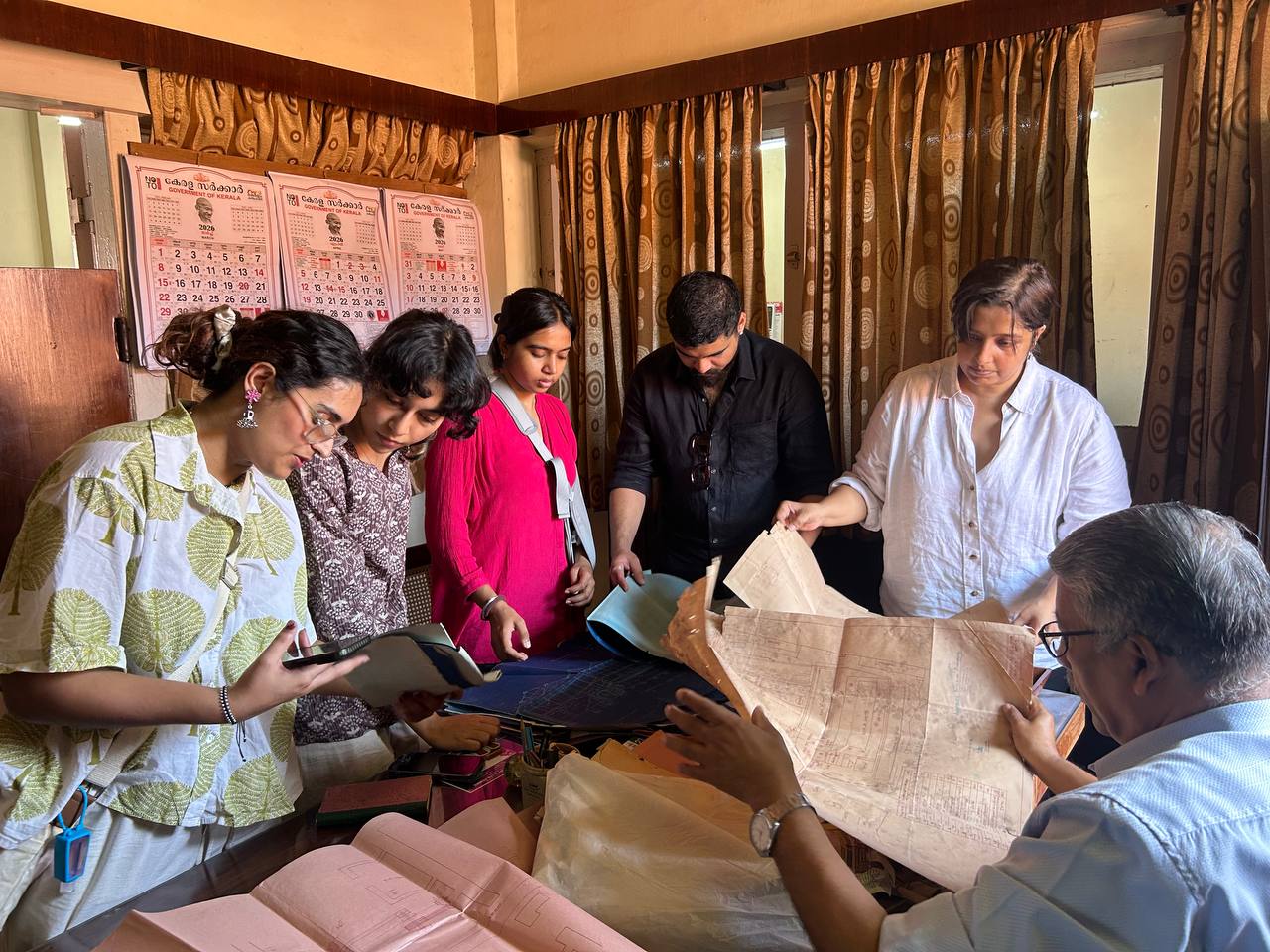
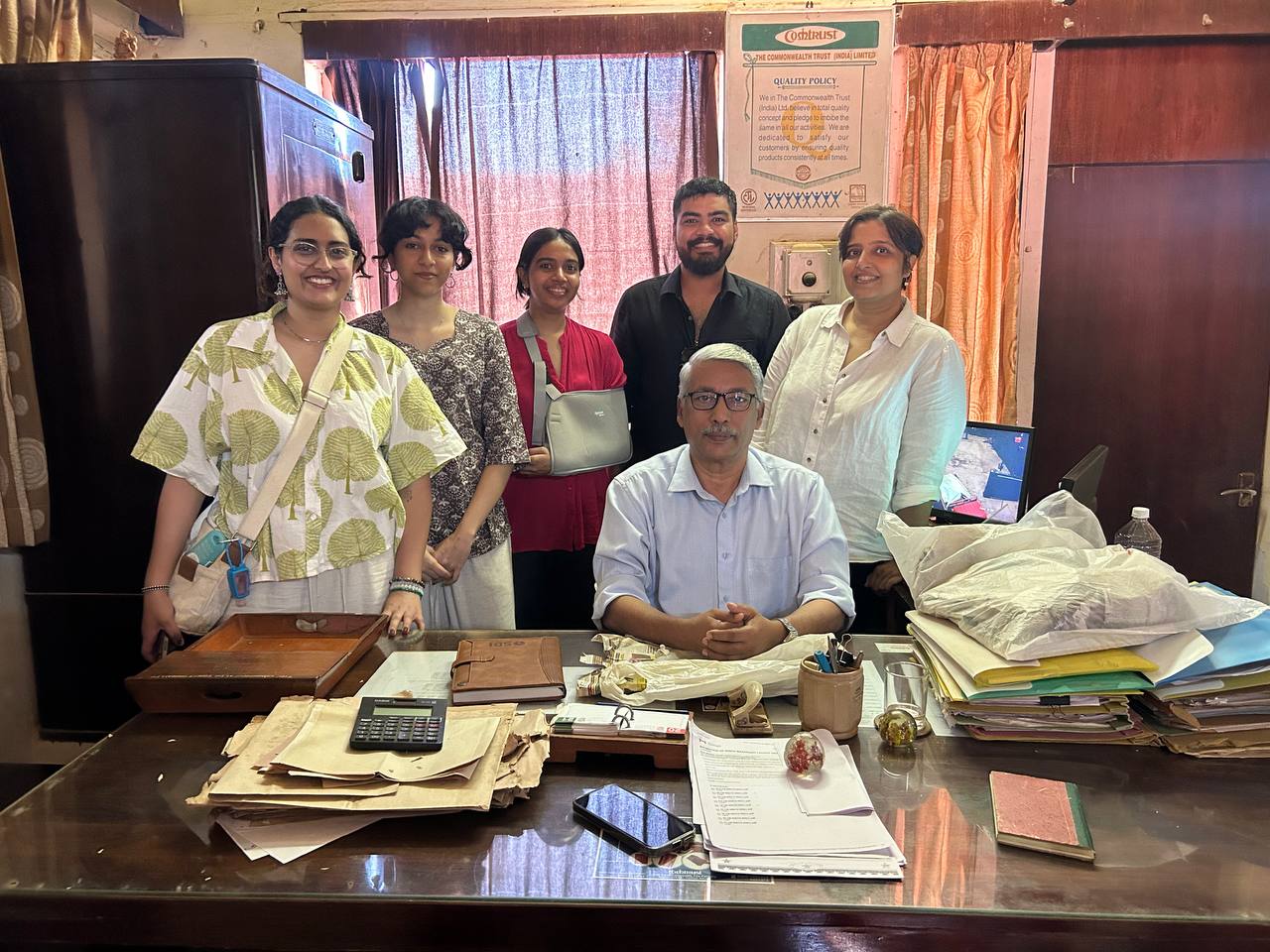
- The team engaged with the archival documents with the support of Mr. Sreekumar P. K., Manager of the Commonwealth Tile Factory.
His support proved invaluable to the research team. He provided access to archival records, historical documents, and photographs preserved by the factory. The students carefully examined these materials, photographing and documenting information relevant to their individual projects.
The team also interacted with Mr. Jijo Valsan, whose academic background in History from Malabar Christian College created an unexpected connection between the institutions founded by the Basel Mission and the industries it established. The conversations highlighted how education, industry, and community development were deeply interconnected within the Mission's vision for Malabar.
The influence of the Basel Mission extended beyond industrial production. Located near the factory is BEM UP School, established to educate the children of factory workers. At a time when both parents often worked in the factory, the school became an important social institution that supported working families and expanded educational opportunities within the community.
For the students, this offered another perspective on the Mission's impact—not merely as an industrial enterprise, but as a catalyst for social development.
After an intensive morning of exploration, we paused for lunch at a restaurant overlooking the Chaliyar River. As we enjoyed Malabar food, the landscape itself became part of the day's lesson. Across the river valley stood the chimneys of numerous tile factories—silent witnesses to an era when Feroke's tile industry supplied roofing materials across South Asia and beyond.
The afternoon was dedicated to field surveys and interviews.
The students spent hours speaking with workers, craftsmen, technicians, and veteran employees. Their curiosity went beyond understanding how tiles are made; they wanted to understand the lives of the people who make them. Through these conversations, the factory transformed from an industrial site into a collection of human stories, experiences, and memories.
Each of the four students approached the visit from different disciplines within art and design. Yet what stood out was their shared commitment to understanding people as much as processes. Their research was not limited to products or architecture; it sought to understand the experiences of the individuals who sustain these traditions every day.
As the day concluded, at City Heritage, we believe every story begins with people—those who built, preserved, shaped, and continue to sustain the cultural landscape around us. Whether through craftsmanship, faith, education, cuisine, tradition, or daily labour, it is people who transform places into living heritage.
At the Banks of the Conolly Canal
Our third day, April 8, 2026, took us deeper into the world of traditional craftsmanship and the people who continue to preserve the history and architectural heritage of Kozhikode. The day began at one of the oldest surviving industrial heritage sites in Kerala—the Puthiyara Comtrust Tile Factory.
Unlike the Commonwealth Tile Factory at Feroke, which flourished along the Chaliyar River, the Puthiyara Comtrust Tile Factory stands beside another important waterway—the Conolly Canal, named after Henry Valentine Conolly, the British Collector whose development initiatives left a lasting impact on Malabar.
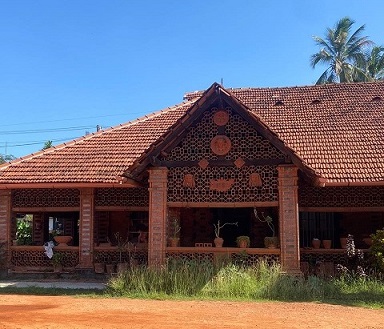
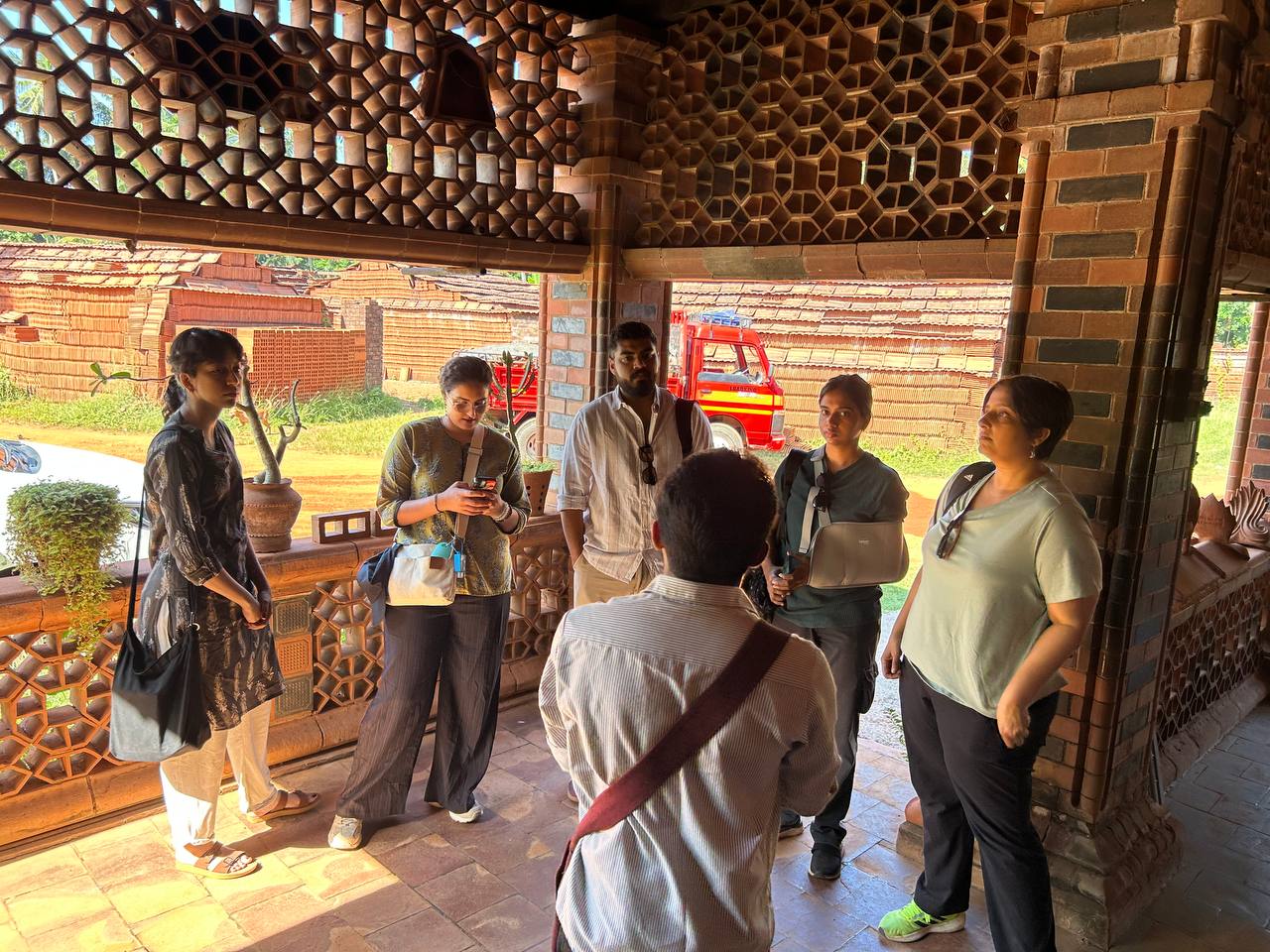
- At Puthiyara Comtrust Tile Factory
Established in 1873, the Puthiyara factory is one of the earliest tile manufacturing units founded by the Basel Mission after the success of the pioneering Mangalore Tile Factory. More than 150 years later, the factory continues to preserve techniques, traditions, and stories from a remarkable period in Kerala's industrial history.
As we entered the premises, we were welcomed by Mr. Pradeep, an experienced staff member who has spent years working with tile factories connected to the Basel Mission tradition. His knowledge and enthusiasm transformed the visit into a living lesson on industrial heritage.
Even before entering the production area, something unusual caught the attention of the students. Mounted near the entrance was a large board filled with small metal tokens, each engraved with a number and marked with either "M" or "F."
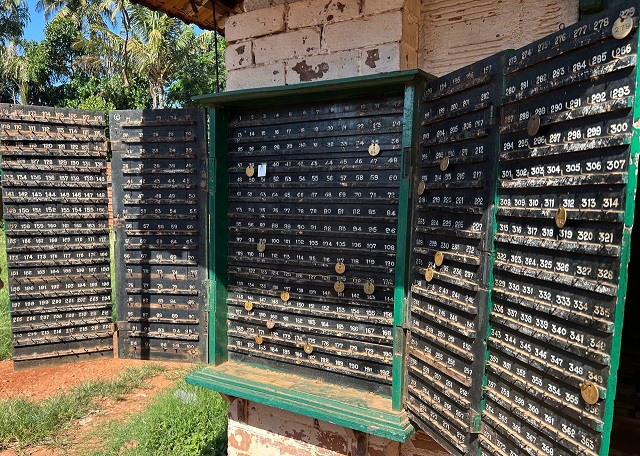
- The token system at Puthiyara Comtrust Tile Factory.
The students immediately began asking questions: What were these coins? Why were some marked with "F"? How were they used?
The answer revealed a fascinating workplace tradition that has survived for generations. Each worker is assigned a numbered token. Upon arriving at work, the employee places the token in a designated section corresponding to their department. This simple but effective system allows supervisors to track attendance and work assignments throughout the day.
The presence of tokens marked "F" also highlighted an important aspect of the factory's history—the active participation of women in the workforce. While women were absent from the production areas we visited at Feroke, the Puthiyara factory continues to employ female workers, preserving a tradition of inclusive labour that stretches back decades.
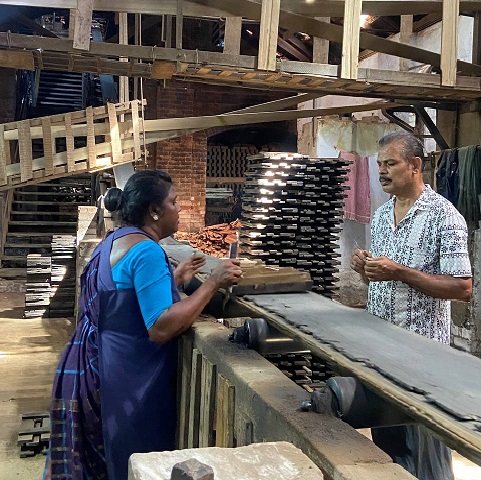
For the students, this attendance board became more than an administrative tool; it was a symbol of the people whose lives have been intertwined with the factory for generations.
As we moved through the factory, the contrast with the Feroke unit became immediately apparent. Puthiyara feels older—not merely because of its age, but because many of its traditional practices remain intact. Modern machinery is used sparingly, and much of the production process continues to rely on skilled manual labour.
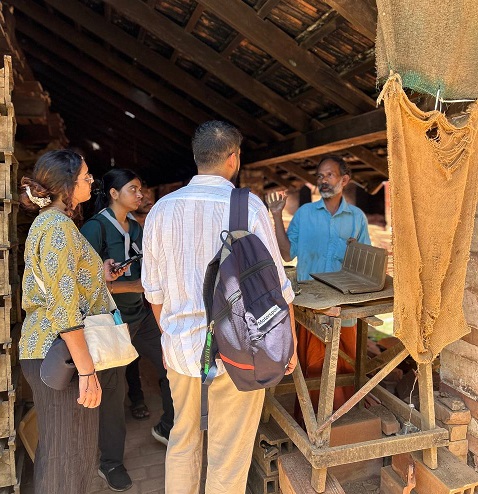
- Students engaged with the artisan at Tile Factory
Mr. Pradeep guided us through every stage of manufacturing, from clay preparation and moulding to drying and firing. He explained how, in earlier times, clay was transported through the Conolly Canal in wooden boats from various parts of Malabar, making the canal an essential lifeline for the industry.
The students observed how workers continue to shape, prepare, and handle the clay using techniques that have been passed down through generations. In many areas of the factory, the human hand remains the most important tool.
The students spoke with craftsmen, artisans, and female employees, learning about their daily routines, experiences, and challenges. Several of the workers belonged to families that have been connected to tile-making for generations.
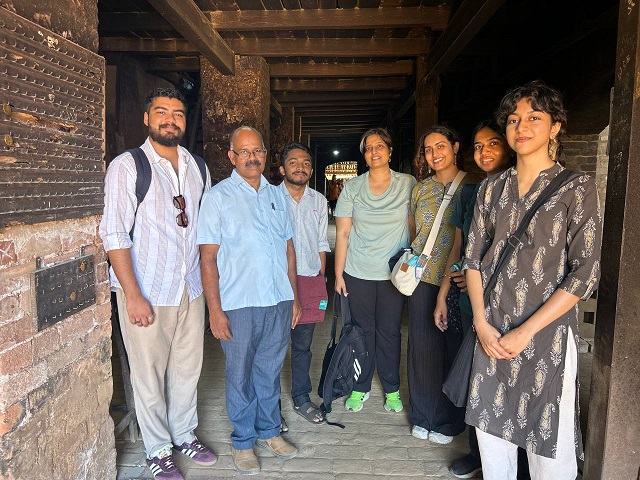
- With Mr. Pradeep, a staff of the Tile Factory.
Before concluding the visit, we met Mr. Vinod, the factory manager, whose support, along with that of Mr. Pradeep and the workers, helped make the experience both informative and memorable.
Meeting the Voices of Architecture and Heritage
The second half of the day was dedicated to meeting individuals who have played important roles in documenting, preserving, and interpreting the history and architecture of Kozhikode.
Our first visit was to the office of C-EARTH (Centre for Environment, Architecture and Human Settlements) in Chevayur, where we met its Chairman, Ragive Manuel.
The discussion introduced the students to the principles of sustainable architecture and the enduring influence of the renowned architect Laurie Baker in Kerala. Ragive Manuel explained how C-EARTH continues to promote context-sensitive design, environmentally responsible construction, and community-centered planning.
As evening approached, we visited the residence of Dr. Oliver Noon, a medical doctor whose passion for history has made him one of the most respected independent researchers of Kozhikode's past.
Despite his demanding professional schedule, he graciously welcomed the team into his home and shared his extensive knowledge of the city's history. Drawing upon archival research conducted in London, Oliver Noon authored 'The Forgotten Battles of Calicut', a remarkable work that explores lesser-known episodes in the city's past.
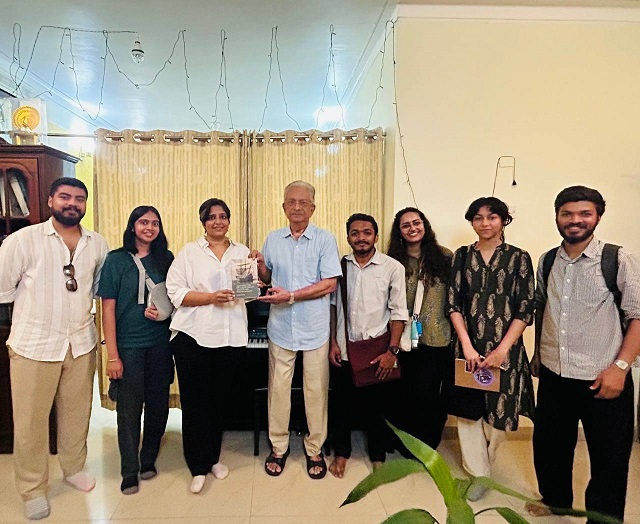
- Dr. Oliver Noon presented his book, The Forgotten Battles of Calicut, to faculty member Dr. Priya Joseph.
What began as a planned interview soon evolved into a wide-ranging discussion on trade, colonial encounters, military conflicts, and the historical evolution of Calicut. The highlight of the visit was undoubtedly his personal library. Surrounded by books, documents, maps, and research materials, the students explored sources that reflected years of dedicated historical investigation.
Over refreshments and conversation, history came alive—not through monuments or archives alone, but through the passion of someone committed to uncovering forgotten stories. For City Heritage, heritage is not only about buildings, objects, or places. It is about the people who preserve knowledge, sustain traditions, and keep stories alive.
Exploring the Living Craftsmanship of Beypore
April 9, 2026 - It was election day in Kerala, and much of the state moved at a slower pace as people exercised their democratic right to vote. After casting my vote in my village, I joined the research team, for another day of exploration across the heritage landscape of Kozhikode.
With many institutions closed for the holiday, we decided to focus on one of the most extraordinary living traditions of Malabar—the legendary Uru shipbuilding yards of Beypore.
The morning welcomed us with a gentle breeze from the Chaliyar River as we arrived at the historic Uru Yard in Beypore. Located near the confluence of the river, the Beypore Port, and the Arabian Sea, this is one of the few places in the world where a centuries-old shipbuilding tradition continues to survive.
Although the workers were on holiday due to the election, the unfinished vessel standing before us was enough to spark curiosity and wonder.
As we stood beside the massive wooden structure, I began sharing the story of Beypore's maritime heritage - a story that stretches back nearly two thousand years.
For centuries, merchants from Arabia, Rome, Greece, China, and other regions commissioned and purchased Urus from the Beypore shipyards. The abundance of high-quality teak from the Western Ghats, combined with Kerala's river networks that transported timber to the coast, made Beypore an ideal centre for constructing these large ocean-going vessels.
These handcrafted wooden ships connected Malabar to ports across the Arabian Peninsula, East Africa, and beyond, carrying not only goods but also cultures, ideas, and relationships.
The Uru currently under construction has been commissioned by the Al Kuwari family of Qatar, continuing a centuries-old connection between Beypore and the Arab world. Today, these vessels are no longer primarily used for transporting goods. Instead, they are valued as symbols of heritage, luxury, and prestige. For many Arab families, owning an Uru represents a connection to a shared maritime history that links the Gulf and Malabar.
One of the most memorable moments of the visit was meeting the master craftsman, Mr. Sathyan, and his son, Jishnu. Their presence transformed the site from a shipyard into a living classroom.
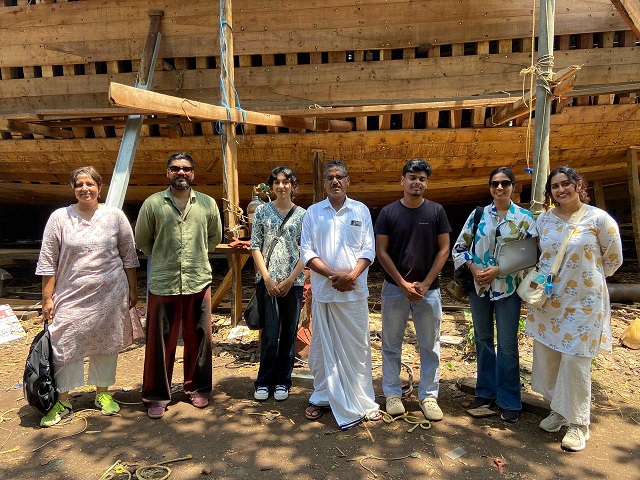
- The team is with Uru master craftsman Mr. Sathyan and his son, Jishnu.
As the students interviewed them about the construction process, Jishnu shared a remarkable insight:
"We do not use blueprints to build these ships. The knowledge exists in our minds and memories. It is passed down from one generation to the next."
The statement fascinated everyone. How does a tradition survive for centuries without formal architectural drawings? How is such complex knowledge transmitted across generations?
The answer lies in apprenticeship, observation, and inherited craftsmanship. The skills required to construct these enormous vessels are learned through years of experience, working alongside elders who themselves inherited the knowledge from previous generations. Jishnu now represents the next generation of craftsmen entrusted with preserving this extraordinary tradition.
Inside a Royal Vessel
The team was granted permission to enter the vessel through a temporary wooden staircase used by the workers.
One by one, we stepped inside.
Walking through the unfinished structure was an unforgettable experience. Massive wooden beams curved overhead, while craftsmen's markings and construction details could be seen throughout the interior. The sheer scale of the vessel amazed everyone.
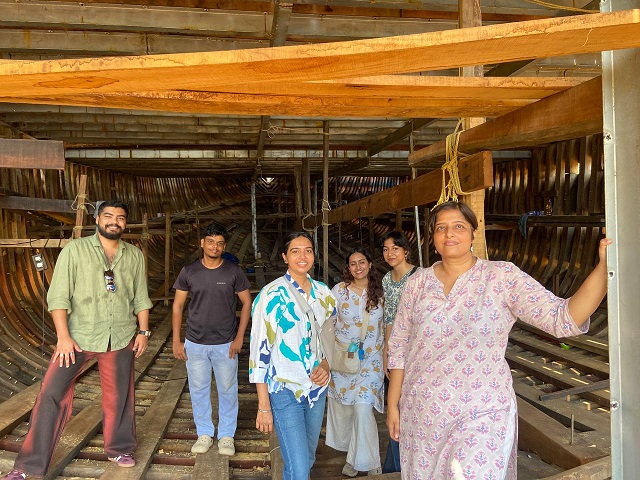
- Inside the majestic Uru
For students studying art, design, architecture, and material culture, the experience offered a rare opportunity to witness one of the world's largest wooden vessels being built using largely traditional methods.
Before leaving, students purchased handcrafted miniature Uru models created by local artisans—a small but meaningful reminder of Beypore's maritime legacy.
Into the Historic Heart of Kuttichira
After lunch, our journey continued into another layer of Kozhikode's heritage.
We headed to Kuttichira, one of the city's most historic neighbourhoods and a place deeply connected to centuries of maritime trade and cultural exchange.
At an old ancestral house on Thangals Road, we were welcomed by City Heritage Founder Muhammed Shihad and a member of the family, Sayyaf. The house itself was a remarkable example of traditional architecture shaped by centuries of Arab-Malabar interaction.
From the exterior, the students immediately noticed the distinctive wooden facade and large window structures that could be opened for ventilation and social interaction. Inside, spacious halls, interconnected rooms, wooden ceilings, and intricate architectural details reflected the lifestyle of wealthy trading families of an earlier era.
Inside the house, Muhammed Shihad began sharing stories that transported the students centuries into the past. Long before the arrival of European powers, Arab traders regularly visited the Malabar Coast, drawn by its spices and strategic position within the Indian Ocean trade network. Many stayed in Kozhikode for extended periods while waiting for the seasonal monsoon winds that would carry them back across the Arabian Sea.
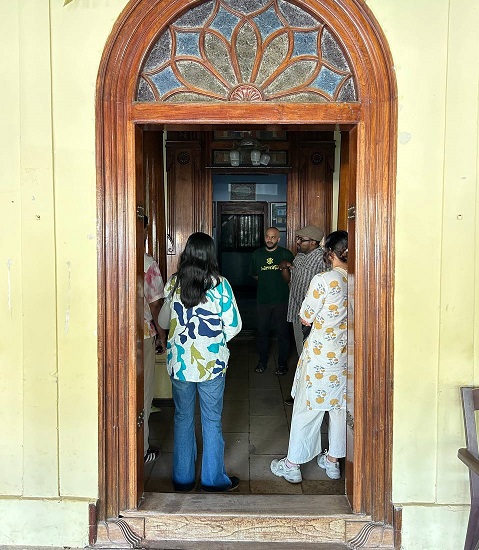
- The team is inside the Kuttichira ancestral home with City Heritage founder Muhammed Shihad and family member Sayyaf.
During these months, relationships developed between visiting traders and local communities. Some traders settled permanently. Many married local women. New traditions emerged.
Large family homes were constructed to accommodate extended households, guests, and commercial activities.
The students learned about unique social customs, matrilineal family practices, wedding traditions, and culinary influences that continue to shape the cultural identity of Kuttichira today.
As we explored the house, Sayyaf patiently explained the purpose of various architectural elements and how different spaces were used in earlier times. Although the house is no longer occupied as a residence, it continues to preserve memories of generations who lived within its walls.
During our visit, several family members arrived, following their regular evening routine of gathering at the property. Their presence added another layer of authenticity to the experience.
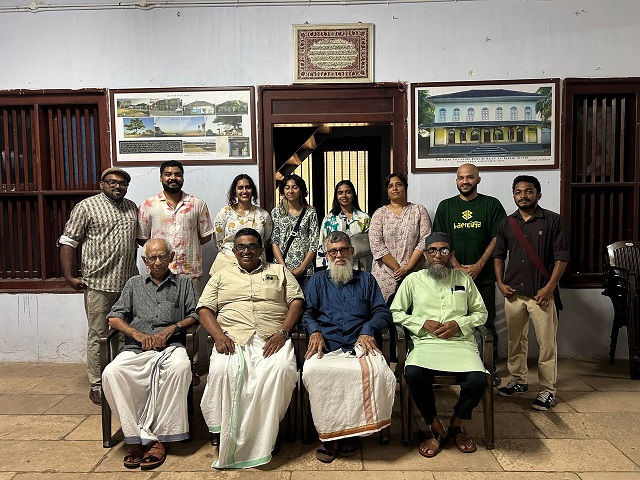
- The team is with the family members at the historic Kuttichira ancestral home.
The students had the opportunity to interact directly with them, listening to personal stories, family memories, and reflections on how life in Kuttichira has evolved over time.
The Legacy of Kozhikode's Trading Communities
As evening approached, we continued to Gujarati Street, another important chapter in Kozhikode's multicultural history.
Here, old warehouses once used by Gujarati merchants still stand as reminders of the city's commercial past. Some of these historic structures have found new life as creative spaces, including Gudhaam Art Cafe and Design Ashram.
Walking through these beautifully adapted buildings, the students witnessed how heritage architecture can be preserved while serving contemporary cultural purposes.
The surrounding neighbourhood continues to reflect the presence of Gujarati communities who settled in Kozhikode generations ago. Their schools, temples, businesses, and traditions remain woven into the city's social fabric.
As we concluded the fourth day of our journey, it became clear that heritage is not confined to museums or monuments. It lives in the hands of craftsmen building ships without blueprints. It survives in ancestral homes where stories are passed from one generation to the next. It continues through communities that preserve their traditions while adapting to modern life.
For City Heritage, these are the stories that matter most—the stories of people who continue to carry the legacy of Malabar into the future.
Reflections from the Visit: From Heritage Research to Creative Interpretation
By the fifth day, the focus shifted from exploration to reflection. The team spent the day revisiting their notes, photographs, interviews, sketches, recordings, and observations gathered throughout the previous four days. The experiences collected from classrooms, archives, factories, shipyards, historic homes, and conversations with people began to take new forms through discussion, analysis, and creative interpretation.
One of the most inspiring aspects of the visit was witnessing how the students approached their research. They sought to understand the human stories behind the architecture, industries, and institutions they encountered.
In the tile factories, they spoke with workers and craftsmen about their daily lives and experiences.
In Beypore, they listened to shipbuilders explain how centuries-old knowledge continues to be passed from one generation to another without formal blueprints.
In Kuttichira, they explored how architecture preserves memories of trade, migration, family life, and cultural exchange.
Through these interactions, the students discovered that heritage is not only preserved in documents and monuments—it is also preserved in people.
From Research to Creative Expression
The knowledge gathered during the field visit soon evolved into artistic and academic explorations.
The creative outcomes developed by students Hiral Chahar, Emily Kane, Aditi Puthane, and Aidan Sebastian reflected the diverse ways in which research can be interpreted and communicated. Their works took the form of essays, illustrated books, visual studies, and art installations, each offering a unique perspective on the themes explored during the journey.
Among the outcomes were:
1. A thoughtfully curated studio book documenting observations, research findings, and visual narratives.
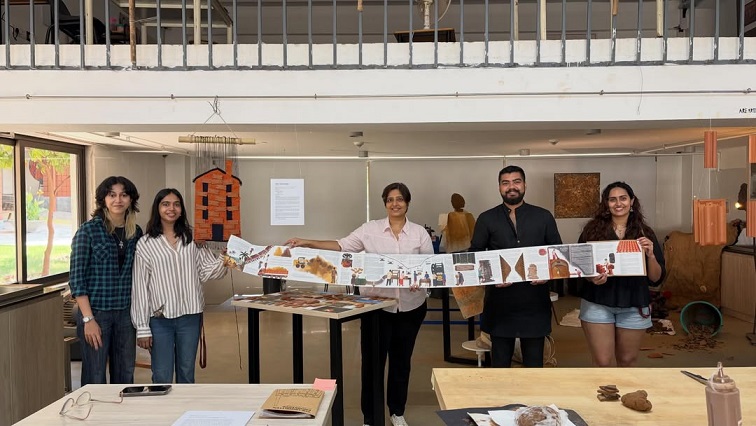
- The team with the curated Studio Book.
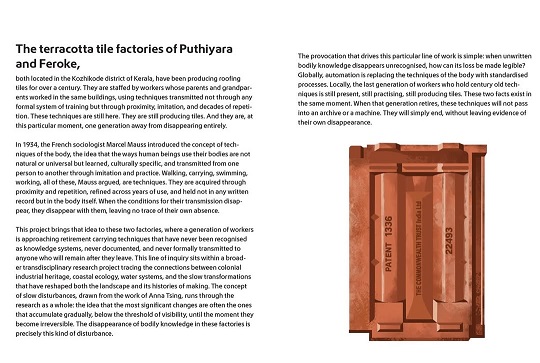
- Page from the Studio Book about 'The terracotta tile factories of Puthiyara and Feroke'
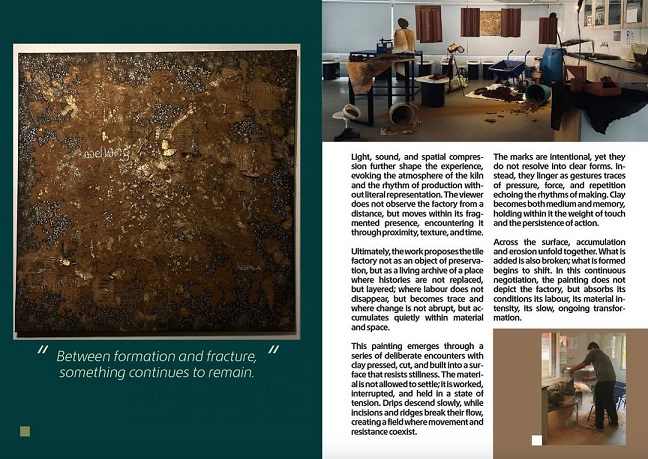
- A Page from the Studio Book
2. Aditi Puthane's artwork incorporates woven burnt clay and thread, creatively engaging with the material culture of the tile industry.
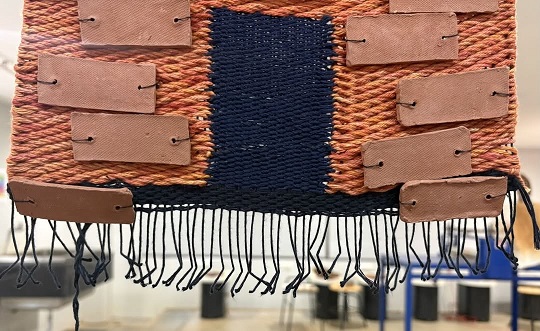
- Aditi Puthane's artwork
3. Aidan Sebastian's artistic exploration inspired by the industrial and social landscapes encountered during the field study.
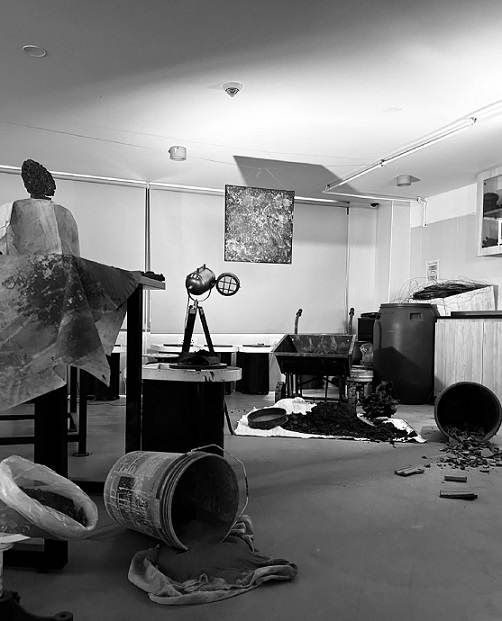
- Aidan Sebastian's art work set up on progress.
4. Hiral Chahar's illustrated book, transforming archival research and field observations into a compelling visual narrative.
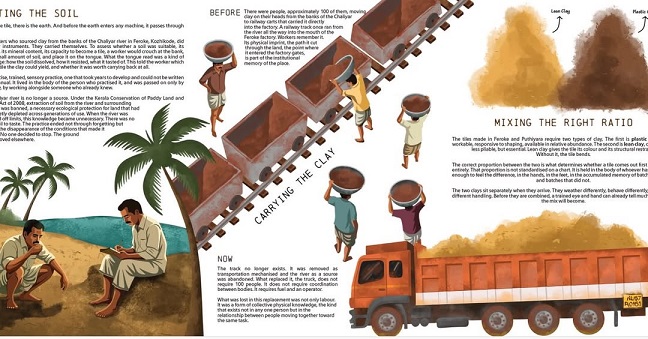
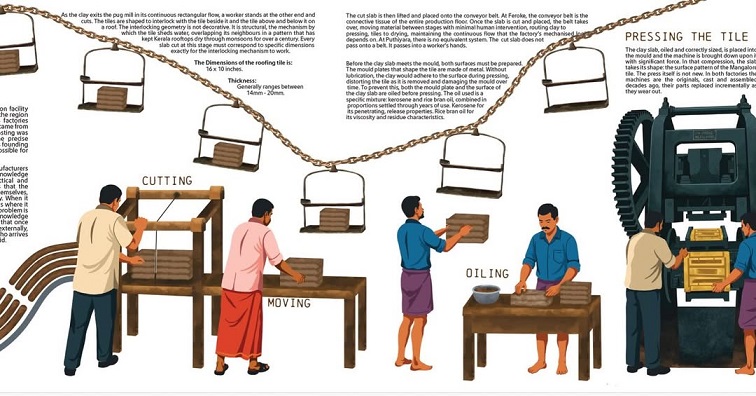 - Pages from Hiral Chahar's illustrated book
5. Emily Kane’s digital portrait of Jaishree, a factory worker, as part of her research questioning the colonial archives and it's exclusions.

- Emily Kane’s digital portrait of Jaishree
These works demonstrated how heritage research can move beyond conventional academic formats and inspire new forms of storytelling, artistic expression, and critical inquiry.
A Meaningful Collaboration
For City Heritage, this is the true purpose of heritage interpretation—to connect people with places, and stories with those willing to listen. The five-day journey may have ended, but the reflections, research, and creative outcomes it inspired will continue to grow long after the students return to their studios and classrooms.
Over five days, students and faculty engaged directly with the landscapes, institutions, industries, and communities that form the living heritage of Malabar. Through these encounters, history moved beyond textbooks and archives and became something that could be experienced, discussed, questioned, and interpreted.
As the journey came to an end, City Heritage presented Certificates of Appreciation to the students and faculty members in recognition of their commitment to heritage research and creative exploration. The certificates were handed over by City Heritage Founder Muhammed Shihad, marking the conclusion of a meaningful collaboration and exchange of knowledge.
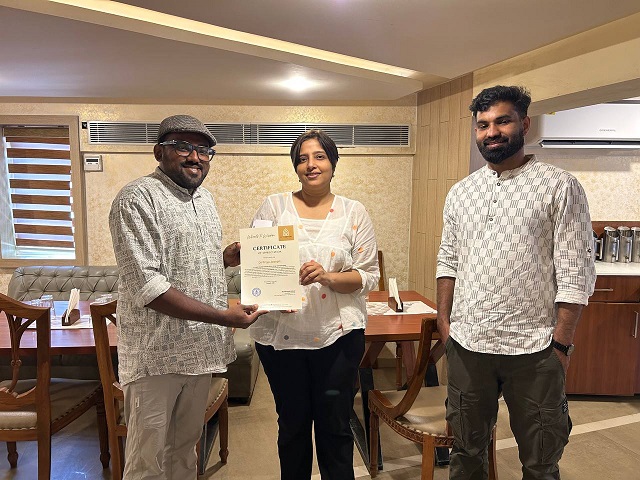
- Presentation of a Certificate of Appreciation to Dr. Priya Joseph by City Heritage founder Muhammed Shihad.
City Heritage promotes research and learning in art, architecture, heritage, history, and related fields in North Kerala, while offering curated cultural explorations.
Get in Touch:
Visit: www.cityheritage.in
Email: mail@cityheritage.in
Instagram: cityheritage.in
Phone: +91 7356569573, +91 8377024979




 (1).png)
© Copyright 2026 City Heritage. All rights reserved.
Website designed by TNM Online Solutions.
If you have any enquiry, feel free to ask, and we'll provide you with a prompt and concise response.