Long before maps drew borders and nations claimed the seas, the Malabar Coast stood as one of the world's greatest maritime crossroads. Nestled between the towering mala (the Western Ghats) and the vast bar (the Arabian Sea), this narrow strip of land possessed a geography unlike any other. The fertile mountains yielded the world's most sought-after spices, while the sea carried them across oceans, connecting Malabar with civilizations thousands of kilometres away.
For over two thousand years, the rhythm of life on the Malabar Coast was governed not merely by kingdoms or rulers, but by the winds. The seasonal monsoon winds brought ships from Mesopotamia, Egypt, Arabia, East Africa, Persia, Southeast Asia, and China, and months later carried them home again. Until the winds changed, merchants remained on these shores, transforming bustling ports into vibrant centres of exchange where commerce, conversation, and culture flourished together.
But the ships that arrived in Malabar carried far more than gold, silver, silk, porcelain, and horses. They brought languages, faiths, ideas, technologies, and traditions. Many merchants settled here, married local women, established families, and became part of the social fabric of the region. In return, they carried home stories of Malabar's spices, craftsmanship, and remarkable hospitality. Through centuries of these encounters, the coast evolved into one of the Indian Ocean's most cosmopolitan societies—a land where diversity was not an exception but a way of life.
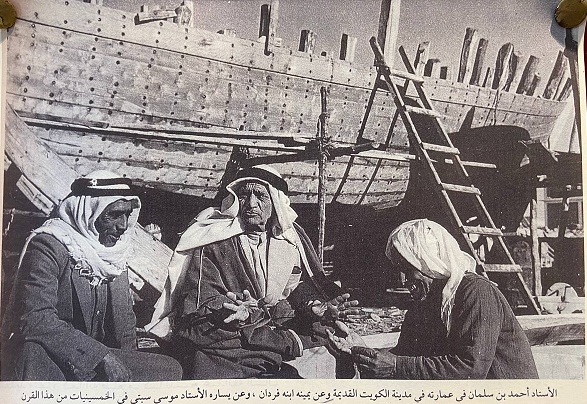
Behind this extraordinary maritime world stood another remarkable story—one that is often overlooked. It was not only the story of merchants and ports, but also of ships, sailors, navigators, naval commanders, and coastal kingdoms that protected these waters. The maritime prosperity of Malabar was sustained by indigenous shipbuilding traditions, remarkable knowledge of the monsoon winds, powerful naval forces, and communities whose lives were inseparable from the ocean.
The Arakkal Kingdom: Sovereigns of the Indian Ocean
Long before European empires arrived on the Malabar Coast, the Arakkal Kingdom of Kannur had already established itself as one of the greatest maritime powers of the Indian Ocean. While many kingdoms measured their strength by the lands they controlled, the Arakkal rulers measured theirs by the horizons they reached.
The story of the Arakkal Kingdom is unlike that of any other royal house in Kerala. Governed through a distinctive matrilineal tradition, the eldest member of the royal family inherited the throne irrespective of gender. Male rulers bore the title Ali Raja, while women ruled as the Arakkal Beevi, making the dynasty one of the few royal houses in South Asia where female sovereigns exercised political authority.
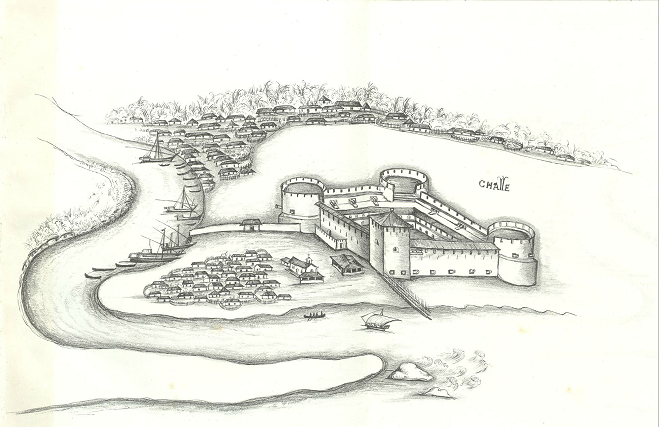
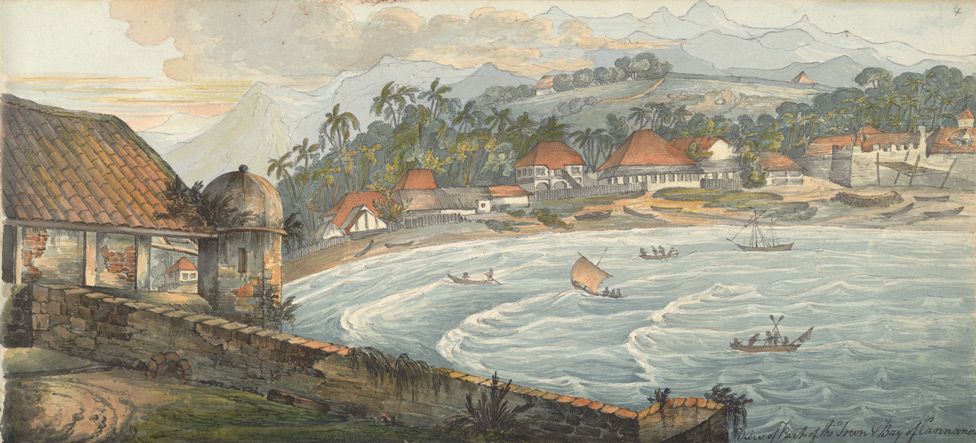
At the heart of this maritime power was Mappila Bay, the historic harbour of Kannur. Protected by the natural contours of the coast and positioned close to the Arakkal palace and the trading quarters of Kannur, the bay served as an important gateway for the kingdom’s maritime activities. It connected the Arakkal rulers with the wider Indian Ocean trading world and provided a harbour for vessels arriving from Arabia and other parts of the western Indian Ocean. The movement of ships, merchants and commodities through Mappila Bay helped transform Kannur into a vibrant centre of maritime commerce and political influence.
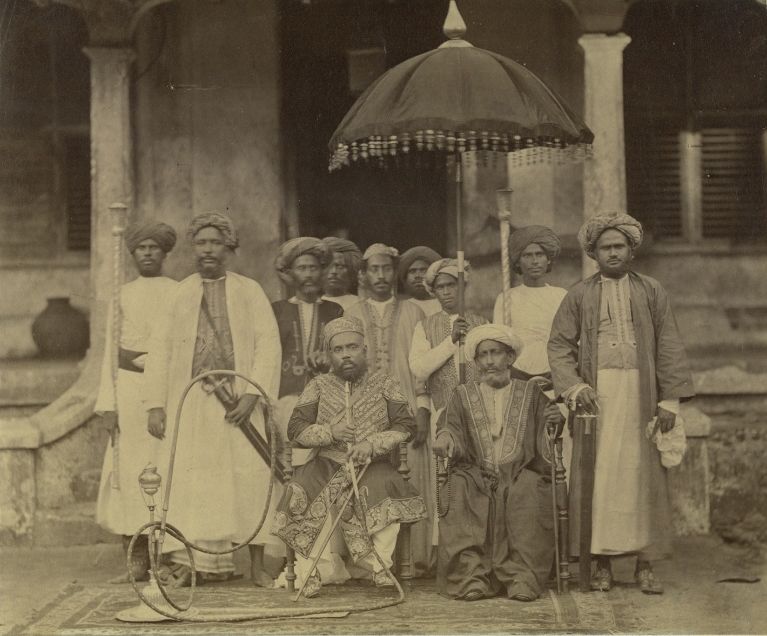
- Arakkal Royal Kingdom (Archival Image)
From this harbour, the Arakkal maritime network extended towards the Lakshadweep Islands and the Maldives, while its commercial connections reached Arabia, Persia, East Africa, Egypt and Southeast Asia. Pepper, cardamom, ivory, pearls, precious stones and fine handicrafts moved westward, while Arabian horses, luxury goods, ideas and cultures arrived on the Malabar Coast. The sea was therefore not simply a route of trade for the Arakkal rulers—it was the foundation of their political and economic power.
Their maritime influence was so closely associated with the sea that Arab sailors are traditionally said to have recognised the Arakkal rulers as “Mamlakathul Bahari” — the Kings of the Sea.
The Portuguese Arrival and the Arakkal’s Naval Resistance
By the close of the fifteenth century, however, a new power appeared on the horizon. Drawn by Malabar's legendary spice wealth, the Portuguese sought to bypass the long-established Arab trading networks and establish a direct sea route to India. In 1498, Vasco da Gama reached the Malabar Coast, marking the beginning of a new era in Indian Ocean history. What began as a commercial mission soon transformed into an ambitious project of military domination. The Portuguese established trading stations, constructed forts, and gradually attempted to monopolize maritime trade through armed force and restrictive permit systems, fundamentally challenging the centuries-old commercial order of the Indian Ocean.
For the Arakkal Kingdom, whose prosperity rested upon free navigation and overseas commerce, Portuguese expansion posed a direct threat. Their trading vessels became frequent targets of Portuguese attacks, resulting in the loss of ships, merchants, and even members of the Arakkal royal family. As Portuguese naval power expanded, fortified by advanced artillery and heavily armed warships, they tightened their grip over the Malabar Coast. The construction of St. Angelo's Fort at Kannur in 1505 symbolized this new order, enabling the Portuguese to monitor maritime traffic and enforce their authority over vessels sailing through Malabar's waters.
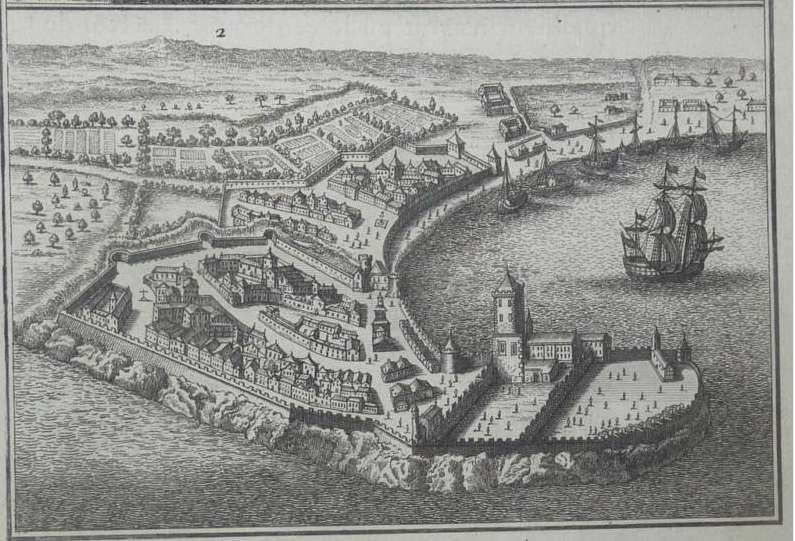
Yet the Arakkal rulers refused to surrender the sea without resistance. Recognising the growing danger, they forged alliances with the Kolathiris, the Zamorin of Kozhikode, and powerful Muslim maritime allies from Egypt and the Ottoman world. In 1506, one of the earliest and most remarkable anti-colonial coalitions in Malabar came together to challenge Portuguese supremacy. A combined naval force, supported by nearly two hundred ships, blockaded St. Angelo's Fort while allied armies launched attacks from land. For weeks, the Portuguese garrison struggled under siege, facing dwindling supplies and the real possibility of defeat. Although reinforcements from Portugal and Kochi eventually forced the coalition to withdraw, the siege demonstrated that the maritime powers of Malabar were capable of setting aside political differences to defend their seas against foreign domination.
Through trade, diplomacy, naval strength, and resistance against colonial expansion, the Arakkal rulers safeguarded Malabar's position as one of the world's greatest maritime crossroads.
Baliya Hassan: The Martyr Who Defied the Portuguese Empire
As Portuguese influence spread across the Malabar Coast, the struggle for control of the sea entered a new and decisive phase. At the forefront of this resistance stood one of the celebrated military leaders of the Arakkal Kingdom—Baliya Hassan. Remembered for his courage, military brilliance, and unwavering loyalty to the Arakkal Ali Raja, Baliya Hassan emerged as one of the greatest defenders of Malabar's maritime freedom during the early sixteenth century.
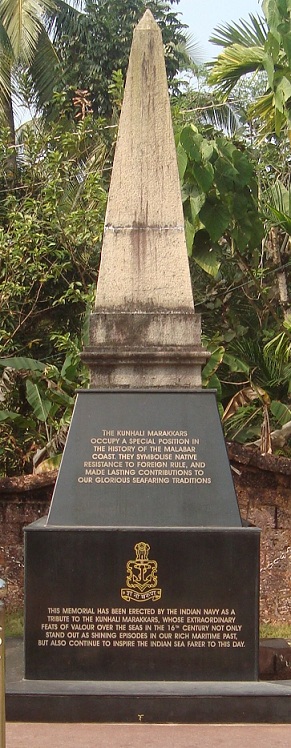
Commanding the formidable naval forces of the Arakkal Kingdom, Baliya Hassan fought alongside the legendary Kunjali Marakkars of Kozhikode in a united effort to challenge Portuguese domination over the Indian Ocean trade. Drawing together Mappila warriors from Purakkad, Ponnani, Tanur, and other coastal settlements, he transformed the resistance into a powerful maritime coalition. Their coordinated attacks on Portuguese fleets and trading posts along the coasts of Kozhikode, Kodungallur, Kochi, Sri Lanka, and the Maldives repeatedly disrupted Portuguese ambitions of establishing an uncontested monopoly over the spice trade. Despite possessing heavily armed ships and superior artillery, the Portuguese found themselves facing an enemy whose knowledge of the sea, swift naval tactics, and regional alliances proved exceptionally difficult to overcome.
The years 1522 and 1523 witnessed some of the most successful campaigns led by Baliya Hassan. Working closely with the Kunjali Marakkars, his forces launched daring attacks on Portuguese camps and captured several Portuguese vessels, significantly weakening their position along the Malabar Coast. These victories demonstrated that the Indian Ocean was far from being a Portuguese sea; it remained fiercely defended by the indigenous naval powers of Malabar.
Unable to defeat him on the battlefield, the Portuguese turned to diplomacy and deception. In 1524, during Vasco da Gama's final voyage to India, Baliya Hassan was reportedly invited to what appeared to be a ceremonial honour through an alliance with the Kolathiri ruler. Arriving unarmed, he was seized, handed over to the Portuguese, and imprisoned within the walls of St. Angelo's Fort at Kannur. The news sent shockwaves across the Arakkal Kingdom. The Ali Raja prepared a large-scale military campaign to storm the Portuguese stronghold, compelling Vasco da Gama to withdraw from Kannur and return to Kochi. There, shortly afterwards, the Portuguese admiral died on 24 December 1524, leaving behind an unfinished struggle for control of Malabar's seas.
The death of Vasco da Gama did not bring justice to Baliya Hassan. Under the new Portuguese administration, he was sentenced to death despite widespread opposition from the Arakkal rulers and the local population. On 7 January 1525, Baliya Hassan was executed at St. Angelo's Fort, becoming one of the earliest martyrs of Malabar's resistance against European colonial expansion. His execution dealt a heavy blow to the military leadership of the Arakkal Kingdom, but it did not extinguish the spirit of resistance.
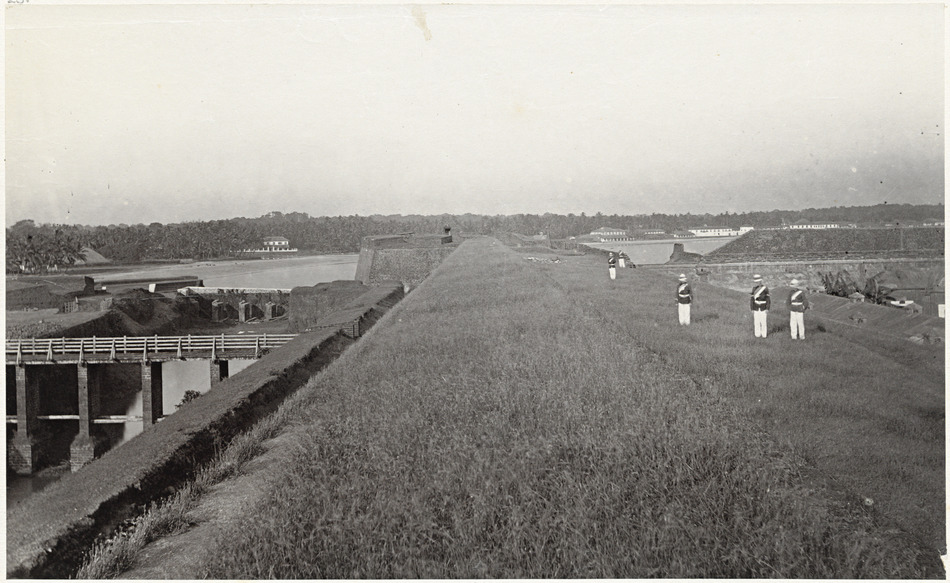
- Kannur St. Angelo's Fort (Archival Image)
The struggle continued with renewed determination. Between 1526 and 1545, the Arakkal Kingdom remained one of the Portuguese Empire's most persistent adversaries on the Malabar Coast. Successive Portuguese campaigns were met with determined resistance from the Arakkal fleet, often strengthened through alliances with the Kunjali Marakkars and powerful rulers such as the Sultan of Bijapur. Although the Portuguese introduced new reinforcements and increasingly relied on fortified coastal bases, the Arakkal rulers refused to abandon their maritime networks.
Ramanthali: The Seventeen Martyrs Who Defended Malabar's Coast
As Portuguese power tightened its grip over the Malabar Coast, resistance was not confined to royal courts or naval commanders. It spread into fishing villages, coastal settlements, and ordinary communities whose lives had been shaped by the sea for centuries. One such chapter unfolded at Ramanthali in 1524, beneath the shadow of the historic Ezhimala hills, where a small band of local Muslims chose courage over surrender and etched their names into the maritime history of Malabar.
Following the arrival of Vasco da Gama in 1498, the Portuguese sought not only to dominate the lucrative spice trade but also to dismantle the long-established Arab-Muslim commercial networks that had flourished on the Malabar Coast for centuries. Their expansion was accompanied by violence against merchant communities, attacks on trading vessels, and the destruction of mosques in several coastal centres, including Kozhikode, Ponnani, Chaliyam, Kochi, and Kannur. As their influence expanded northwards, the peaceful coastal settlement of Ramanthali also became a target.
Among the stories that continue to be passed down through generations is the tale of a young Muslim woman who was abducted by the Portuguese. Refusing to remain silent, seventeen courageous young men from the village set out to rescue her. Armed only with determination, they confronted the Portuguese soldiers, who possessed firearms and cannons far superior to their own weapons. The battle was fierce and unequal. According to local tradition, seventeen of the young men fell in combat while bravely defending their community. Local tradition further recounts that the Portuguese buried the bodies of the seventeen martyrs together in a well in an attempt to erase their memory.
Instead, their sacrifice became immortal. Today, the names of ten of these brave martyrs continue to be remembered: Pokkar Moopan, believed to have been their commander, Pari, Kalandar, Kunhipari, Pari, Qamber, Abubacker, Ahmed, Bakiri Hassan and Cherikkakka. The names of the remaining seven heroes have gradually faded from memory, yet their sacrifice continues to live on in the collective consciousness of the people of Ramanthali. Their resting place, situated before the Ramanthali Juma Masjid, remains a place of remembrance, and many families in the region trace their ancestry to these courageous defenders of the coast.
The Zamorin of Calicut: Guardian of the Spice Coast
Calicut (Kozhikode) had already earned a reputation as one of the greatest ports of the Indian Ocean. Its bustling harbour welcomed merchants from Arabia, Persia, East Africa, China, and Southeast Asia, making it the heart of the global spice trade. At the centre of this thriving maritime world stood the Zamorin of Calicut (Samoothiri), a ruler whose strength was measured not merely by the territory he governed, but by the vast network of commerce that flowed through his port. Pepper, ginger, cardamom, and other precious commodities reached distant markets through Calicut, making the Zamorin one of the most influential maritime rulers of medieval India.
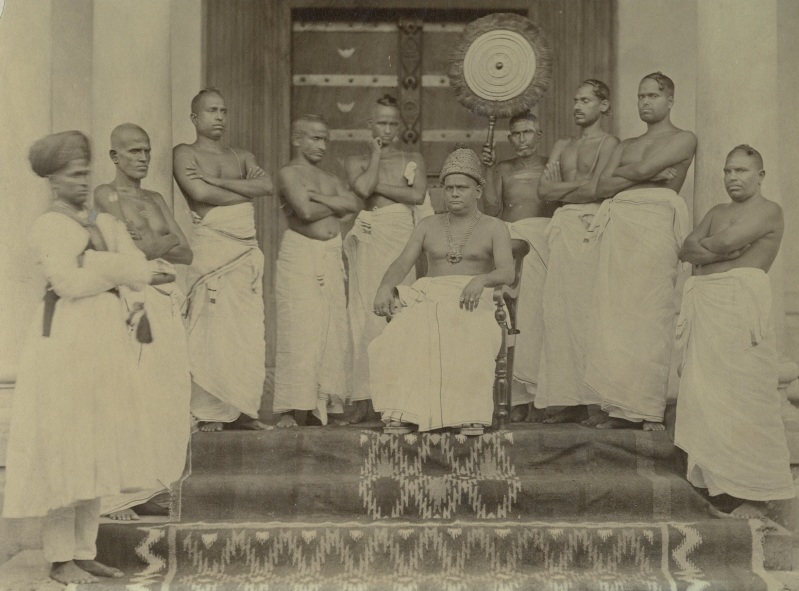
- Zamorin of Calicut (Image: Wikimedia - between 1816 - 1900)
Unlike many contemporary kingdoms that relied primarily on land-based warfare, the Zamorin understood that the prosperity of Calicut depended upon the freedom of the sea. Protecting merchant ships, maintaining secure sea routes, and preserving the confidence of international traders became essential pillars of his administration. Arab merchants, who had traded peacefully on the Malabar Coast for centuries, found in Calicut a ruler who respected commercial freedom and ensured the safety of overseas trade. This policy transformed the city into an open port where merchants of different cultures, languages, and faiths conducted business under royal protection.
The arrival of the Portuguese in 1498 fundamentally challenged this maritime order. Rather than participating in the existing trading system, they sought to monopolise the spice trade through military force, fortified ports, and armed control of shipping. Their attempts to dominate the Arabian Sea threatened not only the Zamorin's commercial prosperity but also the centuries-old freedom of navigation that had made Calicut the leading port of the Indian Ocean.
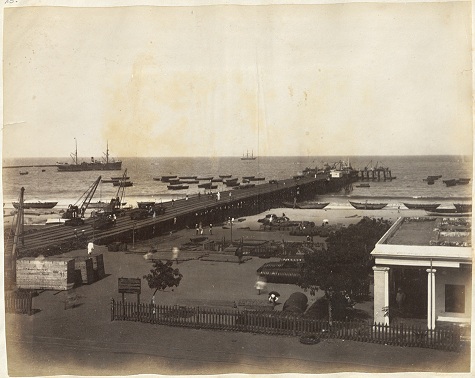
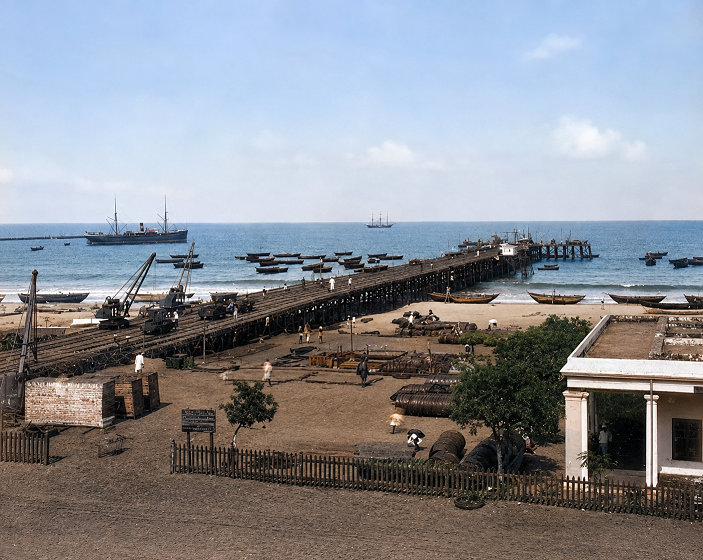
- Calicut Sea Bridge (Archival Image)
Tuhfat al-Mujahidin: The Book that Armed Malabar's Maritime Resistance
Not every battle for the sea was fought with swords, cannons, or ships. Some were fought with ideas. At a time when Portuguese fleets dominated the Arabian Sea and sought to dismantle the centuries-old maritime order of Malabar, one scholar chose the pen as his weapon. That scholar was Sheikh Zainuddin Makhdum II, and his masterpiece, Tuhfat al-Mujahidin fi Ba'd Akhbar al-Burtughaliyyin ("A Gift to the Warriors concerning the Deeds of the Portuguese"), became one of the most influential works ever written on the naval resistance of the Malabar Coast.
The story of the Makhdum family itself was closely connected to Malabar's maritime world. Believed to have originated in Yemen, the family crossed the Arabian Sea and settled first in the Kannur region, where some of the earliest Portuguese attacks and resistance unfolded. Sheikh Zainuddin was born at his maternal home in Chempola (Mahe), received his early education in Ponnani, and later travelled across the Arabian Sea to Mecca for higher studies. On his return, he became a teacher at the Ponnani Juma Masjid, transforming the historic port town into one of the leading centres of Islamic scholarship and intellectual resistance in the Indian Ocean world. During the reign of Ali Adil Shah of Bijapur, to whom the work was dedicated, Sheikh Zainuddin completed Tuhfat al-Mujahidin in 1583.
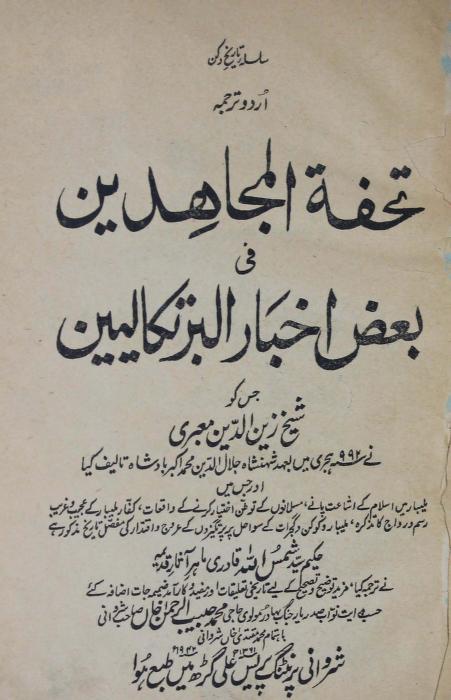
- Tuhfat al-Mujahidin fi Ba'd Akhbar al-Burtughaliyyin (Image: Internet Archive)
Unlike many chronicles of its age, Tuhfat al-Mujahidin was written by a scholar who lived through the Portuguese expansion and witnessed its impact on the people of Malabar. Covering the period from 1498 to 1583, it provides one of the earliest indigenous accounts of Portuguese activities on the Malabar Coast while also presenting a vivid picture of Kerala's maritime society, its ports, merchants, rulers, and the cultural coexistence that had flourished through centuries of Indian Ocean trade.
It describes the principal harbours of Malabar, the arrival of Arab merchants, the flourishing spice trade, and the maritime policies of rulers such as the Zamorin and the Ali Rajas of Kannur. It vividly narrates the emergence of the Kunjali Marakkars, whose swift naval tactics transformed the struggle against the Portuguese into one of the earliest examples of organised naval resistance in the Indian Ocean. Among the most dramatic episodes recorded in the work is the capture of Chaliyam Portuguese Fort in 1571, where the combined Nair and Muslim forces of the Zamorin overran the Portuguese stronghold. The fall and demolition of this strategically important fort dealt a severe blow to Portuguese naval dominance and restored control over one of the most vital maritime gateways of Malabar.
Yet Tuhfat al-Mujahidin was more than a historical record—it was a call to defend the sea. Sheikh Zainuddin believed that the struggle against the Portuguese was not simply about commerce, but about protecting the freedom of navigation, the security of coastal communities, and the maritime traditions that had connected Malabar with Arabia, Africa, and Asia for centuries. Through his writings, he inspired rulers, merchants, and seafaring communities to unite in safeguarding the Indian Ocean from colonial domination. His words strengthened the ideological foundations of the resistance that inspired the Kunjali Marakkars, supported the Zamorin's naval campaigns, and reinforced the maritime alliances that defined sixteenth-century Malabar.
Centuries later, it is one of the earliest indigenous histories of Kerala's maritime world, preserving the voices of those who defended Malabar's ports, protected its shipping lanes, and challenged one of the greatest naval empires of the early modern world.
Fath-ul Mubeen: The Poem that Celebrated Malabar's Naval Triumph
“Al Fath-ul Mubeen li-Samiri al-ladhi Yuhibbul Muslimin” (‘The Victory of the Zamorin of Calicut, Benevolent of Muslims’) is the celebrated Arabic war poem composed by Qazi Muhammad I ibn Abdul Azeez. Written towards the end of the sixteenth century, this masterpiece of 537 verses is one of the earliest literary works in India to commemorate organised resistance against European colonial expansion. More than a poem, it is an eyewitness tribute to one of the greatest naval victories in the history of the Malabar Coast—the capture of the Portuguese fort at Chaliyam.
For the Portuguese, Chaliyam was far more than a military outpost. Standing at the entrance to the waterways of Kozhikode, it occupied one of the most strategic maritime locations on the Malabar Coast. Recognising its immense commercial and naval importance, the Portuguese secured permission to construct a fort there, hoping to tighten their control over Malabar's sea routes and strengthen their monopoly over Indian Ocean commerce.
Yet the sea had always belonged to those who understood its rhythms. Under the leadership of the Zamorin of Kozhikode, a united force of Nair and Muslim warriors, supported by Malabar's maritime communities, laid siege to the Portuguese stronghold. After years of determined resistance, the fort finally fell in 1571. The destruction of Chaliyam Fort marked a decisive turning point in the struggle for control of the Arabian Sea, reopening one of the most important maritime gateways of Malabar and dealing a severe blow to Portuguese naval ambitions.
Qazi Muhammad himself had direct connections with the conflict, and his poem carries the vividness of an eyewitness account. Through eloquent verses, he praised the courage of the Zamorin, who, despite not being a Muslim ruler, stood firmly beside the Muslim merchant communities in defending Malabar's maritime freedom. He also honoured the bravery of the Nair and Muslim soldiers who fought together against the Portuguese, presenting the victory at Chaliyam as a triumph born from unity rather than division.

- New printing of 'Fath-ul Mubeen' (Image: Amazon)
The poem goes beyond the battlefield to reveal the larger struggle unfolding across the Indian Ocean. It recounts how the Portuguese arrived as traders but gradually sought to dominate the spice trade, destroy established Arab merchant networks, impose their authority over maritime commerce, and use fortified ports to control the movement of ships along the Malabar Coast. Against this expanding naval empire, Fath-ul Mubeen proclaimed that the defence of the sea was inseparable from the defence of Malabar's ports, merchants, and centuries-old traditions of maritime exchange.
Qazi Muhammad deliberately composed the work in Arabic. He hoped that rulers, scholars, merchants, and sailors across the Indian Ocean world would learn of the courage shown on the Malabar Coast and recognise the importance of resisting Portuguese domination. His poem was therefore not merely a celebration of victory; it was a message carried across the sea, seeking solidarity among the wider maritime world.
Today, Fath-ul Mubeen remains one of the finest literary witnesses to Malabar's naval heritage.
New Empires: The Dutch, the British, and the Last Maritime Stand of Arakkal
By the beginning of the seventeenth century, the Portuguese monopoly over the Indian Ocean was beginning to weaken. Sensing an opportunity, another European power appeared on the horizon—the Dutch East India Company (VOC). Unlike the Portuguese, who arrived with a strong religious and military agenda, the Dutch were driven primarily by commerce. They first reached Kannur in 1604 and soon entered into diplomatic relations with the rulers of Malabar, including the Zamorin of Kozhikode. As their influence expanded across the Indian Ocean, they captured Portuguese strongholds one after another, and with the fall of Kochi in 1663, the Portuguese era on the Malabar Coast effectively came to an end.




 (1).png)
© Copyright 2026 City Heritage. All rights reserved.
Website designed by TNM Online Solutions.
If you have any enquiry, feel free to ask, and we'll provide you with a prompt and concise response.