
Yasin Asharaf P| Published on 03/03/2026
A soft breeze moved beneath the ancient banyan tree as if the earth itself sensed what was to unfold. Hidden just five hundred meters from the main road stood Karanthur Sree Areekkal Bhagavati Temple — not announced by signboards, but by sound. The steady, summoning rhythm of the chenda guided every seeker toward the sacred kaavu, where coconut leaves, wild blossoms, and humble offerings waited before the shrine.
By afternoon, the grove had already awakened. Families arrived carrying infants, elders walked slowly with folded hands, footwear lay scattered at the entrance in silent reverence. They brought bananas and coconuts — and also unseen burdens: worries, vows, whispered prayers. The ritual would hold them all.
The Gentle Beginning – Vellattam
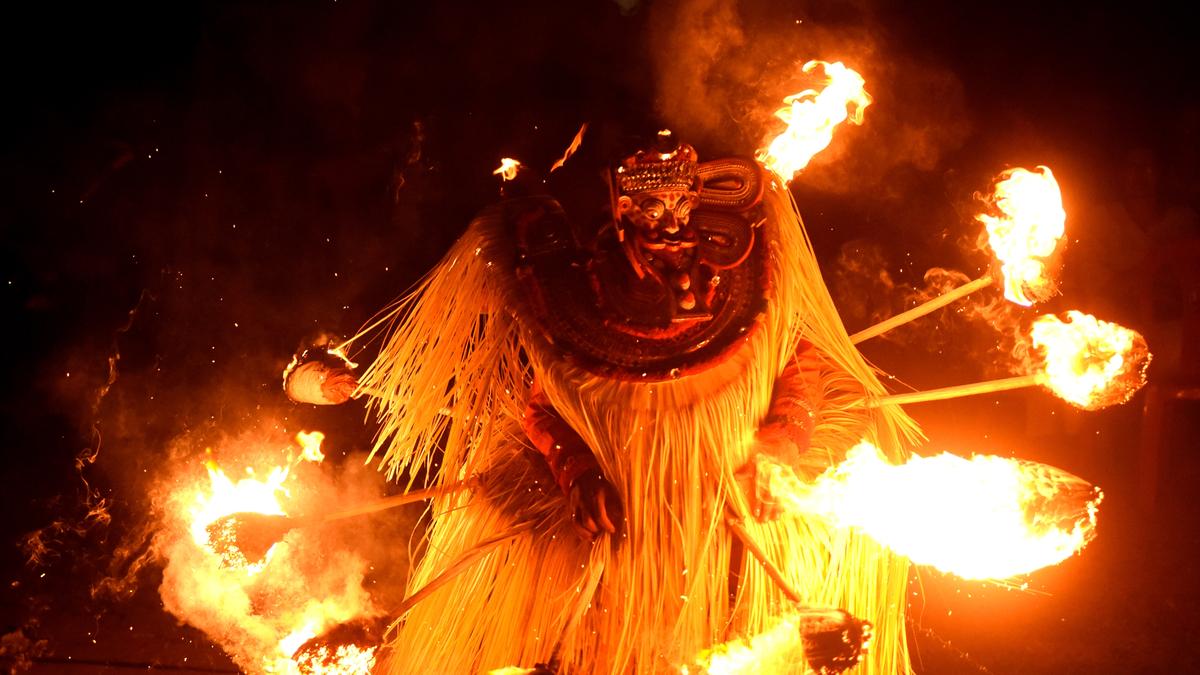
Thirayaattam begins not in spectacle, but in invocation. The first stage, Vellattam or Thottam, unfolds in daylight. The performer appears with minimal adornment, his body glowing with turmeric under the sun. The chenda beats steadily, joined by elathalam, thudi, panchayudham, and the haunting kuzhal. Through song and narration, he recounts the origins and powers of the deities. This is not performance — it is awakening. The goddess is invited gently into the grove.
Each year, the Peruvannan leads this sacred opening. His voice carries inherited knowledge — myths, rituals, discipline. More than a performer, he is a guardian of continuity, mentoring the next generation so that nothing is forgotten. Under his guidance, memory becomes movement.
As daylight fades, Thirayaattam deepens — from Vellattam’s quiet honesty to the blazing intensity of night, and finally toward Chanthattam at dawn, when the ritual softens once more before returning to the earth.
When Night Descends
By evening, the grove transforms. Flames from dried coconut-leaf torches flare against the dark sky. Smoke mingles with devotion. The drums grow louder, heavier. Beneath the banyan’s shadow, anticipation thickens.
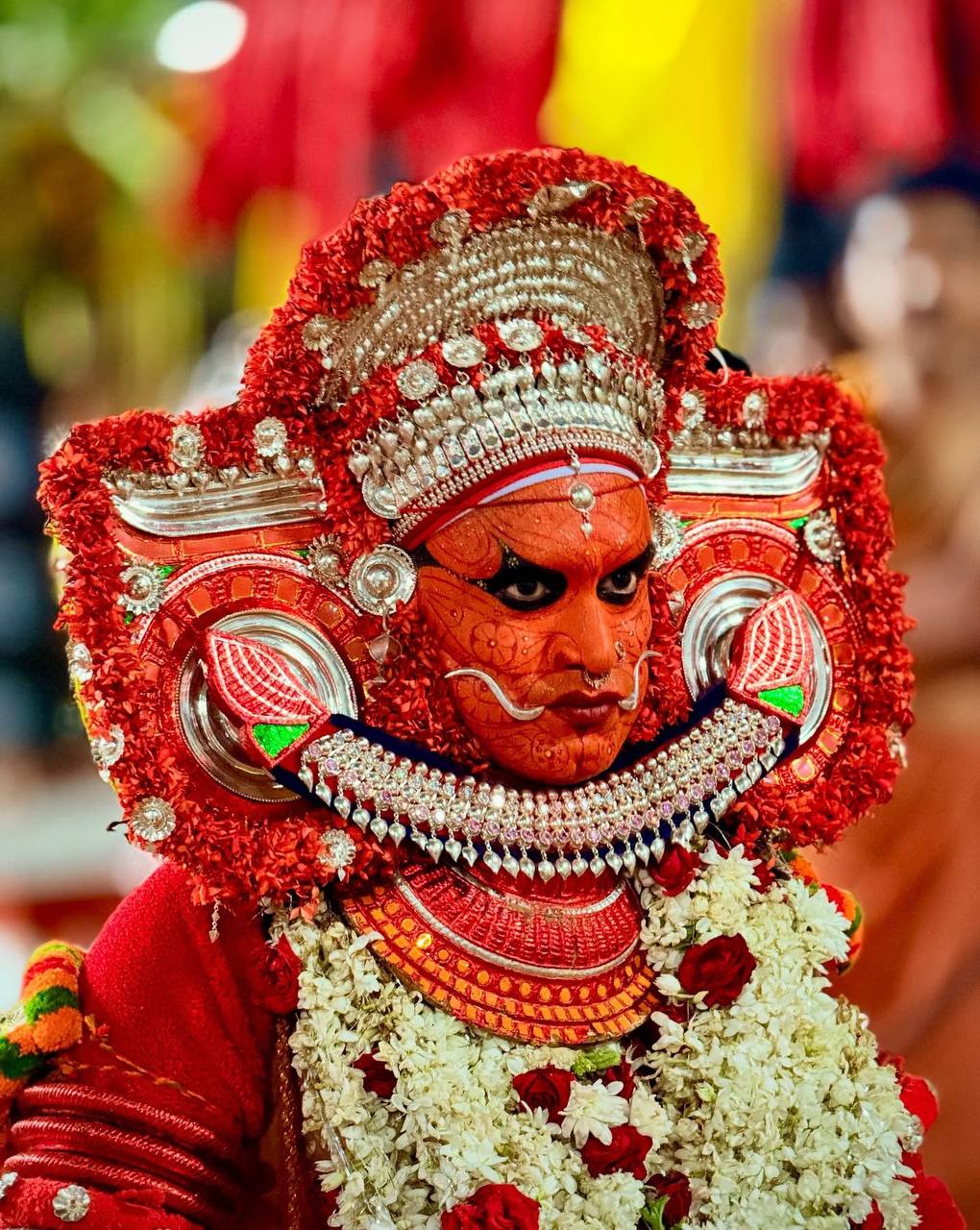
From the darkness, the performer emerges — no longer merely a man. His face is painted in intricate patterns, black mashi encircling his eyes with fierce intensity. His body glows in white, red, yellow, and black designs drawn with palm-leaf brushes. A towering wooden crown adorned with silk and peacock feathers rises above him. He has become a kolam — a living manifestation of the divine.
The word Thiram means radiance, and under the torchlight he shines with otherworldly brilliance.
Deities are invoked — Guligan, Karanavar, Kuttichathan, Kandakarnan, Vishnumoorthi, Vasoorimala Thampuraatti, Bhagavathi. With each name, the rhythm intensifies. The performer moves with controlled fury, sometimes stepping across red-hot embers, untouched by pain. To the devotees, this is proof: the divine has descended.
Then comes the moment.
Possession strikes like a storm. The air shifts — electric, heavy. Some devotees tremble; some sway. Faith becomes visible. Under drumbeat and flame, the ordinary dissolves.
Suddenly, the rhythm softens.
One by one, devotees approach the embodied deity. They bow low, speak their fears, confess grief, seek guidance. The possessed performer listens and responds with calm authority. It is not theatre — it is communion. A sacred conversation between human vulnerability and divine assurance.
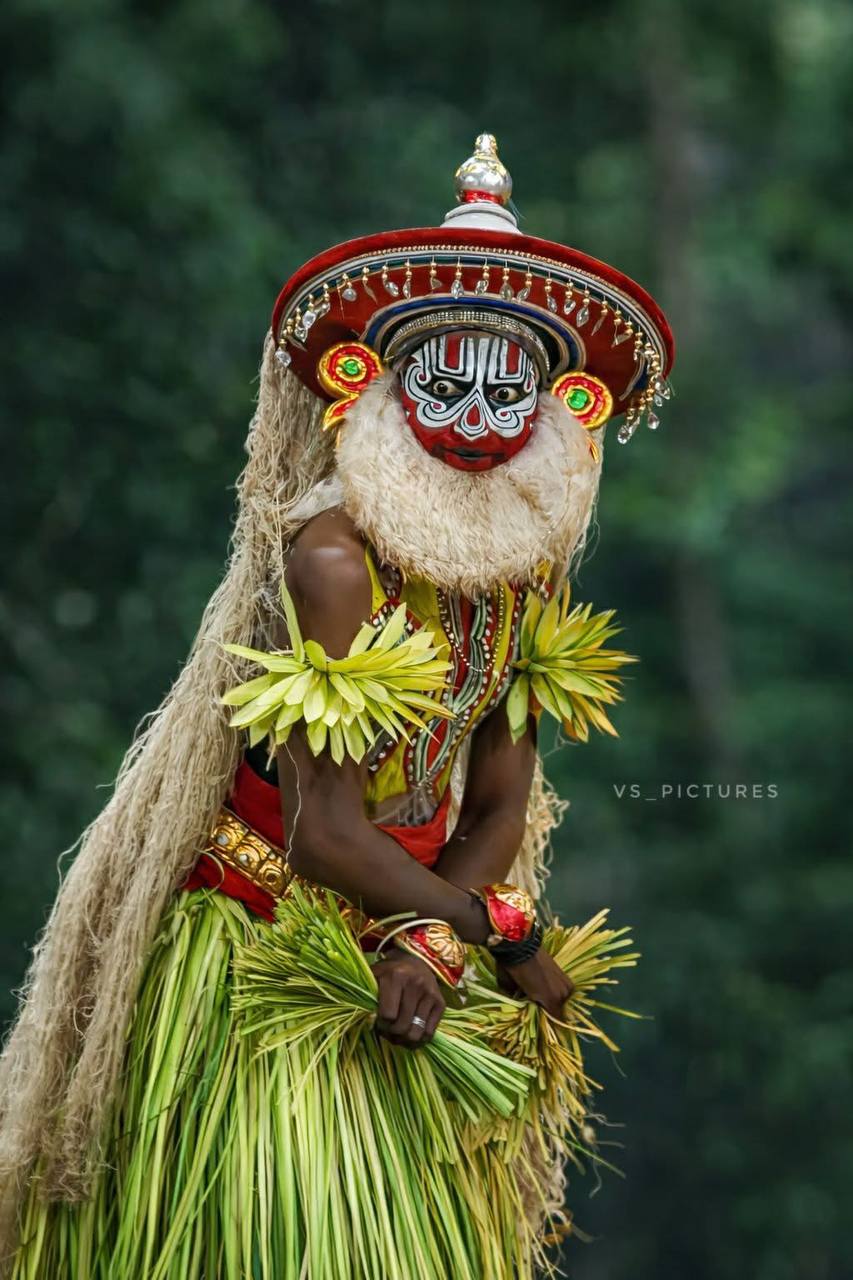
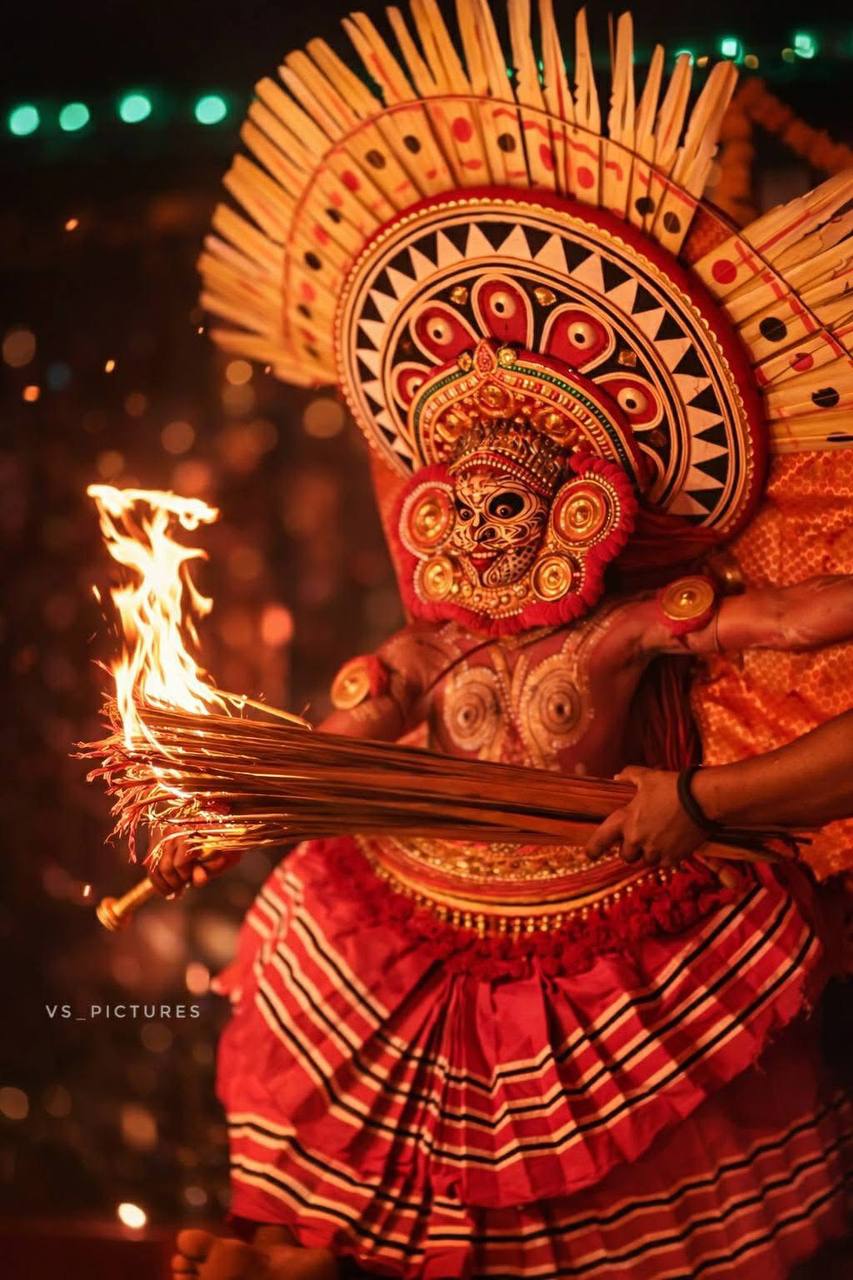
1. Bhairavan Thira 2. Raktheswari Thira
Stories Carried by Flame
Every grove carries its own legend. From one kaavu to another, the stories shift, yet most revolve around Bhagavathi and ancestral guardians.
Though related to Theyyam, Thirayaattam carries a different spirit. While Theyyam often tells of oppressed heroes rising in grandeur, Thira feels intimate — rooted in ancestral memory. Here, movement speaks louder than costume. The dance itself becomes devotion.
Traditionally performed by the Perumannan community, Thirayaattam invokes three sacred realms — the Mother Goddess, the Hill Gods, and the Ancestors — reflecting Kerala’s deep tribal and animistic heritage where nature and divinity are inseparable.
For generations, these beliefs have protected the sacred groves. Because a deity resides within, the land remains untouched. Faith becomes conservation. The kaavu survives.
And so, Thirayaattam is more than a ritual. It is the ancient bond between human and forest, fire and faith, memory and survival. In an age of vanishing trees and fading traditions, the drums still echo beneath the banyan.
This is the story of our gods. And in the sacred groves of Malabar, the story continues to breathe.
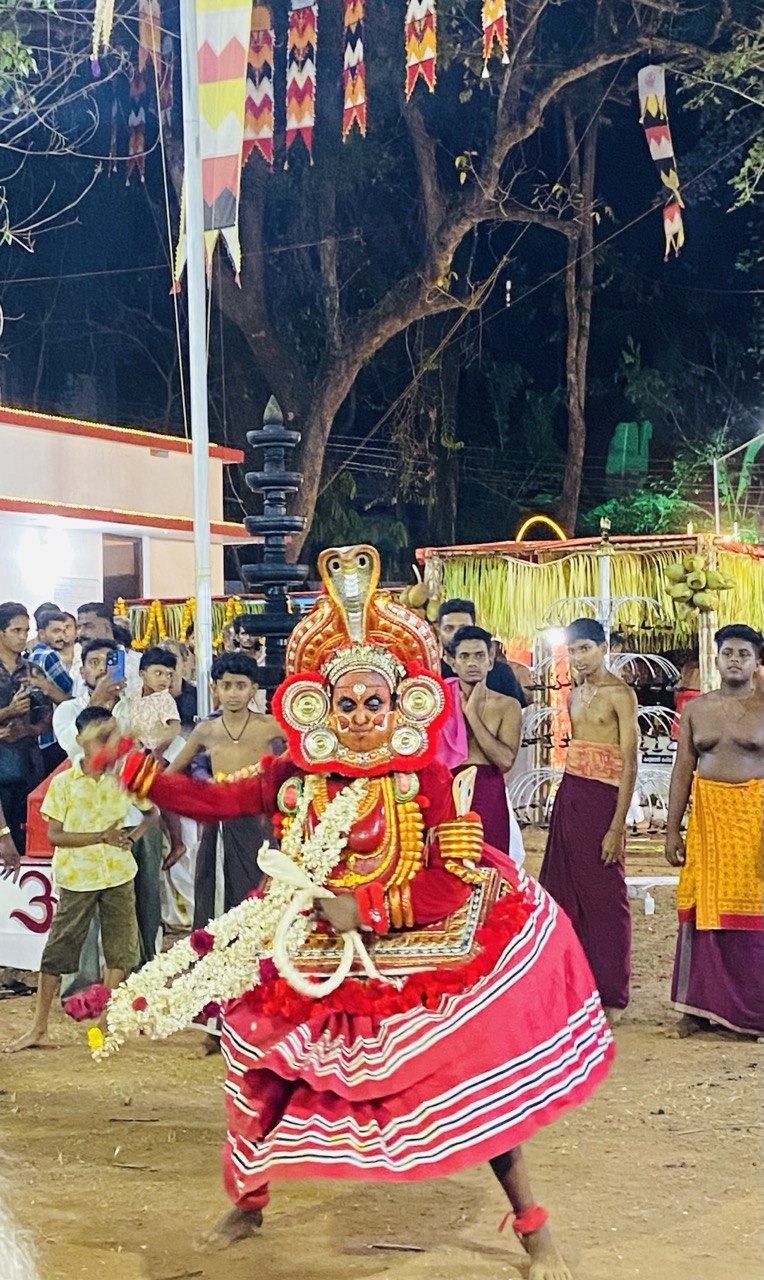
- Thira Happened in Narangali Sree Bhagavati Temple, Calicut
Click the link to watch the Thira video: Experince Thira with City Heritage
Visit us and Contact:
Explore the soul of Malabar - the Thirayattam. Contact us for an unforgettable experience.
Get in Touch:
Visit: www.cityheritage.in
Email: mail@cityheritage.in
Instagram: cityheritage.in
Phone: +91 7356569573, +91 8377024979




 (1).png)
© Copyright 2026 City Heritage. All rights reserved.
Website designed by TNM Online Solutions.
If you have any enquiry, feel free to ask, and we'll provide you with a prompt and concise response.