
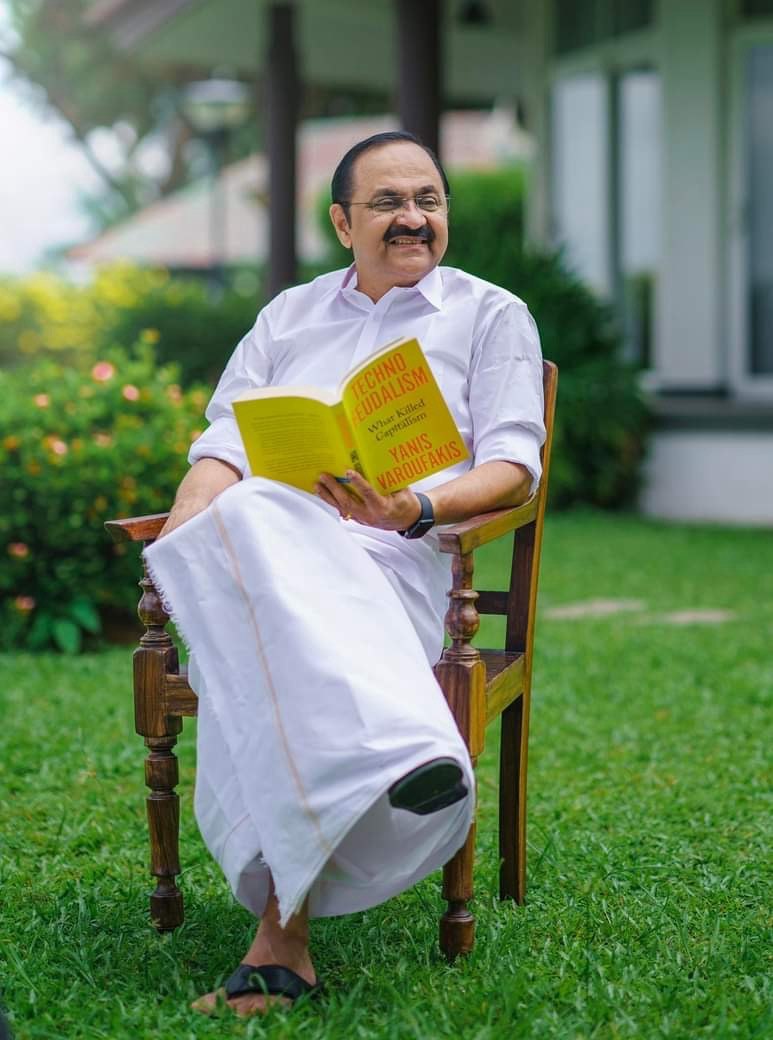
The dawn of May 2026 has brought a new reflection to the political and cultural horizon of Kerala. With the election of V.D. Satheeshan as the Chief Minister, the state has found a leader who doesn't just govern geography, but embodies a history. Representing the Paravur constituency for an unbeaten 25 years, Satheesan has emerged as a “tall figure” in Kerala’s grassroots politics, bridging the ancient pluralism of Muziris with the aspirations of a modern, secular generation.
The Man Behind the Aura: Roots and Academic Excellence
To understand the leadership of V.D. Satheesan, one must first understand the intellectual and cultural foundations that shaped him. His full name — Vadassery Damodaran Satheesan — carries the memory of his family lineage and the influence of his father, Damodaran. More importantly, his roots are deeply connected to the historic land from which he emerged — the shores of ancient Muziris, a civilization whose history stretches back more than 2,000 years. Growing up in a region shaped by centuries of trade, cultural exchange, and coexistence, Satheesan inherited not only a political identity, but also the pluralistic spirit of a land that once connected Kerala to the wider world.
Satheesan’s rise is rooted in academic rigor and a deep sense of social responsibility:
• Early Years: Born to K. Damodara Menon and V. Vilasini Amma, he began his journey in Nettoor and Panangad, where his leadership traits first surfaced as a school leader.
• The Intellectual Edge: A graduate of Sacred Heart College, Thevara, he went on to earn a Master of Social Work (MSW) from Rajagiri College of Social Sciences.
• The Legal Mind: His mastery of the law is evidenced by his LLB from Kerala Law Academy and LLM from Government Law College, Thiruvananthapuram. Before his full-time political ascent, he spent a decade practicing in the Kerala High Court, a background that informs his precise and principled legislative discourse.

Image Courtesy: Facebook
And since 2001, V.D. Satheesan has achieved what few politicians can: a 25-year unbeaten streak in Paravur. This isn't just a political record; it is a profound bond with a land that was once the “Emporium of the East.”
V.D. Satheesan has created a new aura among the youth and at the grassroots levels. In a world often divided by rhetoric, his stance is clear: Unity in Diversity.
Why Kerala Chose this Reflection
• The Secular Trend: His historic mandate as CM is a reflection of Kerala’s desire for a leader who treats pluralism as a lived reality rather than a political slogan.
• Respect for the Vivid: Whether it is the traditional handloom weavers of his constituency or the digital innovators of Kochi, Satheesan commands respect through his deep love for Kerala’s vivid community structures.
• Colleagues and Connections: From his early days as MG University Union Chairman to his collaboration with senior leaders like Ramesh Chennithala and K.C. Venugopal, he has built a network characterized by intellectual depth and professional integrity.
The Guardian of Muziris & Pattanam
V.D. Satheesan represents more than a constituency; he represents one of the most historically significant landscapes in Kerala — the ancient region of Muziris, believed to be centered around present-day Pattanam in North Paravur. This was once the maritime gateway of the Malabar Coast, where ships from Rome, Arabia, Persia, Egypt, China, and later Europe arrived in search of Kerala’s treasured spices and global trade connections.
For Satheesan, Muziris is not merely an archaeological discovery or a tourism narrative. It is a living symbol of Kerala’s shared heritage, secular traditions, and civilizational openness. The discoveries unearthed from Pattanam — Roman coins, amphorae, Mediterranean ceramics, wharf structures, beads, canoe remains, and evidence of ancient maritime trade — reveal a society that thrived not only through commerce, but through cultural coexistence and human connection.
He represents a land where the Jewish synagogue, the Cheraman Juma Masjid, ancient temples, and churches continue to stand as timeless reminders of a society that welcomed the world with dignity and harmony. In many ways, the inclusive and secular values associated with Satheesan’s public life reflect the very spirit of Muziris itself — a land where trade connected continents and diversity shaped civilization.
Why Muziris Still Matters
To understand the spirit of Kerala’s coastal history, one must understand Muziris — the ancient maritime soul of the Malabar Coast. Between the Western Ghats and the Arabian Sea once stood three legendary port cities: Muziris, Tyndis, and Naura. Among them, Muziris emerged as the greatest gateway connecting Kerala to the wider world.
Ancient texts such as the Periplus of the Erythraean Sea and the writings of Pliny the Elder described Muziris as “the first emporium of India,” filled with ships carrying gold, wine, silk, and luxury goods from distant continents. Black pepper from the hills of Kerala travelled through Muziris to the Mediterranean world, making the port a central hub in the global spice trade from as early as the 1st century BCE.
Yet the significance of Muziris extended far beyond trade and commerce. Along with merchants arrived ideas, faiths, languages, traditions, cuisines, and cultures that transformed the Malabar Coast into one of the world’s earliest spaces of cultural coexistence. Judaism, Christianity, and Islam are all believed to have reached India through this historic coast, making Muziris a lasting symbol of Kerala’s multicultural and secular heritage.
Even today, the shores of ancient Muziris preserve the living memories of that shared past. The Cheraman Juma Masjid, regarded as the first mosque in India, some of the earliest Christian churches, enduring Jewish heritage sites, and ancient temples continue to stand across the Paravur and Kodungallur regions as timeless symbols of harmony and coexistence. Kerala’s native rulers welcomed traders and travelers with openness and dignity, nurturing a society where diversity was not merely accepted, but celebrated.
The Jewish connection to Muziris dates back more than two thousand years, with traditions linking the first Jewish traders to the era of King Solomon. Drawn by the flourishing spice trade and the atmosphere of tolerance in Kerala, Jewish communities settled in the Muziris region and gradually became an influential part of its social, economic, and cultural life. Synagogues at Paravur and Chendamangalam, along with old cemeteries and heritage sites, continue to preserve the memory of one of the oldest Jewish diasporas in India.
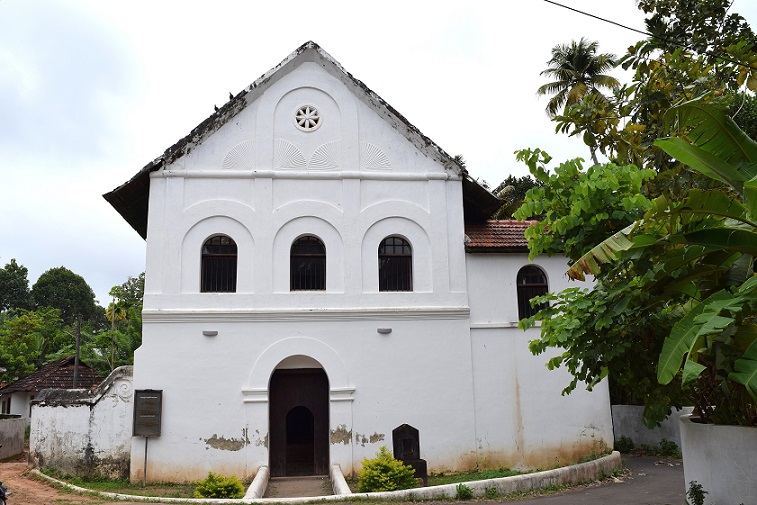
- Chendamangalam Jewish Synagogue (Image Courtesy: Wikepedia)
Islam reached Kerala through the same maritime networks that connected Muziris to Arabia and the Middle East. The Cheraman Juma Masjid, built in 629 CE by Malik Ibn Dinar during the lifetime of Prophet Muhammad, is widely regarded as the first mosque in India and among the earliest in the world to host Juma prayers. Rooted in the legendary story of the Chera king Cheraman Perumal embracing Islam, the mosque stands today as a remarkable blend of Middle Eastern and traditional Kerala architecture, reflecting the cultural synthesis that defined Muziris.
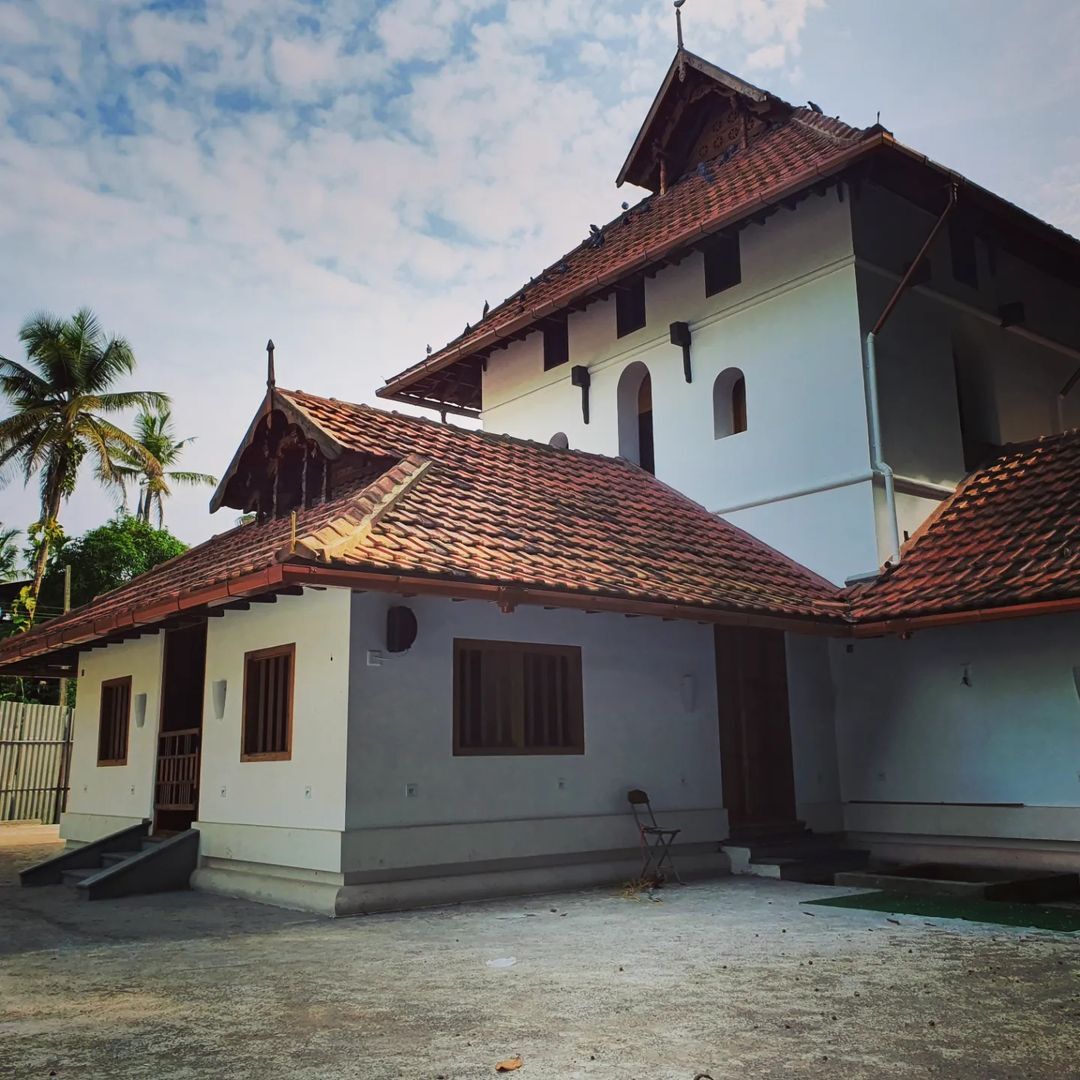
- Cheraman Juma Masjid, Kodungallur (Image Courtesy: Wikepedia)
Christianity too is deeply woven into the history of this coast. According to long-standing traditions of the St. Thomas Christians, the Apostle Thomas arrived at Muziris in 52 CE and established one of the earliest Christian communities in the world outside the Middle East. The historic St. Thomas Church near Kodungallur, believed to have been founded by the Apostle himself, remains a sacred symbol of this legacy. Along with the other ancient “Ezhara Pallikal” churches established across Kerala, it reflects how the Muziris coast became an early center for the spread of Christianity in India.
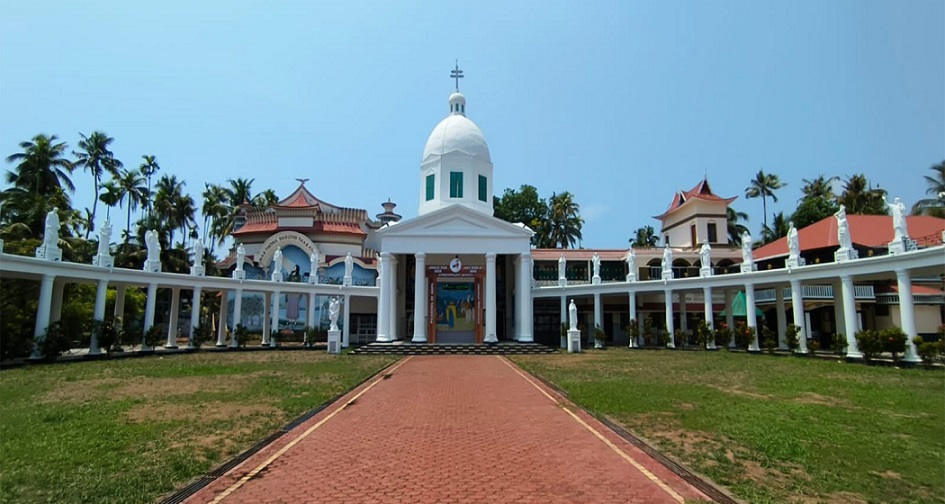
- St. Thomas Church near Kodungallur
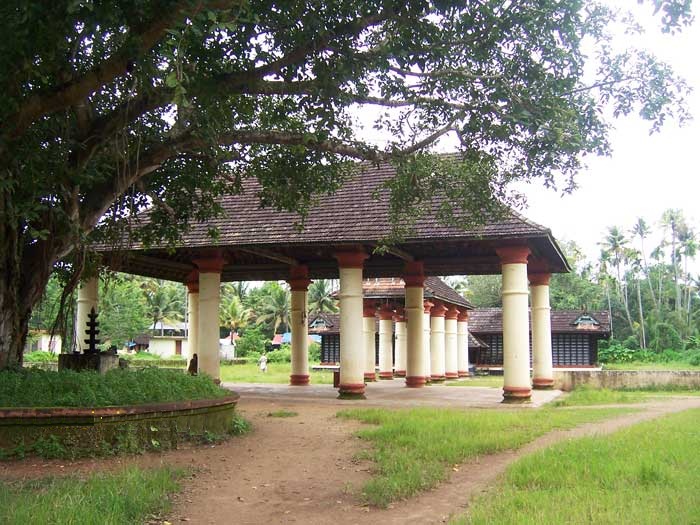
- Puthiyathrikovu Shiva Temple
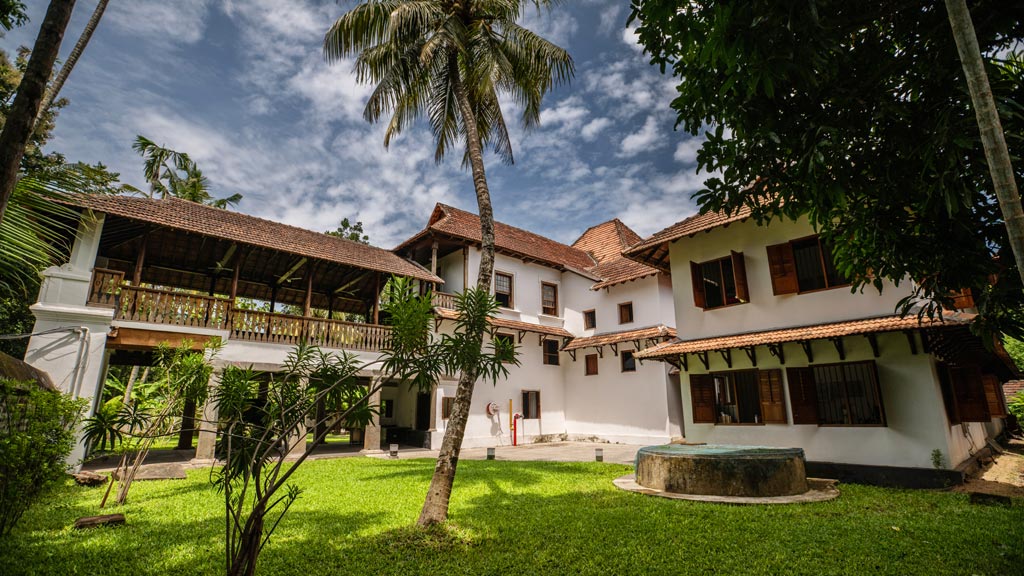
- Paliam Palace (Image Courtesy: Kerala Tourism)
Together, these histories reveal that Muziris was never merely a port of spices and wealth; it was a gateway of civilizations, where people of different faiths, cultures, and traditions arrived from across the world and found acceptance on the shores of Kerala.
Modern archaeological excavations conducted by the Kerala Council for Historical Research (KCHR) at Pattanam have uncovered powerful evidence of these ancient global connections. Roman coins, amphora fragments, Chinese porcelain, West Asian pottery, and signs of advanced urban and maritime life reveal that ancient Kerala maintained international networks centuries before the rise of modern globalization.
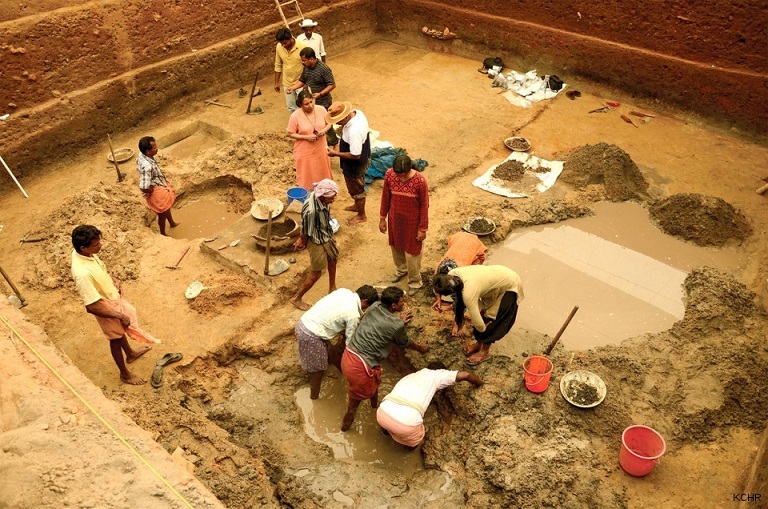
- Excavations in the village of Pattanam (Image Courtesy: architexturez.net)
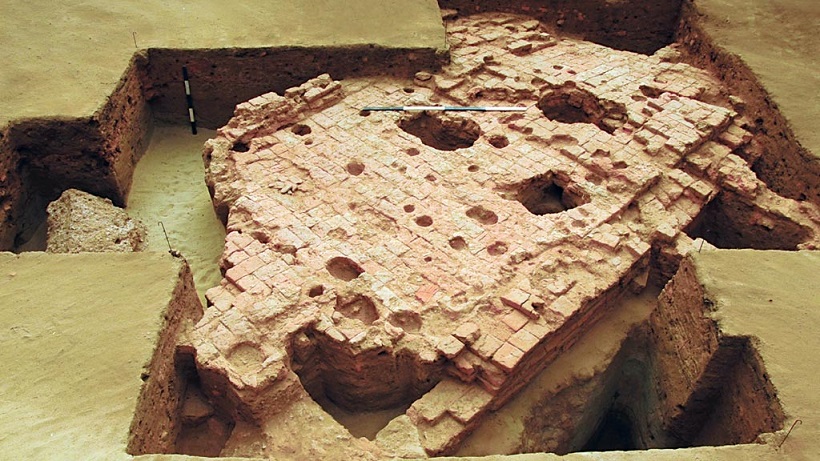
- Excavated site in the village of Pattanam (Image Courtesy: Kerala Tourism)
Though Muziris disappeared from world maps after the catastrophic floods of 1341 reshaped the Periyar River and Kerala’s coastline, its spirit never vanished. The memory of Muziris continues to live through Kerala’s culture of coexistence, trade, and openness to the world.
Today, that historic legacy finds representation through leaders like V.D. Satheesan, whose political identity is deeply connected to the pluralistic values of this ancient land. His constituency stands not only as a political region, but as a reminder that Kerala’s greatest strength has always been its ability to welcome the world while preserving its own unique identity.
A Future Rooted in History
As Chief Minister, V.D. Satheesan emerges as a reflection of a “New Kerala” — a Kerala that draws strength from its history while shaping a progressive future. Looking at the excavations of Pattanam and the legacy of ancient Muziris, he sees more than remnants of the past; he sees a vision for a society rooted in coexistence, cultural harmony, secular values, and sustainable development.
For Satheesan, the spirit of Muziris is not confined to archaeology or heritage alone. It is a reminder that Kerala once stood as a global center where people of different cultures, faiths, and civilizations lived together with mutual respect and dignity. The lessons of that shared history continue to shape his political and social outlook.
“History is not just in books; it is in the way we treat our neighbor. In Paravur, we learned to live together 2,000 years ago. As Chief Minister, I carry that lesson for all of Kerala.”
The story of V.D. Satheesan is, in many ways, the story of a native son deeply connected to his roots, a scholar shaped by learning and public service, and a leader who represents the enduring legacy of Kerala’s pluralistic and shared heritage.
Heritage is Kerala’s Greatest Asset for the Future:
City Heritage Envisions a Revolutionary Future Rooted in Kerala’s Rich Heritage
At a time when much of the modern world faces division, violence, intolerance, and cultural fragmentation, Kerala carries a different message to humanity — a message of harmony, nonviolence, coexistence, and unity in diversity. The spirit of Kerala’s renaissance movements, social reforms, and cultural awakening continues to inspire generations, reminding us that progress is strongest when built upon human dignity and shared values.
Today, this may be the most important moment to recognize the immense potential of Kerala’s heritage — tangible, intangible, and natural. From monuments, ancient settlements, and sacred spaces to folklore, rituals, cuisine, art forms, oral traditions, ecological landscapes, and living cultural practices, Kerala possesses an extraordinary heritage resource unlike anywhere else in the world.
Heritage is not simply a memory of the past; it is Kerala’s greatest asset for the future. In the making of a “New Kerala,” it is time to identify these resources as engines of cultural confidence, education, tourism, sustainability, and global engagement. The same land that once brought the world to Kerala can once again connect Kerala to the world through its values, history, and cultural vision.
For City Heritage, preserving this story is not merely about protecting monuments or documenting history. It is about reintroducing Kerala to the modern world through its timeless identity — coexistence, cultural dignity, human connection, and respect for diversity. The spirit of Muziris is not only the memory of Kerala’s glorious past; it is a futuristic vision for Kerala’s tomorrow and a message the world urgently needs to hear.




 (1).png)
© Copyright 2026 City Heritage. All rights reserved.
Website designed by TNM Online Solutions.
If you have any enquiry, feel free to ask, and we'll provide you with a prompt and concise response.